
Dubbing or subtitles? Differences, advantages and how to choose
We compare dubbing and subtitled original audio in films, series and anime: performance, comprehension, accessibility and viewer preferences.
By TopicWeekPublished 8 min read

In this article
Should you watch a film dubbed or with its original audio and subtitles? There is no universal winner. The experience depends on the translation and performance, the work itself, how comfortably you read, the language you know, and what you need from a particular viewing.
What changes between the two options?
Dubbing replaces or adapts spoken dialogue with a performed voice track in another language. The process involves translation, adaptation, direction, voice acting, recording, mixing and, in many productions, timing the new lines to the scene and visible mouth movements. It is an interpretation, not simply a translated script read aloud.
Original audio with subtitles keeps the main original-language track and adds text to help viewers understand it. Translated subtitles are usually edited for reading speed and screen space, so they may condense or reshape dialogue rather than reproduce every word. A film may also contain more than one spoken language.
- Dubbing makes the localized voice performance the main spoken dialogue.
- Subtitles provide translated text while the original voices remain audible.
- Both routes involve translation choices; neither is automatically literal.
- Availability and quality can differ by title, season, territory and service.
In Spain, VO usually means original version, VOS an original version with subtitles, and VOSE an original version subtitled in Spanish. These labels are not used identically in every market.
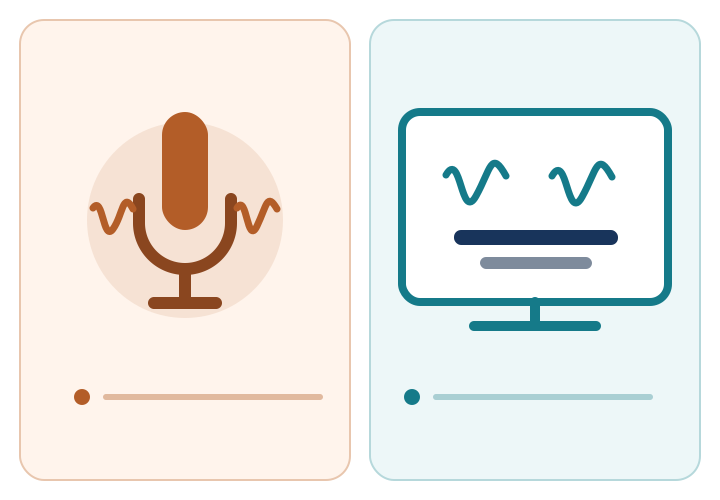
Performance, timing and cultural adaptation
In the original track, you hear the performers’ own timbre, rhythm, pauses and pronunciation. That can matter when vocal acting is central, including in animation. But hearing the original does not mean every viewer understands its language or automatically grasps every artistic intention. A localized dub also has actors and a director making performance choices.
A dubbing adaptation may balance meaning, natural phrasing, duration, pauses and lip synchronization. Perfect phonetic matching is not always possible, and the priorities vary by production. Subtitles face a different constraint: viewers must be able to read them in time. Both can adapt jokes, wordplay, register and cultural references; subtitles are not transcripts and dubbing does not always alter meaning substantially.
What does research say about comprehension and attention?
A 2017 experiment with 51 young adults in Spain compared dubbed and subtitled versions of a film excerpt. The researchers measured general comprehension, dialogue recognition, links between faces and names, visual-scene recognition, appreciation, self-reported effort and memory judgments. The study is useful because it separates several outcomes; its sample and one viewing context cannot represent all ages, countries or films. Study record and abstract.
A 2016 eye-movement paper reported two experiments with Italian university students aged 20–28: 30 watched a 10-minute excerpt from *Caramel* and 31 a 10-minute excerpt from *Sherlock*, comparing professional Italian dubbing with foreign-language audio and Italian subtitles. The groups showed no significant differences in the measured comprehension or evaluative measures. Eye-tracking results and the authors’ discussion suggest that complexity can change reading and visual attention; they do not establish a universal advantage for either format. Aston record · Full article.
A 2018 PLOS ONE study tested 74 adults aged 19–42: 27 native English, 26 Spanish and 21 Polish speakers. They watched short dialogue-heavy clips with subtitles at 12, 16 or 20 characters per second, over Hungarian or English audio. The researchers measured comprehension, cognitive load, recognition, preference, enjoyment and eye movements. Most kept up under these conditions. Slow subtitles prompted more rereading, especially with English audio; preferences for subtitle speed also differed by audio language. These selected viewers and short clips cannot represent every audience or subtitle design. Full study.
Subtitles, captions and audio description are different tools
Translated subtitles help viewers follow dialogue in another language. Captions (also called subtitles for deaf and hard-of-hearing viewers, or SDH in some services) can include speech, identify who is speaking and convey relevant non-speech sounds such as music, laughter or sound effects. The W3C describes captions as text alternatives for audio in synchronized media; ordinary translated subtitles do not automatically provide all this information. W3C: captions.
Audio description uses spoken narration to convey important visual information for people who are blind or have low vision. It is not dubbing, and it is not a subtitle track. Different people need different access features, and availability should be checked for the specific title and version. W3C: audio description.

When watching with other people, preferences may differ. There is no single option for every child: reading comfort, language familiarity and access needs vary. Check which tracks are available and choose what works for the group; no age-based rule is implied.
Streaming menus do not guarantee the same audio and subtitle tracks everywhere. Netflix says options can vary with title, location, profile, device and licensing arrangements, and can differ between episodes or seasons. Check the audio and subtitle menu for the exact version rather than assuming a language is available throughout a catalogue. Netflix audio and subtitle help · Why a language may be unavailable.
What do viewers prefer? It depends where and how we ask
The European Commission’s Special Eurobarometer 540 asked whether respondents agreed with the statement: “You prefer to watch foreign films and programmes with subtitles, rather than dubbed.” In the weighted EU-27 result, 53% agreed, 43% disagreed and 4% did not know. The survey covered 26,523 residents aged 15 and over; fieldwork ran from 29 September to 19 October 2023. Interviews used face-to-face methods; video interviews were used in Czechia, Denmark, Malta and Finland. Agreement varied by country: it was 95% in Sweden and Finland, compared with 34% in Germany, 36% in Austria and 38% in Slovakia. Disagreement does not itself mean an explicit preference for dubbing. These are reported attitudes, not viewing records or a worldwide result. Survey summary Full report and methods · dataset.
Viewing traditions and access to dubbing or subtitles differ among countries, but a historical pattern does not tell us what every person prefers today. Age, reading comfort, familiarity with subtitles, language knowledge, disability access, household context and the particular translation can all matter. A national average should not be used to predict an individual viewer.
Anime: Japanese audio or a localized dub?
For anime originally produced in Japanese, viewers may choose Japanese audio with translated subtitles or a localized voice track. Both require creative and technical work: performance direction, timing, terminology, humor and cultural context. A dub can feel natural and expressive; subtitles can suit viewers who want the original vocal performance. Quality and track availability differ across titles and seasons, and not every anime is originally Japanese. There is no single preference shared by all fans. For a separate look at award-winning series, see our Anime Awards 2026 guide.
Can original audio help you learn a language?
Watching in another language provides exposure to sounds and phrasing, but a film alone does not guarantee vocabulary gains, fluency or a particular learning result. What a viewer understands depends on prior knowledge, attention and the subtitles used. Translated subtitles and same-language captions support different tasks. Treat viewing as one possible form of exposure, not a substitute for a learning plan or a promise of progress.
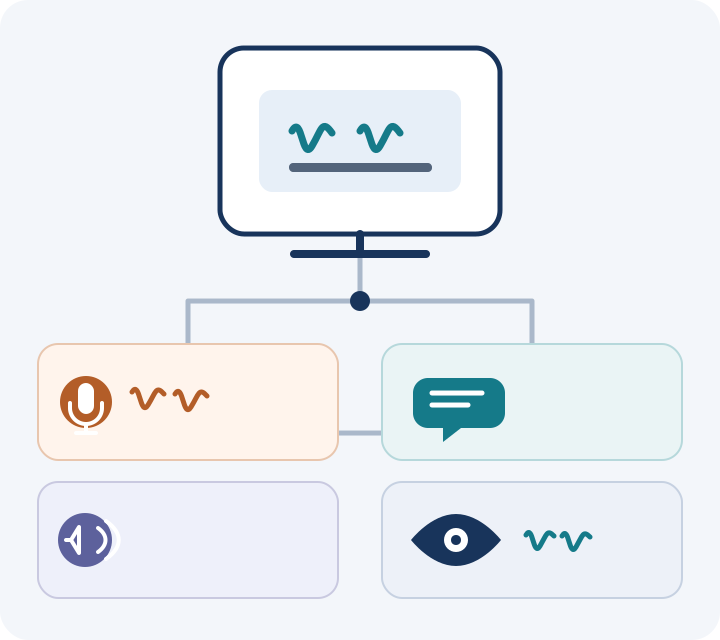
Five questions to choose a version
- Do you want to hear the original performance, or would a localized voice track suit this viewing?
- Can you comfortably read the subtitles at the pace of this particular film or episode?
- Would you rather follow dialogue by listening in a familiar language while watching the image?
- How well do the available dub or subtitles handle tone, names, humor and timing?
- Do you need translated subtitles, captions/SDH, audio description or another access feature, and is it available for this version?
Four situations, four reasonable choices
- You value the original vocal performance: try original audio with subtitles in a language you read comfortably.
- You want to keep your eyes on a fast-moving scene: a well-made dub may fit, if listening in that language works for you.
- You are choosing an anime: sample both tracks when available; judge the voice direction and adaptation for that title, not a blanket rule.
- You have an access need: look for the specific feature you need. Dubbing, translated subtitles, captions and audio description are not interchangeable.
Common claims that need a second look
- “Dubbing always ruins the acting.” A dub is also a voice performance; results vary.
- “Subtitles translate every word.” Reading speed and space often require editing.
- “Original audio always makes a story clearer.” Understanding depends partly on language knowledge and translation quality.
- “Reading subtitles means missing the whole image.” Attention is shared, but studies do not show that every viewer loses all visual information.
- “Subtitles, captions and audio description are the same.” They serve different functions.
- “Watching in an original language guarantees language learning.” Exposure alone is not a guaranteed outcome.
Frequently asked questions
- What does VOSE mean? In Spain, it usually means *versión original subtitulada en español*—original version with Spanish subtitles. Labels vary by market.
- Are subtitles exact transcripts? Usually not: translated subtitles may condense dialogue to fit reading time and space.
- Is anime better dubbed or subbed? Neither by default; compare the available performances, translation and your own preference.
- Are captions the same as translated subtitles? No. Captions may identify speakers and relevant non-speech audio; translated subtitles primarily translate dialogue.
- Is audio description a kind of dubbing? No. It narrates important visual information for access.
- Can I change my mind by title? Yes. Different works, scenes, tracks and viewing circumstances can make different options more comfortable.
The most useful test is simple: check the tracks, choose what serves this viewing, and switch if it does not work for you. The original and the dub are both interpretations shaped by translation and performance; the right choice is the one that lets you engage with the story on your terms.
Related guides

Entertainment
Best Co-op Games to Play With Friends in 2026
A co-op game can be a two-player story, a four-person kitchen scramble or an online expedition for a larger squad. This 2026 selection compares what matters before you invite anyone: player count, local and online modes, exact crossplay support, platform limits and whether a guest needs a copy.
11 min read

Entertainment
Best Free Games to Play With Friends in 2026
Compare genuinely free-to-start multiplayer games by group size, platforms, crossplay and the limits that matter before you invite friends.
6 min read

Entertainment
Best Horror Movies of 2026 to Watch This Halloween
Ten 2026 horror films compared by type of fear, franchise context and verified ways to watch in named territories.
5 min read