
How to build lasting habits: what science says beyond 21 days
Learn how habits develop, why 21 days is not a universal rule, and what practical steps may help a behaviour stick.
By TopicWeekPublished 7 min read

In this article
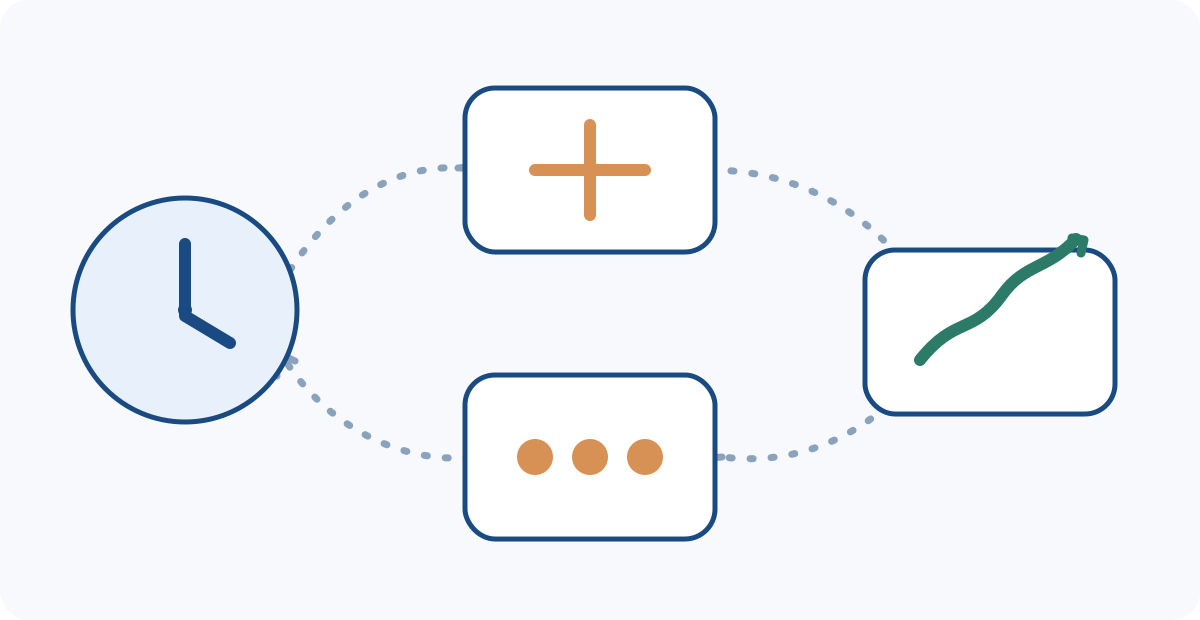
A new routine does not become automatic on a set day. Repetition can make an action easier to begin when a familiar cue appears, but the pace depends on the behaviour, the person and their circumstances. Research can describe patterns; it cannot promise a deadline for every goal.
What does it mean to form a habit?
A routine is an action or sequence you repeat. In psychology, a habit usually refers more specifically to a learned link between a cue in a recurring context and a response that can start with less deliberate thought. Automatic does not mean irresistible or entirely unconscious: intention, attention and the situation can still affect what happens. A repeated action is not automatically a strong habit, and a complex activity may remain partly deliberate.
Habits can support goals, but they are only one influence on behaviour. A 2024 review by Benjamin Gardner argues that habit formation may help maintain a change, but is neither necessary nor sufficient for long-term change; intentions and context also matter (review).
Where did the 21-day claim come from?
The rule is often traced to plastic surgeon Maxwell Maltz’s 1960 book *Psycho-Cybernetics*, which discussed how long some people seemed to take to adjust to changes in body image or circumstances. That observation was not a controlled study of how repeated behaviours become automatic. The exact history of how it turned into a universal habit formula is not settled; the book is a source often cited for the number, not scientific proof of a 21-day deadline (book record).
What did the habit studies actually find?
In a 2010 real-world study, 96 volunteers chose a healthy eating, drinking or activity behaviour and tried to repeat it daily after a consistent cue for 12 weeks. Eighty-two supplied enough data; the researchers could fit a curve for 62, and 39 of those showed a good fit. For that group, the modelled median time to reach 95% of each person’s estimated automaticity plateau was 66 days, with a range of 18–254 days (Lally et al.). That statistic describes a subset, chosen behaviours and a modelled plateau—not the date a habit appears for everyone. The 95% marks a point on the fitted curve, not a participant success rate; estimates beyond the 12-week follow-up come from the model rather than direct observations at those later dates.
A 2024 systematic review included 20 studies and 2,601 participants, mainly examining health behaviours such as activity, eating, drinking water and flossing. Only four studies directly reported time to habit formation. Their estimates varied by measure: medians of 59–66 days and means of 106–154 days; individual estimates ranged from 4 to 335 days. The review could not meta-analyse time because there were too few comparable studies, and many studies had methodological limitations (Singh et al.). These findings challenge both the 21-day promise and the idea that 66 days is a replacement rule.
Make the action concrete and workable
Start by naming an observable action rather than a broad identity or outcome. “Read one page after breakfast” is easier to plan than “become a reader”; “put the keys in the bowl when I get home” is more concrete than “be organised.” A smaller first step can reduce friction, though it does not guarantee automaticity or substitute for the time and resources a larger goal needs.
Use a cue you are likely to encounter
If possible, connect the action to a stable event or context: “After I put away breakfast, I will read one page.” The cue need not be a clock time; an event in your day may be easier to notice. Repeating an action in a similar context can help build a cue–response association, but rigid daily repetition is not required for every goal, and changing circumstances may call for another cue.
Specific if–then plans are called implementation intentions: decide in advance what you will do when a situation occurs. A meta-analysis of 94 independent tests found a positive effect on goal attainment (d = 0.65), but that result concerns reaching varied goals—not proof that a behaviour became automatic or will last indefinitely (Gollwitzer & Sheeran).
Prepare the environment; track only what helps
Make the next action easier to start when you can: leave a book where you usually sit, prepare materials before a class, or move distracting notifications out of sight. This can reduce practical friction, but it cannot remove time, access, health, caregiving or work constraints. A supportive setting helps; it does not replace resources or choice.
A tick on a calendar or a brief note can help you notice whether you repeated the behaviour and what got in the way. A streak records repetitions, not automaticity. No app is essential, and if tracking creates pressure, simplify it or stop. Research measures of habit often ask about automaticity separately from how often a person performed an action.

What if you miss an opportunity?
An interruption does not automatically erase earlier repetitions. In Lally’s study, one missed opportunity did not materially change the modelled formation process in that sample. This is a limited finding about single omissions—not a guarantee about longer breaks or every behaviour. If the routine changes, choose a practical cue and restart at a manageable level instead of treating one missed day as starting from zero.
Adapt when your context changes
Habits are partly tied to the cues and places in which they were repeated. Travel, a move, a new work schedule or caring responsibilities can remove those cues or make the action harder. Research on context change supports the idea that familiar patterns can be disrupted, but it does not mean every routine will vanish. Try a new cue, a smaller version of the action, or a temporary pause that fits your circumstances.
Three hypothetical examples
- Reading: Alex wants to read more. They leave a book beside the breakfast place and plan to read one page after putting the dishes away. If mornings are rushed, they move the cue to a quieter break. Repeating this may make starting easier; it does not promise a reading habit by a certain date.
- Preparing for an activity: Sam often loses time looking for materials before a class. They place the needed items by the door after the previous session. The environment may reduce search friction, but a changing schedule or missing equipment may still interrupt the plan.
- Fewer phone interruptions: Jo wants to check a phone less while doing a task. They silence non-essential notifications and put the phone out of reach during a chosen work period. If the phone is needed for care or work, they can use a less restrictive setting. This is a practical adjustment, not treatment for compulsive behaviour.
A simple plan you can adjust
Write one goal, one action, a cue, and one way to make the action easier. Notice repetitions and obstacles for a while, then adjust. You can revisit the plan after a week or a month, but those are review points, not scientific habit deadlines.
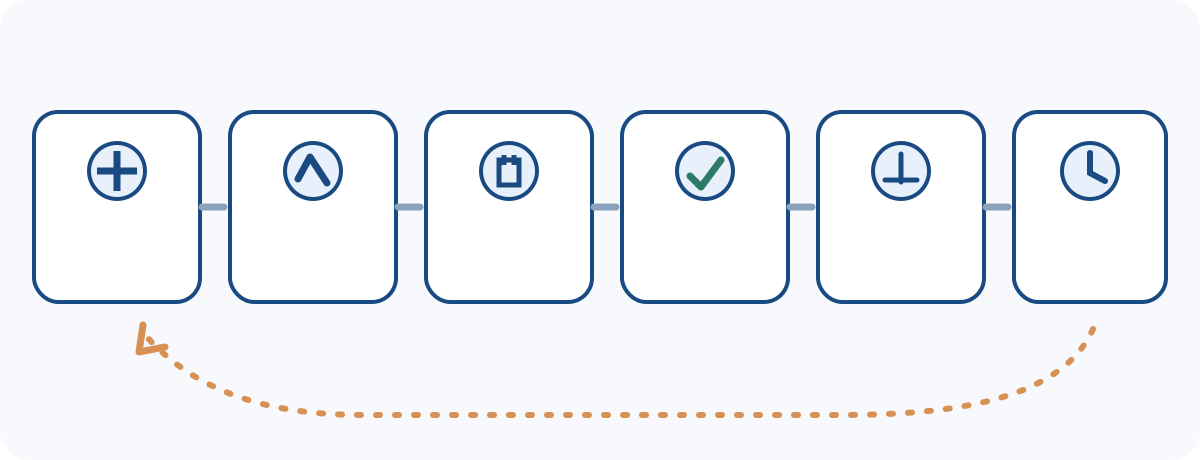
- What exact action do I want to repeat, and is it realistic now?
- When or where will I have an opportunity to do it?
- What cue could remind me, and can I prepare what I need?
- What obstacle is likely, and what is a simpler alternative?
- How will I notice repetition without demanding a perfect streak?
- If my routine changes or I miss an opportunity, how can I adapt?
Changing an unwanted routine
Notice when and where the behaviour tends to happen, then consider a realistic alternative or a change to the cue if you have control over it. Context changes can interrupt familiar responses, but change is not always simple and habits do not operate alone. Concerns involving addiction, eating disorders, compulsions or other health conditions may need specialised professional support; this guide is not treatment.
Common claims, with more careful wording
- “Every habit takes 21 days.” No study establishes that universal deadline.
- “It takes exactly 66 days.” That was a modelled median for a small subset in one study, not a rule.
- “Miss one day and you are back to zero.” A single omission did not materially affect the Lally study’s model, but the evidence does not promise the same for every interruption.
- “A streak proves the habit is automatic.” It shows recorded repetition, not the full psychological process.
- “Motivation or willpower explains everything.” Intentions, cues, opportunity, environment and constraints also matter.
Frequently asked questions
Should I do a new action at the same time every day? Not necessarily. A recurring event or context may be a more practical cue, and the useful pattern depends on the behaviour and your schedule.
How long should I keep trying? There is no evidence-based universal deadline. Review whether the action is useful, feasible and supported by your setting; change the plan if it is not.
Is a small habit enough to reach a big goal? It can make one step easier to repeat, but complex goals may require several actions, resources and deliberate decisions.
A habit is not a countdown. Choose a specific action, connect it to a cue you can use, make room for real-life variation, and adjust based on what happens. If progress is uneven, that is information for the next version of the plan—not proof of personal failure. For sleep-specific routines, see our guide to habits that support better sleep.
Related guides

Lifestyle
How to sleep better: habits that support healthy rest
Explore practical sleep habits involving schedules, light, caffeine and the bedroom environment, with evidence-based limits and guidance on when to seek help.
7 min read

Lifestyle
How to store perfume properly and help prevent changes
Learn where to store perfume, what can affect a fragrance, and how to read PAO without assuming a universal expiry date.
6 min read

Lifestyle
How to reduce phone distractions without giving up your phone
Reduce unwanted phone interruptions with practical notification, focus and usage settings while keeping the tools and contacts you need.
8 min read