
How to store perfume properly and help prevent changes
Learn where to store perfume, what can affect a fragrance, and how to read PAO without assuming a universal expiry date.
By TopicWeekPublished 6 min read
In this article
A perfume is a mixture, not a product with one universal storage clock. Its formula, bottle, closure, light exposure, temperature, air contact, use and storage history can all matter. Sensible storage can reduce avoidable exposure, but it cannot promise that every fragrance will remain unchanged indefinitely.
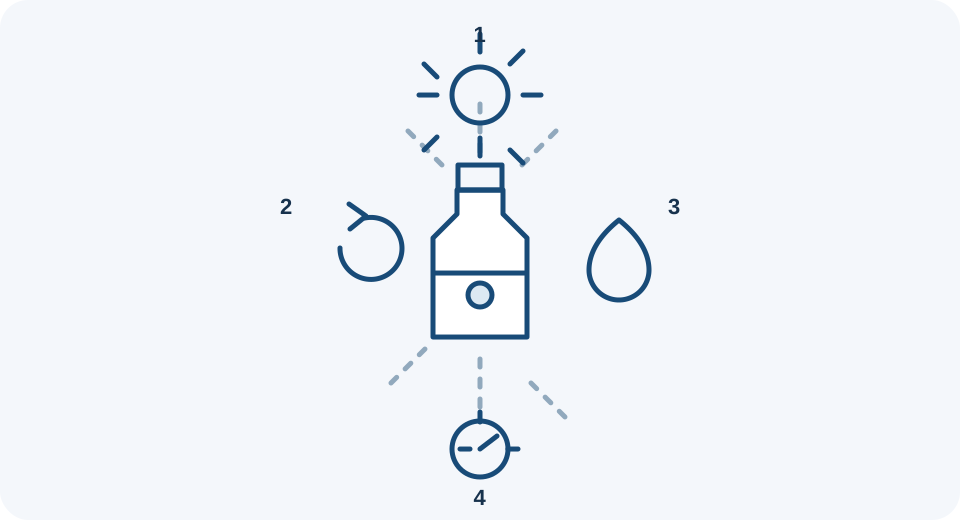
Why fragrance can change
Chemical studies show that some fragrance ingredients can react under particular combinations of light, heat and air. That does not mean every bottle changes in the same way or that opening it inevitably ruins it. In one study, peroxide levels were low in sampled commercial hydroalcoholic fragrances, including products used for months or up to five years; the method and sample do not establish a shelf life for every perfume. Api et al., 2015. Stability tests commonly compare a defined formula in its intended package under set conditions. Accelerated testing helps a manufacturer assess a product; it does not convert into a simple household calendar for how many years every bottle will remain unchanged. Results for one ingredient or one tested fragrance should not be generalized to all formulas. Cosmetic Europe/CTFA stability guidance.
- Evaporation: volatile ingredients can escape more readily from an open or poorly sealed container; the amount depends on the substance, closure and conditions.
- Oxidation: certain ingredients may react with oxygen. Light, heat and contact area can affect specific reactions, but opening does not mean inevitable or measurable damage in every formula.
- Light-driven change: some ingredients or formulas can change under particular light exposures. UV test results for selected perfumes are not a universal rule for ordinary indoor light.
- Heat and time: temperature may influence certain reactions, while the formula and package affect the result. No single temperature or number of years predicts change for every bottle.
Where to store perfume at home
A closed drawer or cupboard away from strong light and heat is a practical option. Prefer reasonably stable conditions and follow the exact product label. The original carton may reduce light exposure, but neither the box nor the original bottle guarantees indefinite stability. Tinted glass or a carton may reduce some light exposure, but bottle color is not proof of complete protection. A sunny window can also warm the bottle, so a shaded place is a practical choice.
- Bathroom: humidity outside an intact, closed bottle does not automatically enter the liquid. Consider actual sunlight, heat swings and where the bottle sits.
- Refrigerator: there is no universal need or prohibition in the sources reviewed. Follow the product instructions and avoid needless temperature cycling.
- Car: a parked cabin can become hot or sunny; avoid leaving perfume there routinely, especially in direct sun. No universal exposure time is given.
- Window or heater: move a bottle away from prolonged direct sun and strong heat.
- Box or cabinet: useful for shielding light and organizing bottles, not a guarantee against all changes.
Open bottles, original packaging and travel sprays
An atomizer limits direct handling of the liquid, but it is not necessarily perfectly airtight. A well-functioning closure helps limit evaporation and exposure; do not assume the outer cap makes every spray bottle hermetic. Moving perfume into a decant changes the container and adds handling, so compatibility, cleanliness, sealing and product identification matter. Use manufacturer-designed refill systems as instructed; do not open sealed packaging that was not made to be refilled.
Expiry dates, PAO and batch codes
In the European Union, Cosmetics Regulation 1223/2009, Article 19 distinguishes minimum durability from the period after opening. For cosmetics whose minimum durability exceeds 30 months, the minimum-durability date need not appear; a PAO is indicated unless after-opening durability is not relevant for that product. The PAO states the period after opening during which the cosmetic may be used without harm under its stated conditions. The regulation creates no blanket exemption for perfumes, and a missing PAO does not prove indefinite shelf life. In the United States, the FDA says cosmetics are not generally required by law to display an expiration date and shelf life is the manufacturer’s responsibility. Rules differ by market. PAO follows the product’s stated conditions; it is not a promise for a bottle stored outside them or showing a significant change.
A batch code helps identify a product or production lot; it is not a universal decoder for an expiry date. Check the packaging and ask the responsible brand if you need product-specific information. Eau de toilette, eau de parfum and extrait are product categories, not reliable predictions of how long a bottle stays unchanged. Scent duration on skin is a different question from stability in the bottle. The expected evolution after spraying, as volatile components evaporate, is different from a change in the liquid while stored.
How to assess a possible change
A marked, persistent change in smell or appearance—such as cloudiness, sediment, or visible separation—can be a reason to pause and ask the manufacturer, but does not reveal the chemical cause by itself. Color may vary by formulation, and perception can also change with application or smell adaptation. A pleasant smell or unchanged color does not certify safety; a color change alone does not identify a hazard. A Spanish medicines and cosmetics authority advises following the label and avoiding use of products with altered color, smell or consistency. AEMPS.
Everyday situations
- Daily bottle: hypothetical user moves a fragrance away from a sunny bathroom shelf to a shaded cupboard, without assuming the old location caused damage.
- Seasonal collection: hypothetical user keeps the bottles closed and checks the label rather than assigning a shared expiry date.
- Travel: hypothetical user uses a purpose-made, compatible, well-sealed travel spray and avoids leaving it in a hot car.
- Older bottle: hypothetical user notices a lasting change, stops repeated skin testing and contacts the manufacturer or chooses not to use it.
A storage checklist
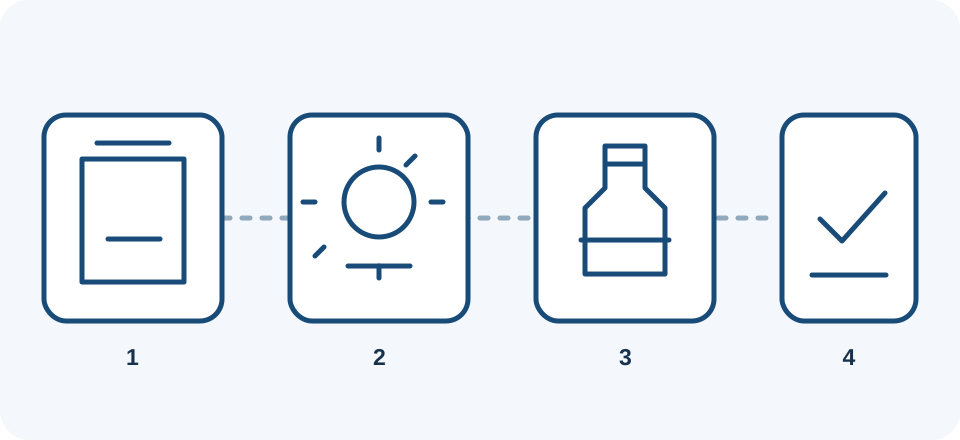
- Is the bottle away from prolonged direct sunlight and strong heat?
- Is it stored under reasonably stable conditions and closed as designed?
- Have I read the label, warnings and any PAO or minimum-durability information?
- Is the original container intact, with no leak or damaged atomizer?
- If decanted, is the travel container intended for fragrance, clean, identified and well sealed?
- Am I treating a batch code as identification rather than a universal expiry decoder?
- Have I noticed a marked persistent change? If concerned, can I ask the manufacturer?
- Is the bottle stored safely away from children and ignition sources when the label requires it?
Common myths and frequently asked questions
- How long does an unopened perfume last? There is no universal number. Check the product’s own label and maker guidance; storage and formula differ.
- Should I keep it in the bathroom or refrigerator? Neither answer is universal. Judge the actual heat, light and temperature stability, then follow the maker’s instructions.
- Does PAO mean the perfume expires on that exact day? It is a product-specific after-opening period under applicable labelling rules, not a global date or a home chemical test.
- Does darker color mean it is unsafe? Not by itself. It is an observation, not an analysis; contact the brand if the change is substantial or concerning.
- Does eau de parfum last longer in storage than eau de toilette? Concentration labels do not establish a universal storage life, and skin longevity is not bottle stability.
- Can a pleasant smell prove an old perfume is safe? No. Smell is subjective and cannot certify safety.
The practical rule is modest: read the label, close the package as designed and keep it away from prolonged direct sunlight and excessive heat. If a product seems markedly different, seek product-specific advice instead of relying on a universal year count or a home smell test.
Related guides
Lifestyle
How to reduce phone distractions without giving up your phone
Reduce unwanted phone interruptions with practical notification, focus and usage settings while keeping the tools and contacts you need.
8 min read
Lifestyle
Reusable water bottles: stainless steel, glass or plastic—which should you choose?
Compare reusable bottle materials by weight, design, cleaning, temperature limits and food-contact information to choose one for your needs.
9 min read

Lifestyle
How to choose your shoe size online: measure your feet and read size charts
Measure both feet, understand EU, UK and US labels, and use the right brand chart to make a more informed online shoe purchase.
7 min read