
Reusable water bottles: stainless steel, glass or plastic—which should you choose?
Compare reusable bottle materials by weight, design, cleaning, temperature limits and food-contact information to choose one for your needs.
By TopicWeekPublished 9 min read

In this article
There is no single best material for every reusable bottle. Stainless steel, glass and reusable plastic can each suit different routines, and the result depends on the whole product: body, lid, seals, opening, construction and care instructions. Start with how you will carry and clean it, what drinks you plan to use, and whether you already own a bottle that works.
A quick comparison of the three materials
- Stainless steel: the body is opaque and may resist everyday impacts, although it can dent. Weight depends on capacity and construction. Steel is not automatically insulated: temperature retention depends on features such as double walls and vacuum insulation. Inspect the lid, seams and interior, and follow the product’s cleaning and drink-use guidance.
- Glass: the contents and inner surface are easy to see, and glass is often straightforward to wash. Its final weight depends on capacity, wall thickness, sleeve and lid, so compare similarly sized products; it can break if dropped; a sleeve may reduce some knocks but cannot make it unbreakable. Heat tolerance depends on the glass type and the finished product, including seams, lid and any sudden temperature changes.
- Reusable plastic: many designs are light and convenient to carry, but properties vary by polymer, formulation, thickness and construction. Heat limits, dishwasher compatibility and suitable drinks are product-specific. Scratches, wear, odour retention or a damaged closure can affect whether a particular bottle remains practical; plastic is not one uniform material.
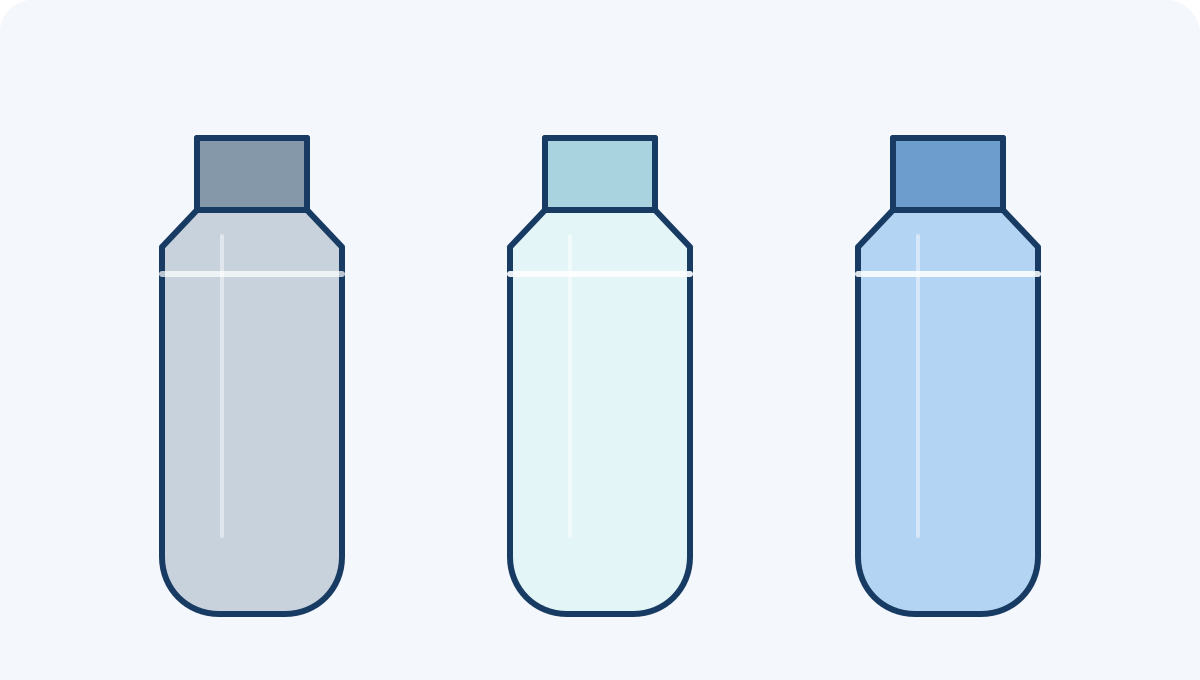
Stainless steel: useful, but not always thermal
Steel bottles are often chosen for a sturdy body and a surface that does not show the drink inside. Many food and beverage applications use stainless grades such as 304, sometimes described commercially as 18/8; 316 is another grade used in some contexts. A grade designation describes the alloy, not the overall safety or quality of a finished bottle. Welds, surface condition, corrosion exposure, the drink, manufacturing and the other components all matter. Do not assume every steel bottle uses a particular grade or is immune to corrosion, dents or wear.
A single-wall steel bottle is not a thermos. A double-wall vacuum-insulated design can slow heat transfer, but performance depends on the construction, cap and test conditions. If keeping a drink hot or cold matters, look for product-specific claims and instructions rather than inferring performance from the word “steel”. Do not use a bottle for hot liquids unless the maker says it is suitable, and consider burn risk when drinking.
Glass: visible and washable, but breakable
Glass makes it easy to see the contents and inspect the inside. The type of glass and how the bottle is made affect its thermal behaviour and resistance to impact. Borosilicate glass, for example, is designed for better resistance to thermal shock than ordinary soda-lime glass, but it is not unbreakable and this property does not mean every finished bottle can safely take boiling liquid. A protective sleeve may help with minor knocks; it does not remove breakage risk. Check the maker’s temperature guidance and inspect for chips or cracks.
Reusable plastic: several different materials
Reusable bottles may use polymers such as polypropylene or certain copolyesters; product and intended use matter more than the broad word “plastic”. A polymer name does not reveal every additive, surface finish or allowed temperature. Follow the manufacturer’s drink, heat, cleaning and replacement instructions. A bottle designed for cold water should not automatically be used for hot drinks. If it becomes cracked, warped, persistently odorous or difficult to clean, check whether a part can be replaced or whether the bottle should be retired.
Food-contact suitability, BPA and labels
Food-contact rules apply to products under specified conditions; they do not mean that any object made of a named material is suitable for every drink, temperature or duration. In the EU, Regulation (EC) 1935/2004 sets general requirements for food-contact materials, while Regulation (EC) 2023/2006 covers good manufacturing practice. Some materials, including plastics, also have specific rules such as Regulation (EU) 10/2011. Other countries have their own frameworks. Look for a product intended for the use you have in mind and follow its stated limits.
BPA is one bisphenol used in some materials, including polycarbonate plastics and epoxy resins. “BPA-free” tells you only that the product is presented as not containing BPA; it does not by itself certify the whole bottle for every condition or mean it is free of all other substances. Conversely, the label alone cannot establish that an item contains BPA. In the EU, restrictions on BPA in food-contact materials have been adopted under Regulation (EU) 2024/3190, corrected by Regulation (EU) 2026/250, with defined scope and transition provisions. Requirements differ by market, so avoid treating one region’s label or regulation as a universal guarantee.
Microplastics have been detected in food and drinking water, but detection in a sample does not on its own establish a specific health effect from using a particular bottle. EFSA says knowledge about exposure and potential effects remains limited and is preparing a broader scientific opinion. That uncertainty is not a reason to make unsupported claims about all plastic bottles—or to promise that another material eliminates every exposure.
The cap, seal and opening are part of the decision
A bottle marketed as steel or glass can still have a plastic cap, silicone seal, straw, coating or other parts. Threads, valves and narrow mouthpieces may be harder to reach than a wide opening. Before buying, check whether intended removable pieces can be cleaned, whether seals or lids are sold as replacements, and whether the closure suits the way you carry it. A leak-resistant claim and a dishwasher-safe symbol should be read in the context of that specific product.
Cleaning and care depend on the design
A practical routine is to follow the maker’s instructions and clean the bottle regularly, with particular attention after using anything other than water. Empty it, separate only the parts designed to come apart, wash the inside and all drink-contact surfaces with an appropriate detergent and brush or tool, rinse, then let the pieces dry fully before closing and storing. Clean threads, mouthpieces, straws and seals as directed. For example, the Polish Chief Sanitary Inspectorate advises regular cleaning and at least daily washing for daily use. Treat this as one authority’s practical guidance, not a single legal or scientific schedule for every bottle and situation.
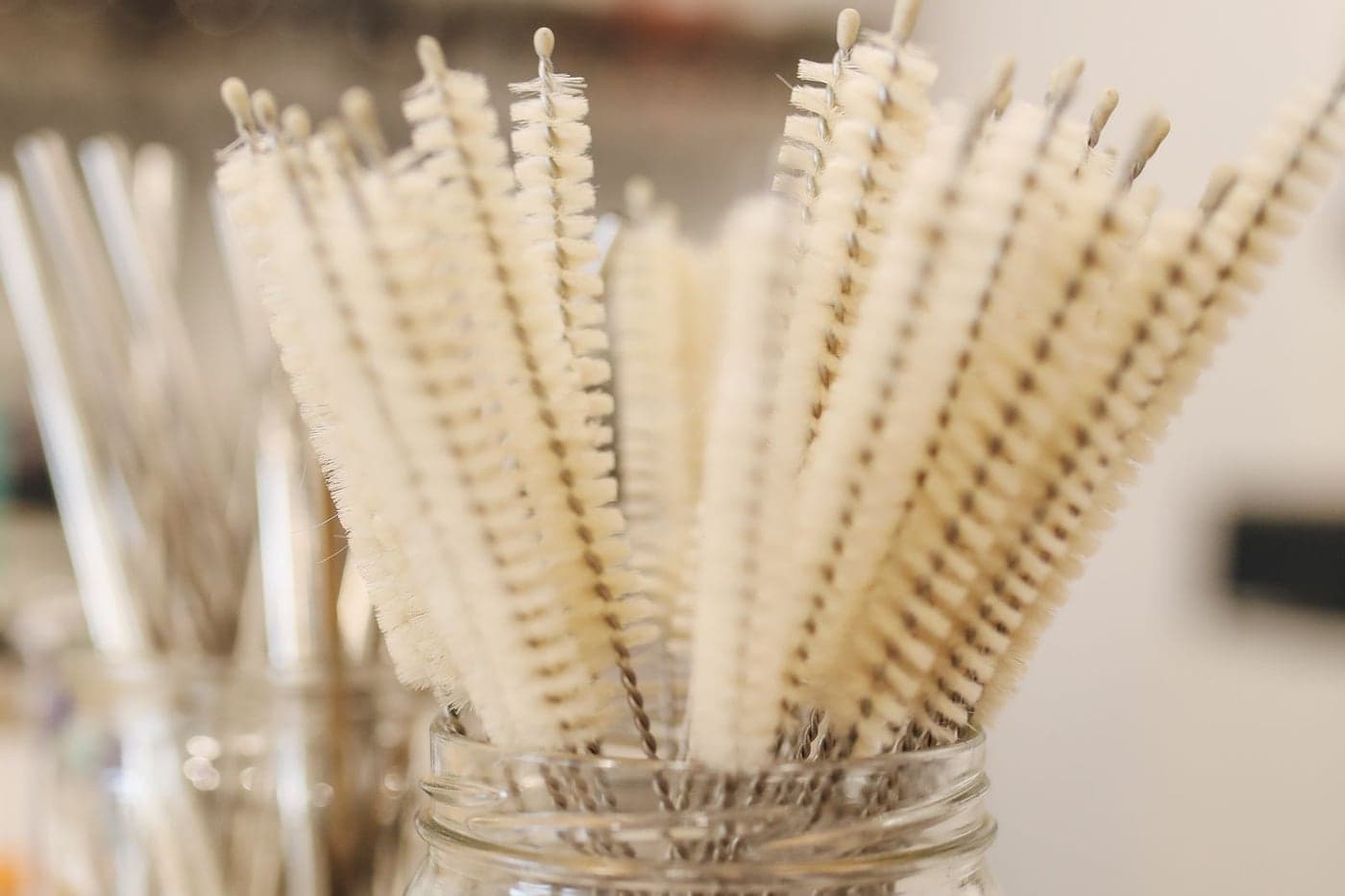
Do not assume that a bottle can go in a dishwasher because its body is metal, glass or a heat-resistant polymer. A dishwasher’s heat and cycle can affect coatings, vacuum construction, lids and seals; the product instructions control. Do not microwave or freeze a bottle unless the manufacturer explicitly permits it. If an odour persists, a seal is damaged, the closure leaks, corrosion is visible, glass is chipped, or the body is cracked or deformed, clean and inspect according to the maker’s advice and replace the affected part or product when needed. Avoid mixing household cleaners or using an unverified “sterilising” recipe.
Compatibility with coffee, tea, acidic, carbonated or sugary drinks is also product-specific. Residue may make cleaning more involved; sealed containers can behave differently with pressure or heat. Check the instructions before using anything other than the drink the bottle is intended for, especially when the liquid is hot or carbonated.
Environmental impact depends on the life cycle
Reusable does not automatically mean lower impact in every comparison. Production, material sourcing, transport, weight, washing, how many times a bottle is actually used, how long it lasts and its end-of-life route all affect an assessment. A comparison with single-use packaging is a different question from comparing steel with glass or plastic. Life-cycle studies depend on their functional unit and scenario: what drink quantity is delivered, for how long, how the bottle is washed and what it replaces. Studies of refill-and-reuse bottles and reusable glass beverage systems model specific scenarios, not a universal ranking (Summa et al., 2026; Le Féon et al., 2024). One study’s break-even result is not a universal number of uses. If you already own a clean, functional bottle suitable for your drinks, continuing to use it may be more useful than replacing it solely to change material.
Hypothetical situations by routine
- Walking or carrying it all day: compare the filled bottle’s size, weight, closure and how securely it fits in your bag. A small single-wall product may be easier to carry than a larger insulated one, regardless of its main material.
- Keeping a drink at temperature: look for a clearly described insulated construction and model-specific care directions; the steel material alone does not provide a guaranteed duration.
- Wanting to inspect and clean the inside: consider a wide mouth, few hard-to-reach parts and a design whose seals can be accessed. Glass makes the body visible, but the cap still needs attention and the bottle can break.
- Using it in a setting with knocks: consider the likely drops, protective design and replacement parts. Plastic or steel bodies can still crack, deform or dent; glass can break. No material makes every closure leak-proof or every bottle indestructible.
- Already have a bottle: if it is intact, cleanable and suitable for the drinks and temperatures you use, there may be no reason to buy another just because a different material is being promoted.
Common claims to put in context
- A steel body does not automatically insulate; construction matters.
- Glass can still break, collect residue and require care.
- Reusable plastics are not one material, and BPA-free is not a blanket safety certification.
- A material name does not show whether the lid, seal or complete bottle suits a particular temperature or drink.
- Dishwasher compatibility and cleaning needs are product-specific.
- Reusable does not automatically mean lower environmental impact; actual use and life-cycle assumptions matter.
A checklist before buying
- What capacity and filled weight will suit my routine?
- What drinks and temperatures does the maker say this exact product supports?
- Can I reach and clean the cap, mouthpiece, threads and seals?
- Are removable parts and replacement seals or lids available?
- Is it dishwasher-safe as a complete product, or only some components?
- Does it need insulation, or would a simpler design meet my needs?
- Could it break, dent or leak in the way I plan to carry it?
- Do I already own a bottle that performs this job?
- Have I read the product’s care, use and replacement instructions?
Frequently asked questions
Are all stainless-steel bottles insulated? No. Insulation depends on construction, such as double walls and a vacuum, not just the metal. Does BPA-free mean risk-free? No; it is a limited label, not a guarantee for every use or every substance. Can any bottle hold hot drinks? No—check the product’s temperature and drink instructions, including its lid and seals.
Which material is most sustainable? There is no universal winner without specifying the bottle, what it replaces, how often it is used and washed, and the local end-of-life system. When should I replace a bottle? There is no universal lifespan. Follow the manufacturer’s advice and assess whether cracks, damage, persistent odour, an uncleanable seal or a faulty closure make it unsuitable for continued use.
A useful bottle is one that fits your routine, can be cared for properly and is intended for the drinks and conditions you use. Compare the complete design and its instructions, and keep using a bottle that already meets those needs.
Related guides

Lifestyle
How to store perfume properly and help prevent changes
Learn where to store perfume, what can affect a fragrance, and how to read PAO without assuming a universal expiry date.
6 min read

Lifestyle
How to reduce phone distractions without giving up your phone
Reduce unwanted phone interruptions with practical notification, focus and usage settings while keeping the tools and contacts you need.
8 min read

Lifestyle
How to choose your shoe size online: measure your feet and read size charts
Measure both feet, understand EU, UK and US labels, and use the right brand chart to make a more informed online shoe purchase.
7 min read