
How to find cheap flights: tips, search tools and mistakes to avoid
Compare dates, airports and total costs, use search tools and price alerts carefully, and check baggage, connections and booking terms before paying. No trick guarantees the lowest fare.
By TopicWeekPublished 14 min read

In this article
A cheap flight is not simply the lowest number on a search-results page. The useful comparison is the itinerary you can actually buy, with the baggage you need, airport transfers, timing, connection risk and the seller’s terms included. No search trick can guarantee the lowest fare, but a consistent process makes the trade-offs visible.
Why flight prices change
Airfares are offered from different fare classes and inventories. A cheaper booking bucket may no longer be available when seats sell, while demand, travel dates, season, route competition, remaining capacity and ticket conditions can all affect what is shown. Providers update their offers at different times, so a fare in a search result can differ when you open the seller’s page. There is no single pricing formula that applies to every airline.
- Seat availability in each fare class; a lower tier may sell out.
- Demand and the dates or season of travel.
- Route competition, schedules and the airports used.
- Fare conditions such as baggage, changes, cancellation and included services.
A repeatable way to search
Start with the trip you actually intend to take, then change one variable at a time. If you change dates, airports, baggage and stop count together, you may find a lower number but not know what caused it or whether the alternative suits you. Save two or three plausible itineraries and compare them using the same passenger count, cabin, dates and baggage needs.
- Set the origin and destination, including the specific airports if the city has more than one.
- Choose fixed dates or mark how many days you can move the trip.
- Search a comparison tool with the same passengers, cabin and trip type.
- Compare dates nearby or a month view if available; confirm indicative calendar amounts by selecting a date.
- Check nearby airports and add the full transfer cost, travel time and operating hours.
- Filter stops and times, then read total journey duration and airport changes, not just the fare.
- Add the baggage, seat or other service you genuinely need; do not buy extras simply because they are preselected or suggested.
- Open the airline’s page and compare the same flight and fare conditions.
- Check who sells the ticket, what support they provide and the final payable amount.
- Before payment, verify names, airports, dates, bags, connections, currency, changes and cancellation terms.

How to use Google Flights
Google Flights is a search and comparison tool, not the seller of every ticket shown. Its official help describes an interactive date calendar and price graph, filters for airlines, stops and times, and separate “Best” and “Cheapest” tabs. “Best” balances price with convenience; “Cheapest” may surface lower-priced online agencies, self-transfers or airport changes. Choose an option, then follow its booking link and verify the itinerary and terms with that provider.
- Enter cities or airports, trip type, dates, passenger count and cabin; the calendar can help compare nearby dates.
- Use the price graph for monthly or weekly trends where available, not as a promise that a future fare will fall.
- Filters can narrow results by stops, airline, times and other criteria. Recheck total duration and changes of airport.
- Google says it works with hundreds of airline and agency partners but does not include every airline or available flight.
How Skyscanner can help
Skyscanner can compare offers for a route, show flexible-date views and let you explore destinations if you have not fixed one. Depending on the search, it may send you to an airline or a third-party travel provider to finish booking. Treat it as a discovery tool: the provider’s page is where you confirm the current itinerary, final amount and contract terms.
- Month or flexible-date views can reveal cheaper dates to investigate. Calendar amounts are indicative and come from recent searches, not guaranteed live prices.
- A flexible destination search can help if the destination itself is open; compare visas, ground travel and accommodation before choosing.
- Price alerts can notify you when a tracked route changes, but they do not hold seats or guarantee that you will receive the alert before availability changes.
- Check which company actually operates the flight and which provider takes payment; they may be different entities.
Flexible dates and alternative airports
If you can move the trip, compare the dates you can genuinely travel: nearby weekdays, a monthly calendar or different trip lengths. A Thursday departure is not inherently cheaper than Friday or Saturday; the result depends on route, season, inventory and return date. Include the whole trip: a cheaper flight may require an extra hotel night, another day off, a costly transfer or an overnight arrival.
- For each date, record fare, departure/arrival time, total journey length and baggage conditions.
- Check whether nearby airports change the city transfer, transport timetable or required overnight stay.
- Consider arrival times and services you will actually use; a distant airport is not automatically cheaper overall.
- Use a flexible-destination search only if you are willing to compare visas, ground transport, lodging and trip purpose as well as airfare.

When to book: what is evidence and what is myth?
There is no universal purchase window that guarantees a low fare. Booking earlier can preserve choice when dates and route are fixed; waiting may sometimes reveal a lower offer but can also leave fewer seats or worse times. Decide using the current price, your deadline, flexibility and the cost of losing the itinerary—not a countdown formula repeated online.
- “Buy on Tuesday” confuses the day of purchase with the day of departure. No weekday is always the cheapest day to buy across routes and markets.
- A weekday departure may cost less on a particular route, but that is different from a universal cheapest purchase day; compare actual dates.
- Incognito mode does not guarantee a lower price. Skyscanner says searches and cookies do not raise prices on its service; price and inventory movement can explain changes. Do not generalize one provider’s policy to every seller.
- Searching at midnight or waiting until the last minute is not a dependable strategy. A flexible traveller may find an option, while a fixed route/date can become more expensive or sell out.
Price alerts: useful, but not a promise
Google Flights lets you track a route or selected flight and, where available, flexible dates; Skyscanner also offers price alerts on supported searches. Set an alert when you have time to compare and can still change dates. Notifications report changes, but do not reserve a seat, guarantee a fare, cover every provider or tell you what price is right for your budget. Reopen the seller page and check availability before deciding.
- An alert is a monitoring aid, not an automatic purchase or a promise that the price will fall.
- Check the alert’s route, dates, passenger count and baggage assumptions; compare the final offer again before paying.
Direct flights, connections and self-transfers
Compare the complete journey, not just the number of stops. A nonstop flight avoids a connection; a one-stop itinerary may be sold as one booking or as separate tickets. The phrase “direct flight” can sometimes mean a flight with an intermediate stop but no change of aircraft, so check the itinerary details.

A self-transfer or separate-ticket connection may require collecting and rechecking baggage, changing terminal, passing security or immigration, and meeting the next carrier’s check-in deadline. A single checkout or payment does not by itself prove that the itinerary is one protected booking: check the contract and ticket structure. If the first flight is late, the next ticket may not be protected by the same booking conditions. Check the airport layout, entry/transit requirements and a realistic buffer; there is no universally safe connection time.
Compare the total price, not only the ticket
Add only costs that apply to your trip: the fare, baggage you need, transfer to and from each airport, and any necessary service. Include mandatory charges in the displayed ticket price where applicable; keep optional services separate. Compare the same trip and passenger assumptions.
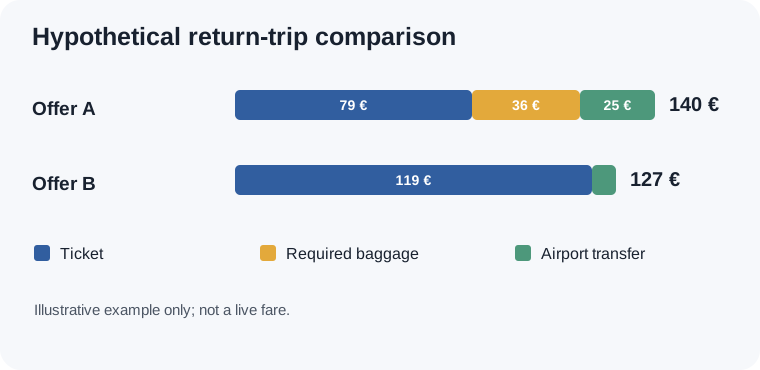
The arithmetic is: A = 79 + 36 + 25 = €140; B = 119 + 0 + 8 = €127; €140 − €127 = €13. In this hypothetical case B is €13 cheaper overall although its base ticket costs more. Both tickets are return fares; mandatory ticket charges are included, baggage need is equivalent and transfer costs differ by airport. This comparison does not assume equal schedules, flexibility or connection risk—check those separately.
Baggage and low-cost fares
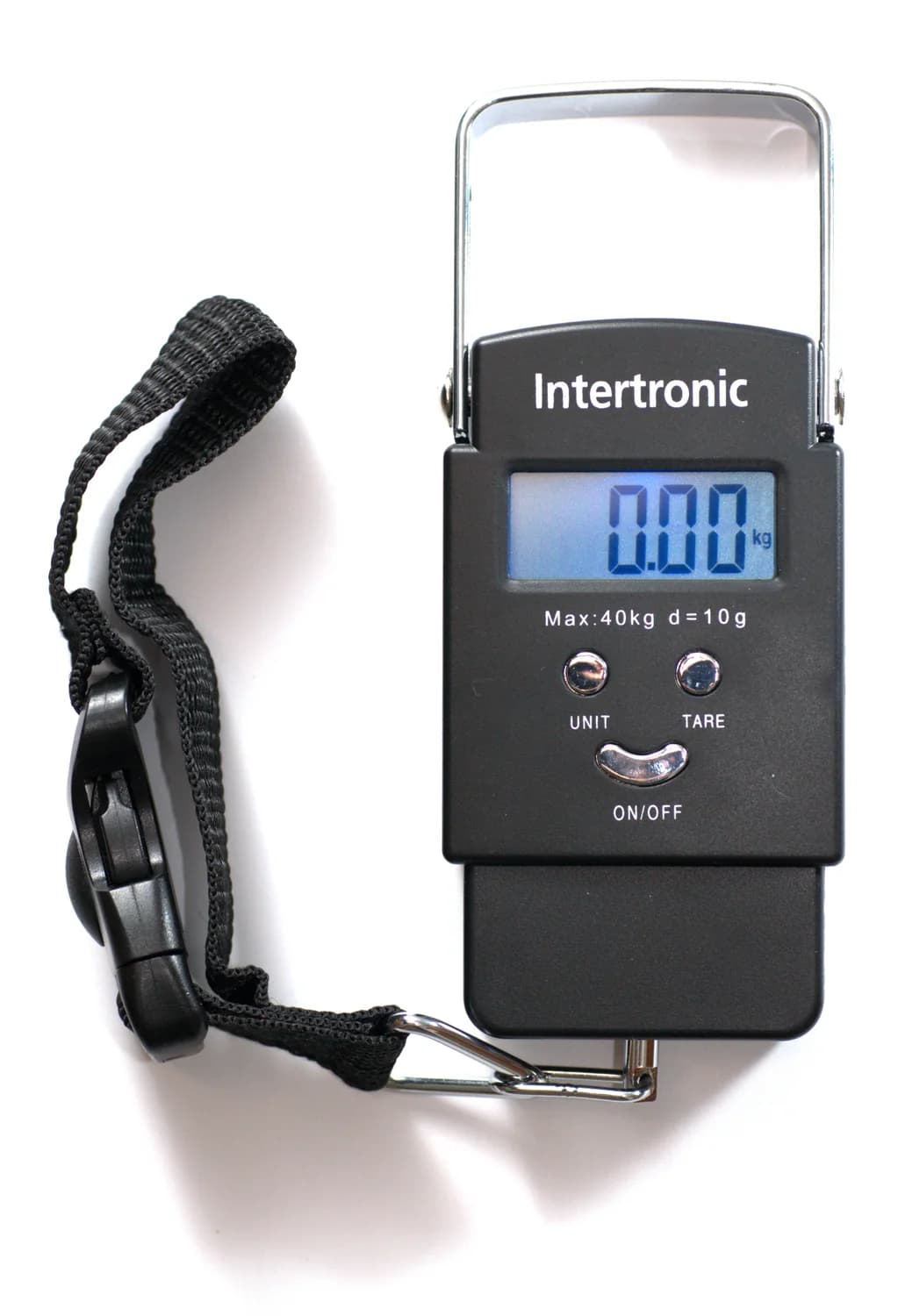
A low base fare may include only the baggage allowance stated for that fare. Distinguish a personal item, cabin baggage and checked baggage; the permitted number, size and weight depend on the airline, route and ticket conditions. If you need a larger bag, add its current price to the comparison and verify the rules on the operating airline’s site before paying. Do not assume a bag shown in an old photo or another carrier’s policy applies.
Compare the seller and booking conditions
A comparison site may link to the airline or to an online travel agency; it is not necessarily the seller. Before payment, identify the contracting company and operating carrier, review the final amount, baggage, changes, cancellation and support arrangements, and check how you will receive the booking reference. Buying directly from an airline can make it clearer whom to contact, but it does not guarantee the lowest price. An agency is not automatically a poor choice either: compare its terms and support for the exact itinerary.
A checklist before paying
- Passenger name and details match the travel document requirements.
- Dates, local times, departure and arrival airports, and any overnight stop are correct.
- Operating airline, number of stops, total journey duration and connection type are understood.
- Baggage allowance matches your needs; required extras and airport transfers are included in your own total.
- Final currency and total, seller identity, change/cancellation terms and payment conditions are checked.
- Save the confirmation and booking reference after purchase.

A reusable flight comparison template
- Origin and destination; dates and airports
- Operating airline; ticket seller/provider
- Base ticket price; baggage included; extra baggage needed and cost
- Airport transfer costs; number of stops; connection type; total duration
- Change/cancellation conditions; estimated total; date checked
Copy the fields into a note or spreadsheet and fill them for each option. Record when you checked the quote because availability changes. “Estimated total” should include only charges and services you need; write down important differences in schedule, flexibility or connection risk separately rather than hiding them inside the price.
Common mistakes when searching for flights
- Searching only one date or airport when nearby options are practical.
- Comparing base fares while ignoring baggage and transfers.
- Treating a calendar estimate, alert or prediction as a live guaranteed fare.
- Choosing separate tickets or a tight connection without accounting for baggage, controls and missed-flight risk.
- Assuming Tuesday, midnight, incognito mode or last-minute booking always saves money.
- Not checking seller identity, operating carrier, passenger name, airport or final currency before payment.
- Adding optional extras you do not need or forgetting to save the confirmation.
Frequently asked questions
How can I find cheap flights?
Compare several dates and nearby airports, filter for a workable itinerary, add baggage and transfers you need, then verify the current total with the seller. No search method guarantees the lowest fare.
Which flight search engine is best?
There is no best tool for every route. Compare what Google Flights, Skyscanner and airline sites return, then check coverage, booking provider, fare conditions and final price for your itinerary.
Does Google Flights sell tickets?
It is primarily a search and comparison service. A result may direct you to an airline or booking provider; check who is actually selling the ticket and completing the reservation.
How do I search flights on Skyscanner?
Enter origin, destination and dates; where offered, compare a whole month or use flexible destinations, then open a result and verify the live quote with the provider. Calendar prices can be indicative estimates from recent searches.
When should I book?
There is no universal booking window. Compare the current fare with your flexibility, deadline, route and the cost of losing suitable dates; do not rely on a fixed countdown rule.
What weekday is cheapest to buy?
No weekday is reliably cheapest across markets and routes. Distinguish the purchase day from departure day and compare actual fares.
What weekday is cheapest to fly?
A weekday departure may be cheaper on a particular route, but there is no guarantee. Compare dates that work for you, including the lodging and ground-transport cost of shifting the trip.
Does incognito mode help?
It does not guarantee a lower fare. Skyscanner says its service does not raise prices because of repeated searches or cookies; that statement should not be generalized to every seller.
Do cookies make fares rise?
A price change alone does not prove that cookies caused it. Availability, fare inventory and provider updates can change; providers may have different practices, so check the seller’s terms and current quote.
How do flexible dates work?
Compare a range of departure dates or a whole month if the tool offers it, then open the chosen date and confirm the current fare. Consider whether a cheaper date adds accommodation, leave or transfer costs.
What are price alerts?
They notify you when a tracked route or flight changes according to the service’s rules. They do not reserve a seat or promise a drop; verify the live offer and conditions with the seller.
Are nearby airports worth considering?
Possibly. Compare the flight price with transfer cost, travel time, service frequency, arrival hour and access needs. A cheaper ticket can produce a more expensive or inconvenient trip.
Are connecting flights cheaper?
Sometimes, but not always. Compare total duration, overnight stays, connection protection and transfer costs as well as fare; do not treat extra stops as guaranteed savings.
What risks do separate tickets create?
You may need to recheck bags and pass controls, and a delay on one ticket may not protect the next. Check each seller’s contract, airport requirements and a generous buffer; no universal minimum connection time is safe.
Why does the price change when I book?
Availability, fare inventory, provider updates, selected options or currency can differ between search and checkout. Recheck the itinerary and final amount before paying; a search display is not a held reservation.
Is it better to book directly with an airline?
Direct booking may make it clearer whom to contact, but it does not guarantee the lowest price. Compare seller identity, service, conditions and total for the exact itinerary.
What baggage does a ticket include?
It depends on the operating airline and fare. Check personal item, cabin and checked baggage rules—dimensions, weight and number of pieces—on the airline’s current page for that booking.
Are last-minute flights cheap?
They can be, but waiting is not a dependable discount strategy. Availability may shrink or prices rise, especially if route and dates are fixed.
How do I compare the final price?
Use the same passenger, dates and baggage need; add the ticket, required baggage and airport transfers, then review mandatory charges, currency and seller conditions. The hypothetical example in this guide shows the arithmetic.
How do I know whether a fare is a good deal?
Judge it against the current alternatives for your route and dates, total cost, schedule, flexibility and connection risk. A “low” label or historical average is context, not proof that the fare is right for your trip.
A practical way to choose
Set the limits that matter most—dates, total budget, arrival time or a nonstop route. Compare a small set of workable options using the same assumptions, verify the current fare and terms with the seller, and decide whether a small saving is worth extra time or risk. Save the confirmation. For the wider trip estimate, see the published guide to building a travel budget.
Sources and current conditions
Check feature details and booking conditions directly: Google Flights search and filters, price insights, price tracking, separate flights, baggage filters; Skyscanner flexible-date search and best-price search. For the cookie claim, see Skyscanner’s explanation.
For European consumer rules on the advertised final price and optional supplements, consult Your Europe: pricing and payments, which applies within its relevant scope. Airline baggage conditions differ; Your Europe: luggage restrictions explains the need to check the carrier. Google’s October 2026 travel trends use selected scenarios and U.S. departures, so do not treat them as a forecast for every market. Article 23 of Regulation (EC) No 1008/2008 sets final-price and opt-in requirements for fares offered to the public for air services from an EU airport; check the rule’s scope for your route.
This article explains how to compare airfares; it is not a live deal feed or legal advice for every country. For a broader estimate of transport, lodging and other trip costs, see how to budget for a trip.
Related guides

Travel
How to make a travel budget step by step (with examples)
A practical travel budget method: estimate transport, accommodation, meals and activities, separate paid from outstanding costs, and track spending.
13 min read

Travel
Japan in 10 days: a first-trip itinerary
A realistic 10-day Japan itinerary for a first visit, linking Tokyo, Kyoto and Osaka with transport, budget, entry and booking advice.
22 min read

Travel
Flight delayed or cancelled? What to do, refunds and compensation
What to do at the airport, what you can ask for (care, another flight, a refund or compensation) under the applicable rules, and how to claim if the airline doesn't respond.
15 min read