
Mold on walls: why it appears and how to prevent it from returning
How to investigate the source of mold, clean a small area carefully, and reduce the chance that it will return.
By TopicWeekPublished 8 min read
In this article
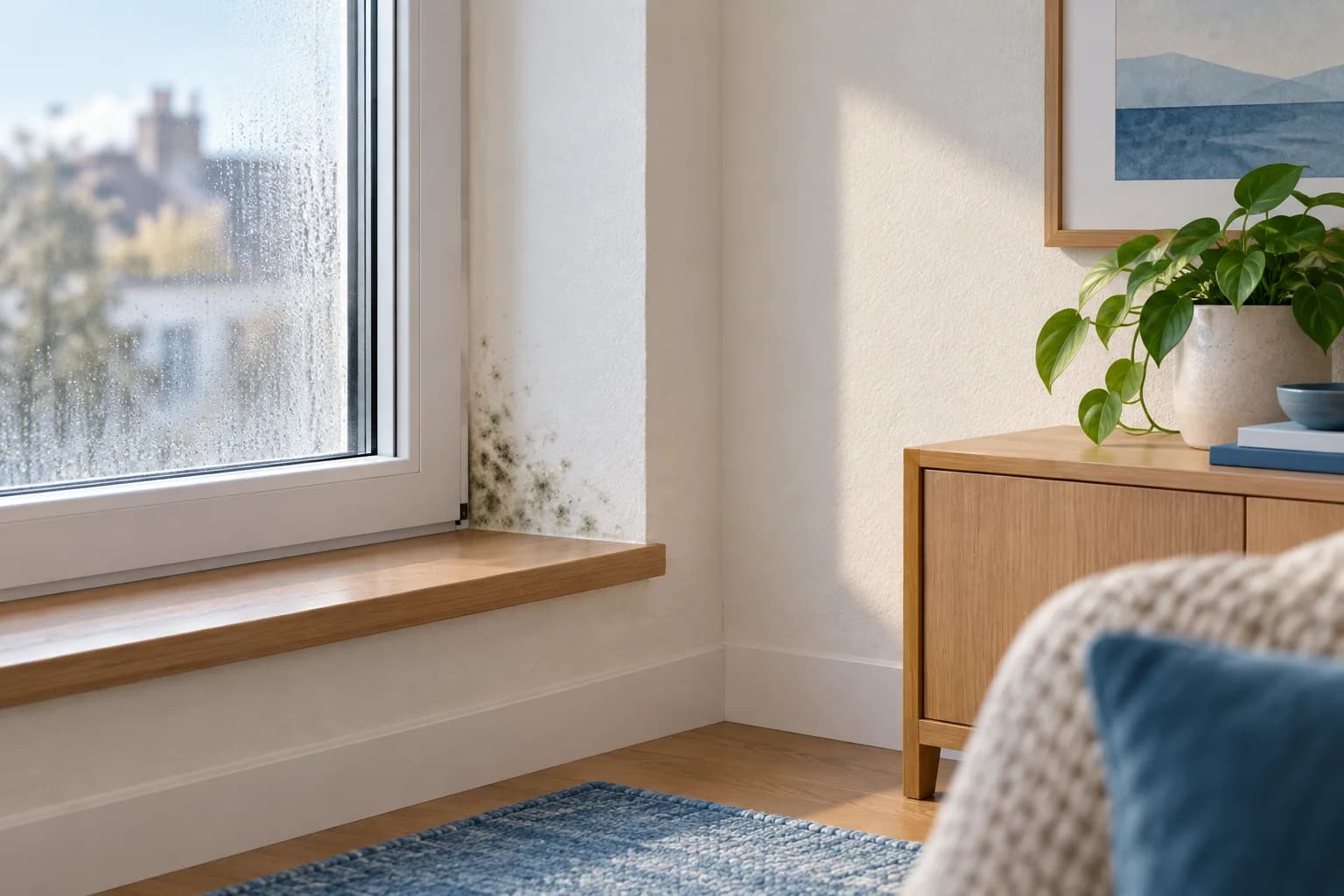
A dark mark on a wall may be mold, but its color alone cannot confirm that or show where the moisture came from. It can grow because of condensation on a cold surface, water entering from outdoors, a leak, or materials that never dried properly. Cleaning what you can see may be part of the response; if the moisture source remains, the problem can return.
Why mold appears on walls and ceilings
Mold is fungal growth that can develop on indoor materials when they stay damp. Moisture can arrive in different ways. Everyday activities—showering, cooking and drying clothes indoors—also add water vapour. If humid air reaches a cold corner or wall and is not removed, condensation can form. Thermal bridges and limited airflow behind furniture can contribute to cold surfaces.
- Condensation: indoor moisture settles on a cold surface, often in corners, around windows or behind furniture. It is one possibility, not an automatic diagnosis.
- Water ingress: rain or outdoor water enters through a roof, façade, joint or window. If the pattern changes after rain, the building envelope may need inspection.
- A leak: a pipe, drain or appliance can wet a wall or floor. A mark near plumbing or one that grows regardless of weather calls for a leak check.
- Persistent dampness: after a leak or flood, water may remain in layers or cavities and some materials take time to dry. Rising damp is another possibility, but a low-level stain alone does not confirm it.

Clues that can help investigate the source
Observe the pattern and how it changes before choosing a product. Does it appear after rain or near plumbing? Does it recur in a cold corner, behind a wardrobe or beside a window with condensation? Is there a persistent musty smell, blistering paint or a history of leaks? These clues can help prioritise an inspection, but none proves what is happening inside the wall. A photograph cannot identify a mold species or establish the source. To compare possible sources of water—including outside ingress, plumbing leaks and rising damp—see our guide to types of damp in the home.
- If it worsens after rain and sits by an outside wall, check the roof, façade, joints and sill; timing is a clue, not proof of water ingress.
- If it is near pipes, radiators, drains or an appliance, check for a leak even if no water is visible at that moment.
- If it recurs in a cold corner, around a window or behind furniture during colder periods, condensation is one possibility; building-fabric defects may also be involved.
- A persistent mark near floor level can have several causes. Rising damp needs a building assessment, not a conclusion based on height alone.
If window moisture is part of the pattern, our guide to condensation on windows explains how indoor vapour, cold surfaces and dew point relate. This article focuses on mold and what to do about the affected surface.
How to clean a small area carefully
There is no single method for every wall: size, material, surface condition and the kind of water involved all matter. The U.S. EPA says that in many cases an area smaller than about 10 square feet (roughly 0.9 m²) can be handled at home; this is a U.S. practical guide, not a universal legal limit. If the area is larger, hidden, recurring or the material is damaged, seek a professional assessment.
- Before starting, find out whether there is an active leak and stop the water source if it is safe. Keep people with asthma, respiratory disease or weakened immune systems away; if you have health concerns, ask a health professional.
- For a small, accessible area on a hard, non-porous surface, public guidance describes cleaning with soap or detergent and water, following the product label. Ventilate the space, wear gloves and avoid touching the material with bare hands. The U.S. CDC cleanup guidance also recommends protecting the nose and mouth with a NIOSH-approved N95 respirator and the eyes with close-fitting goggles; use protection suitable for the task and product.
- Remove the growth without dry-sanding or dry-brushing, then dry the surface thoroughly. Avoid spreading dust or spores to other rooms. If the finish crumbles, growth penetrates porous material or cleaning would damage it, stop and get advice.
- Do not mix cleaning products. In particular, never combine bleach with ammonia or other cleaners: dangerous gases can form. The EPA does not recommend biocides as routine practice; killing growth without removing it and controlling moisture does not address the whole problem.

When not to clean it yourself
Seek professional help if the area is extensive, growth seems to be behind a finish, plaster or insulation is damaged, the problem returns after cleaning, you cannot find the moisture source, or the water may be contaminated. An inspection is also sensible if heating or ventilation equipment may be affected. Size is only one part of the decision: access, material, water source and occupants' health matter too. If there are signs that mold may be in the heating or ventilation system, do not run it until an experienced professional has assessed it.
People with asthma, allergies, chronic lung disease or immune suppression may be more vulnerable to exposure. In its guidance for after severe weather events, the U.S. CDC advises patients with asthma or other lung conditions and people with immune suppression not to enter buildings with indoor water leaks or mold that can be seen or smelled. Its cleanup guidance also says these people should not take part in cleaning. They should reduce exposure and consult a health professional. Dampness and mold are associated with respiratory or allergic symptoms in some people, but this article does not diagnose illness.
How to reduce the chance of it returning
A lasting measure depends on the source. If water enters through a roof or façade, repair the entry point; if plumbing leaks, fix the leak; if condensation is involved, address indoor moisture, ventilation and cold surfaces. The U.S. EPA recommends drying water-damaged areas and items within 24–48 hours to prevent mold growth. In its guidance for severe water events, CDC advises assuming mold may be present when a home and its belongings have stayed wet for longer than that. Actual drying time depends on materials and conditions.
- Use bathroom and kitchen extractors that vent outdoors, where available, and check that they work. Ventilate in a way that suits the climate and the home's ventilation system.
- Reduce vapour at its source: cover pans while cooking, use extraction and avoid drying clothes indoors where possible. If there is no alternative, ventilation can help prevent moisture building up in a closed room.
- Allow air to move near outside walls and cold corners; large furniture tight against a wall can slow drying. This will not repair water ingress.
- A dehumidifier may help when indoor air is damp and the circumstances suit it. It does not replace repairing a leak, needed extraction or checking a thermal bridge.
- If the problem stays concentrated on cold areas, ask for insulation, thermal bridges, seals and ventilation to be checked. Improving the building fabric may be needed; cleaning alone cannot do it.
Popular fixes that only go part of the way
- Painting over it: paint can hide a mark, but it does not dry the material or fix an active leak or condensation. Do not paint over active growth instead of cleaning and correcting moisture.
- Using bleach, vinegar or baking soda for everything: effectiveness and compatibility depend on the surface and product. These are not universal recipes; do not experiment with mixtures and follow the manufacturer's directions.
- Buying a dehumidifier without investigating: it may reduce ambient humidity, but it cannot repair water entering through a roof, leaking pipes or wet material inside a wall.
Frequently asked questions
Is every black mark on a wall mold?
No. Colour cannot reliably identify the material or a mold species. If a mark grows, smells musty or appears beside a wet surface, avoid scraping it to check; investigate the moisture source. Assessment may be needed if there is damage or recurrence.
Is it normal to find mold behind furniture?
It can grow where a wall is cold or damp and air circulation is limited, but water ingress or a leak is also possible. Move the furniture to observe the area and check for links to rain, plumbing or condensation. If the wall is wet or damaged, find the cause before putting the furniture back.
Will a dehumidifier remove mold?
It may help control excess moisture in the air in some homes, but it does not by itself remove existing growth or repair water ingress. Use it as a supporting measure where appropriate, alongside fixing the source and drying materials.
When should I be concerned?
Act if the mark spreads or returns, the wall stays damp, there is a persistent smell, material damage, a leak or contaminated water. If someone at home has asthma, respiratory disease or a weakened immune system, limit their exposure and seek health and building advice.
Public guidance used
For more detail, see the U.S. EPA guide to mold and moisture, the CDC cleanup guidance and the CDC health guidance after severe water events, the WHO guidelines on dampness and mold and, for home ventilation, the UK government guide. These sources have different scopes and do not replace local requirements.
Cleaning is only part of the solution
Visible mold is a sign to investigate moisture, not a complete explanation. Condensation, water ingress, leaks and materials that did not dry call for different responses. Careful cleaning of a small accessible area may be reasonable, but correcting the source—and getting help when the scale, material or health risks call for it—is how to assess whether the problem is actually being resolved.
Related guides

Home
Window condensation: why it happens and how to prevent it
Why condensation appears on windows, what causes it indoors and what you can do to reduce it without relying on simplistic fixes.
6 min read
Home
How to Paint a Room Step by Step: Materials, Preparation and Common Mistakes
Plan materials, prepare walls, estimate paint quantity and apply it safely with a roller and brush. Includes drying times, common mistakes and a worked example.
11 min read

Home
Are Solar Panels Worth It for Your Home? Costs, Savings and Payback
What a home solar PV system costs, how much electricity it produces, how much of it you actually use, what happens to the surplus and how to work out payback, with three worked examples and the cases where it does not pay off.
27 min read