
Renovate or buy another home? Costs, benefits and how to decide
Compare the full cost of renovating your current home with selling and buying another, including taxes, financing, disruption and practical limits.
By TopicWeekPublished Updated 11 min read

In this article
If your home no longer fits your life, renovating may let you keep a location you like; moving may solve space, layout or neighbourhood problems that building work cannot change. Neither option is always cheaper. A useful comparison includes the full renovation scope, net proceeds from selling, purchase costs, financing, technical condition and how long you expect to stay.
Quick comparison
- Investment: renovation concentrates spending on works; moving brings sale and purchase costs plus the price difference between homes.
- Extra costs: renovation may involve professional fees, permits, temporary housing and surprises; moving may involve tax, finance, removals and initial repairs.
- Finance: works may be paid in stages, and a loan is never automatic; a purchase requires reviewing new borrowing and any current mortgage.
- Timing: renovation depends on scope and what is discovered after opening walls; a move depends on selling, finding a home and completing the purchase.
- Disruption: you may live around the work or move out temporarily; moving involves viewings, negotiation, paperwork and a full transfer.
- Layout: renovation can alter parts of a home within technical limits; buying gives a wider choice of size, layout and surroundings.
- Location: staying preserves your neighbourhood and commute; buying allows a change of area if supply and budget permit.
- Uncertainty: both choices carry risk. An inspection, written scope and confirmed finance reduce surprises but cannot remove them.
When renovation may make sense
Renovation is a reasonable option if you want to remain in the area, the home has a sound basis and the required changes are technically and legally feasible. It may update services, add storage, improve accessibility or reduce heat loss. An architect or independent building professional can separate essential work from preferences and identify whether the layout or shared building elements constrain the project.
- The location, services and commute still suit you.
- A defined project addresses the shortcomings without relying on moving structure without design or consent.
- An inspection can assess services, damp and possible hidden defects.
- You can manage the schedule, staged payments and alternative accommodation if needed.
- The owners’ association and local authority allow work affecting shared elements or the façade.
When to consider buying another home
Buying another home deserves comparison when the main need cannot be solved by building work: an unsuitable area, insufficient space that cannot legally be added, an accessibility problem without a viable solution or a structure requiring extensive repairs. That does not make a new home automatically better: it also needs checking, may need adaptation and could increase debt or travel time.
- The problem is location, surroundings, external noise or distance to services.
- The required size, orientation or layout cannot fit within the current home’s legal and physical limits.
- A professional inspection finds extensive damage and works would not meet your underlying needs.
- You have found an available alternative whose total cost, financing and terms can be checked.
- Selling and buying would not force you into an offer or payment you cannot sustain.
What to include in a renovation budget
A price per square metre cannot compare projects without a defined scope. Ask each contractor for itemised pricing against the same specification. The quote should state finishes, quantities, taxes, exclusions, payment milestones, expected schedule, waste handling and how changes will be approved. In older buildings, opening walls or floors can reveal services or damage that was not visible; document what the contract covers and how extra work is priced.
- Demolition, removal and waste management.
- Masonry, structural work or reinforcement where designed and authorised by a competent professional.
- Electrical, plumbing, drainage, heating, cooling and ventilation.
- Insulation, windows, waterproofing and damp treatment based on a diagnosis.
- Kitchen, bathrooms, joinery, flooring, painting and other finishes.
- Design, technical direction, safety coordination and tests where needed.
- Permits, local fees, owners’ association approvals and public-space occupation where applicable.
- VAT on each item, temporary accommodation, storage and final cleaning.
- A contingency set after inspection; do not use a universal percentage as a substitute for diagnosis.
What selling and buying another home costs
Do not compare only the asking price of the home you like. Estimate a realistic sale price for your current property, the mortgage balance to repay and selling costs; then add the next home’s price, purchase taxes and finance and moving costs. Expenses depend on location, property type and contracts. The Spain home-buying costs guide explains purchase costs and territorial differences in more detail.
- Sale costs: marketing or an agent if hired, certificates and paperwork, registration of mortgage cancellation when needed, and any early repayment cost under the loan.
- Sale taxes: a possible personal income tax capital gain and, where applicable, local tax on the increase in urban land value. Check exemptions and local rules.
- Resale purchase: transfer tax (ITP) according to the autonomous community and buyer circumstances.
- New-build purchase: VAT and, where relevant, stamp duty (AJD) under applicable rules.
- Valuation, costs of new finance, notary and land-registry fees where applicable, removals, storage and temporary accommodation.
- Repairs, appliances or layout changes needed before using the new home.
- The cost of carrying two homes or loans if sale and purchase dates do not align.
How to compare both options without mixing cash and wealth
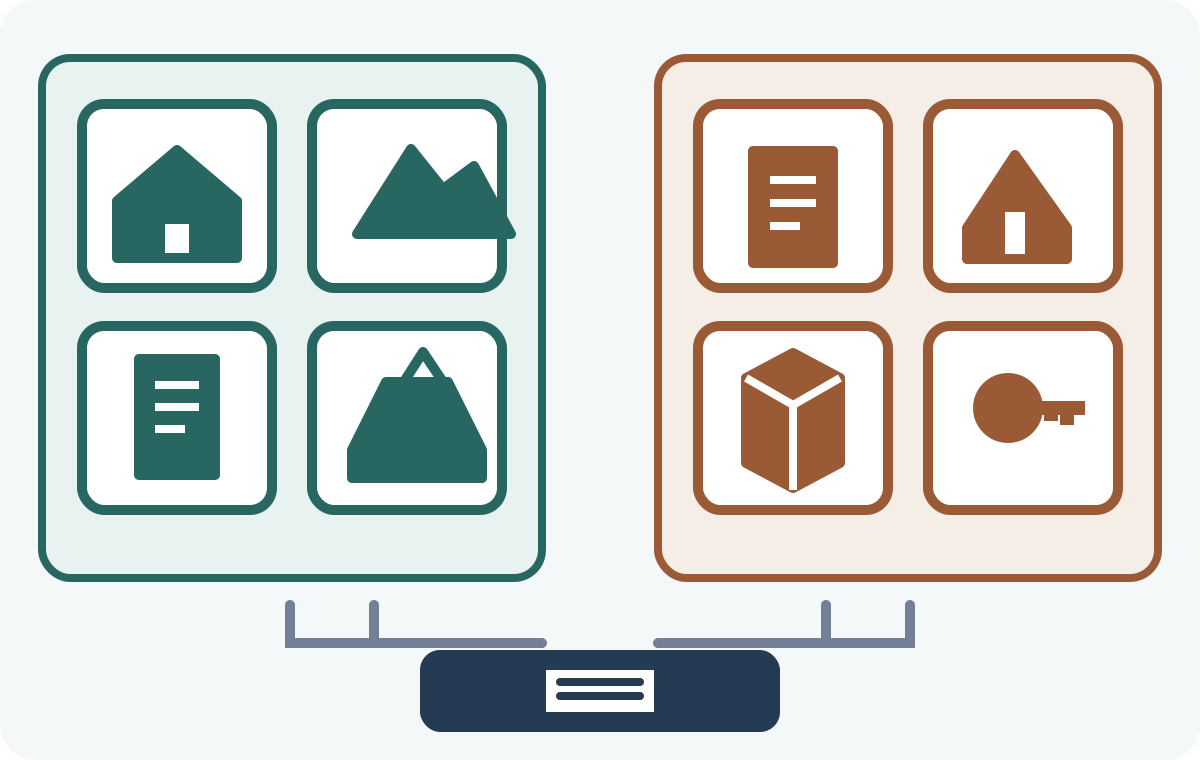
Use two worksheets and the same time horizon, such as how long you expect to stay in the next home. For renovation, add works, professional fees, taxes, finance, temporary housing and expected maintenance. For moving, add sale and purchase costs, the price difference, finance and initial repairs. Use realistic valuations of both homes; do not assume future price growth.
- Stay and renovate: works + professional fees and permissions + non-recoverable taxes + finance + temporary housing and interim moving + extra maintenance. Separately note the estimated value of the renovated home and remaining debt.
- Sell and buy: calculate net cash released by the sale once (sale price minus mortgage payoff, selling costs and applicable sale taxes). Compare it with the purchase price, acquisition taxes and costs, finance, moving and initial adaptation. For final net worth, separately record each home’s value and remaining debt.
Taxes and permits: the Spanish example
In Spain, selling can create a taxable capital gain or loss in personal income tax (IRPF); an exemption for reinvesting in another main home depends on eligibility and timing: generally, reinvestment must take place within the two years before or after the sale; if only part of the sale proceeds is reinvested, the relief may be partial. The Tax Agency says reinvestment in qualifying rehabilitation of the home that will become your main residence may count in some cases, but not every interior renovation meets the tax definition. A local tax on increased urban land value may also be relevant; for a purchase, ITP or VAT and AJD depend on property type and autonomous community. As of this article’s reference date, the Tax Agency says the standard VAT rate for renovation or repair work is 21%. The 10% reduced rate applies only to certain building work if conditions are met, including an individual recipient who is not acting as a business or professional and uses the home privately, the home having been completed or rehabilitated at least two years earlier, and contractor-supplied materials not exceeding 40% of the taxable amount. Confirm the treatment of your contract with the Tax Agency or a tax adviser. For works, Spain’s CTE covers applicable interventions in existing buildings, but local permits and procedures depend on the municipality and scope; check owners’ association approval too. Official sources: the Spanish Tax Agency on property sales, reinvestment relief, VAT on home works and CTE scope.
Financing renovation versus a new purchase
A renovation may be funded from savings, personal credit or a change to an existing mortgage if the lender agrees. A novation or increase is not automatic and may require valuation, an affordability review, fees and updated paperwork. For a purchase, the bank reassesses income, debts, expenses, security and repayment capacity; the property value alone does not guarantee approval. The Bank of Spain advises comparing personalised loan information and says each lender decides after assessing solvency. If you buy before selling, model a period with two payments, ownership costs and sale timing; do not rely on bridging finance until you have a formal offer. See also the Bank of Spain guidance on mortgage assessment and mortgage novation.
Time, living conditions and disruption
Renovation duration depends on scope, permits, contractor availability, materials and discoveries during the work; a quote’s schedule is an estimate, not a guarantee. Clarify which areas will be unusable, how rooms will be protected, who coordinates trades and what happens after changes or delays. Budget for temporary rent, storage, travel, meals away from home and overlapping housing costs. Moving also takes time: viewings, negotiation, inspections, financing, signing, key handover and the transfer itself. Put dates and conditions for sale and purchase in writing to reduce the risk of being without a home or carrying two for longer than planned.
What renovation may not solve
Get a technical assessment before relying on a fixed quote if there are cracks, movement, persistent damp, unsafe services or uncertainty about load-bearing walls. Also assess accessibility, ventilation, daylight, orientation and insulation; replacing windows without designing ventilation can create other problems. In Spain, work must account for the applicable CTE, regional and municipal rules, heritage protection and owners’ association requirements. Do not assume you can add floor area, alter a façade, move structural elements or change shared areas. Ask a qualified architect or building professional what is feasible and what level of compliance is required.
Energy efficiency and comfort
A renovation may improve comfort when it treats the building as a whole: envelope, thermal bridges, windows, shading, ventilation and heating or cooling systems. Get an assessment and relate possible measures to actual energy use, climate, habits and maintenance costs. Do not promise a fixed saving from a particular job or count on a grant until you have checked whether the scheme is open, who can apply, eligible costs and application timing. An energy upgrade also does not guarantee that its full cost will be recovered in the sale price.
Three examples to test the decision
These hypothetical situations show how to apply the method; they are not market prices or predicted outcomes.
- Hypothetical: good location, poor layout. If the structure and services allow a defined project and you want to stay, compare the full renovation and accommodation cost with moving net of sale proceeds; commission a technical review first.
- Hypothetical: one more bedroom is needed and the plot cannot be extended. Rearranging rooms may help, but if it cannot meet the space need, search for alternatives and include taxes, moving, repairs and new payments.
- Hypothetical: older home with damage and several exhausted services. Do not decide from a quick viewing. Commission an inspection, written scope and quote with exclusions. If uncertainty cannot be bounded, compare selling as-is with a feasible purchase.
Checklist before you decide
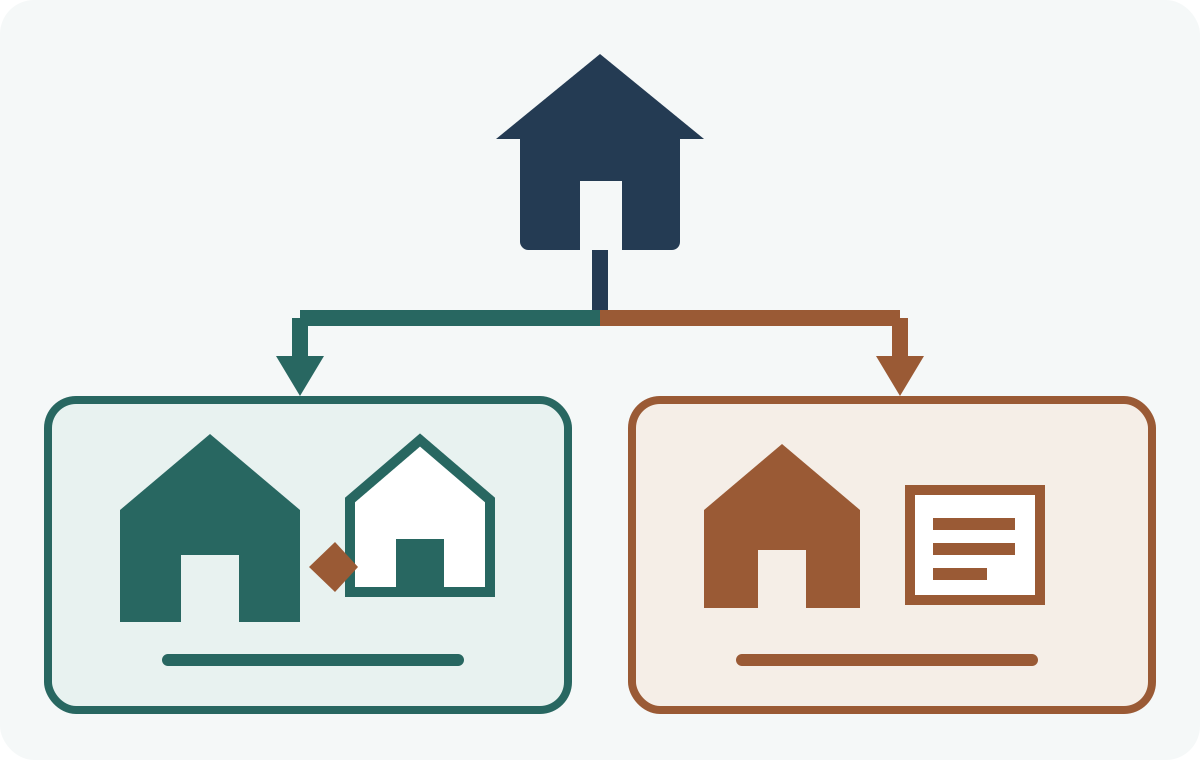
Before deciding, gather comparable information on the home, works, sale, taxes and financing.
- Commission a technical inspection of the current home, including structure, damp and services.
- Define essential needs separately from preferences.
- Request comparable quotes with measurements, finishes, VAT, exclusions and schedule.
- Ask the local authority and owners’ association about permissions, shared elements and restrictions.
- Get a sale valuation and calculate net proceeds after debt, expenses and taxes.
- Check sale and purchase taxes for the municipality and autonomous community; verify any exemption conditions.
- Ask lenders for renovation and purchase illustrations showing payment, total interest, fees, valuation and terms.
- Include accommodation, removals, storage, delays and initial repairs.
- Compare liquidity, non-recoverable cost, debt and final wealth separately; test a cost overrun or a slower sale.
Frequently asked questions
- Is renovating cheaper than buying another home? There is no rule. Compare the full work scope with selling costs, taxes, purchase costs, moving, finance and repairs, using local prices and an inspection.
- Is a full renovation worth it? It can make sense when the home and location work and an assessment confirms the project addresses the needs. Include services, fees, accommodation, taxes and uncertainty.
- When is renovation no longer worthwhile? When location, size or a technical restriction cannot be fixed, or a professional assessment shows the plan cannot solve the problem within your financial limits.
- Can a mortgage fund renovation? Sometimes a lender may agree to a novation or increase, but it must assess affordability, valuation, costs and terms. Do not treat it as approved before a formal offer.
- What taxes apply when selling and buying in Spain? IRPF and a possible local land-value tax may apply to sale; ITP or VAT and AJD may apply to purchase depending on the circumstances and territory. Exemptions have conditions.
- Can I live at home during a full renovation? It depends on phases, dust, noise, safety and access to a kitchen, bathroom, water and power. Request a room-by-room plan and budget for alternative housing.
- What if hidden damage appears? It may require extra work, approval and cost. Document scope, change control and notices; an inspection reduces uncertainty but cannot reveal everything.
- How do I compare quotes fairly? Match drawings, quantities, materials, finishes, included work, taxes, timing, payments, warranties, waste and exclusions. Ask in writing how changes are approved and charged.
Conclusion: compare your home with a real alternative
Start by defining the problem you want to solve and commission a technical review before fixing a renovation budget. Then calculate total cash, payments and liquidity for each option using local values and tax rules. Renovating can preserve a setting that already works; buying another home can solve limits you cannot move. The best choice is not the smallest isolated figure, but the one that meets your needs without relying on unapproved finance, assumed price growth or a project with no surprises.
Related guides

Home
How to Paint a Room Step by Step: Materials, Preparation and Common Mistakes
Plan materials, prepare walls, estimate paint quantity and apply it safely with a roller and brush. Includes drying times, common mistakes and a worked example.
11 min read

Home
Are Solar Panels Worth It for Your Home? Costs, Savings and Payback
What a home solar PV system costs, how much electricity it produces, how much of it you actually use, what happens to the surplus and how to work out payback, with three worked examples and the cases where it does not pay off.
27 min read

Home
Christmas Decorating Ideas for Small Spaces: Practical Ways to Save Room
How to decorate a small flat, studio or single room for Christmas without losing space: compact and wall trees, vertical decor, renter-friendly ideas and decorations that store easily.
15 min read