
Best time to visit Mallorca: when to go for your kind of trip
There's no single ideal month: when to go to Mallorca for beaches, fewer crowds, hiking, cycling, Palma or a road trip, with historical climate and visitor data and a month-by-month guide.
By TopicWeekPublished 9 min read

In this article
The short answer: there's no single best month to visit Mallorca. If you want beaches and heat, summer is the safest bet; if you'd rather walk, cycle or explore villages without heat or crowds, spring and autumn usually suit you better; and in winter the island is still a good destination for Palma and nature, though not for the beach.
This guide helps you choose dates for the trip you have in mind, with historical climate and visitor data and a month-by-month summary.
When is the best time to visit Mallorca?
It depends on what you want to do. In short:
- Spring (March to May): mild temperatures and lengthening days. A good time for walking, cycling and exploring villages; the tourist season picks up strongly in April.
- June: already beach weather, with heat and very little rain on average, and slightly fewer visitors than in July and August.
- July and August: the hottest, driest and sunniest months, and also the busiest.
- September and October: still warm, but with more storms and rain; visitor numbers drop from August but remain high.
- November to February: cool and wetter, with far fewer visitors. A time for Palma, villages and nature, not for the beach.
If you're looking for a balance between weather, sea and crowds, June and September are good candidates for the beach, and May and October if swimming matters less: they have pleasant average temperatures and fewer visitors than July and August. But that balance is a criterion, not a rule: the best month is the one that fits your trip.
Mallorca in spring
According to AEMET's normal values, the average maximum temperature in Palma rises from about 17–18 °C in March to almost 24 °C in May, with moderate rainfall. It's a comfortable time to be outdoors without the summer heat.
That's why spring suits hiking in the Serra de Tramuntana, for example on sections of the GR 221, the Dry Stone Route, as well as cycling and visits to villages and Palma. For the beach it's a period of transition: there may be beach days in May, but with average temperatures still below those of summer.
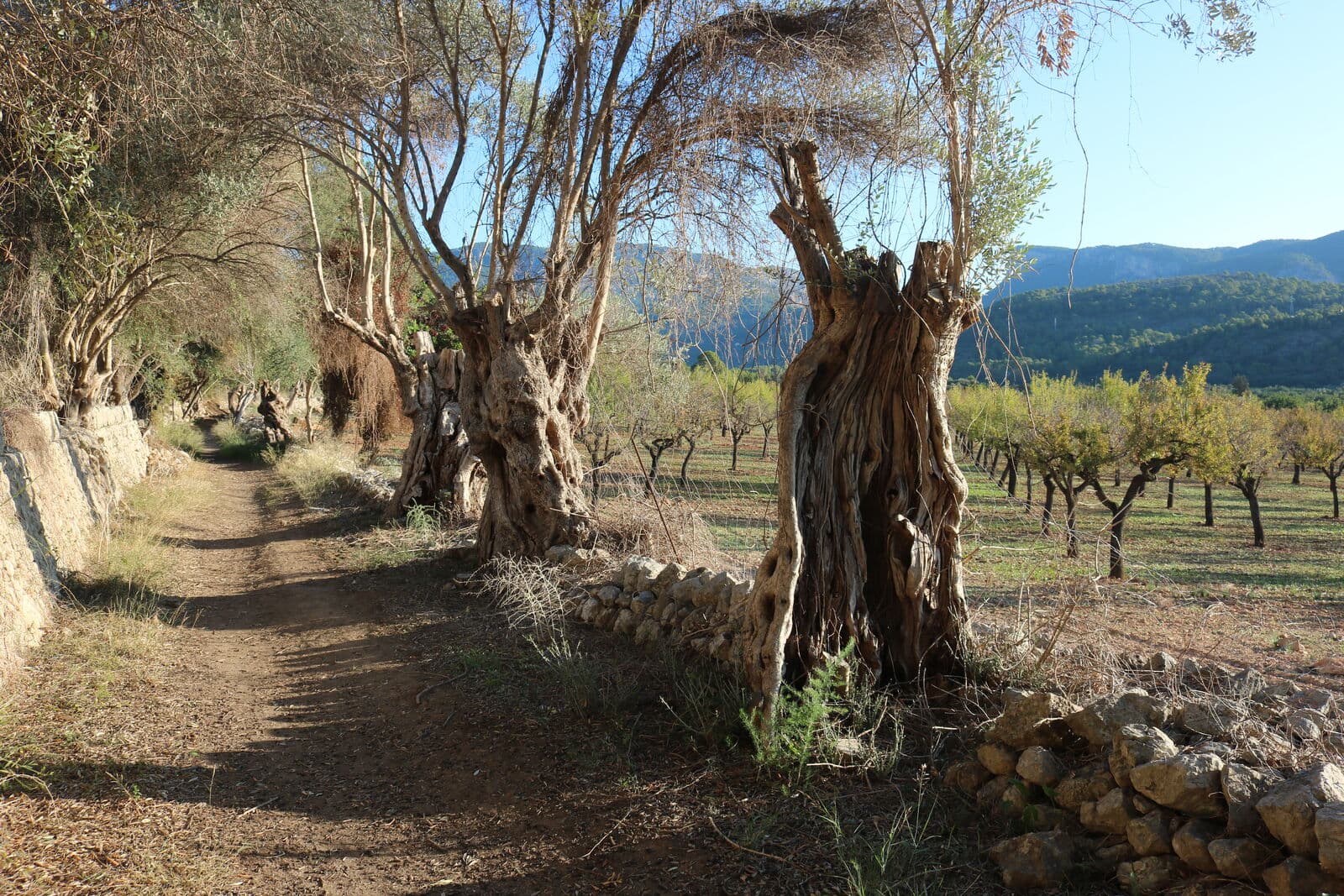
Tourist activity grows quickly. According to Ibestat, the Balearic statistics institute, more than twice as many tourists arrived in Mallorca in April 2025 as in March, and about 1.6 million in May. TIB's summer bus routes also start in spring: in 2026 they began returning at the end of March. At Easter, which falls in March or April depending on the year, Palma holds its processions, with the Holy Thursday (Dijous Sant) procession as one of the main events.
Mallorca in summer
June, July and August are, on average, the warmest, driest and sunniest months. The average maximum in Palma is around 28 °C in June and over 31 °C in July and August, and July is the month with the least rain and the most hours of sunshine of the year.
It's also the busiest time: according to Ibestat, about 2 million tourists arrived in Mallorca in each of July and August 2025, around eight times as many as in January.
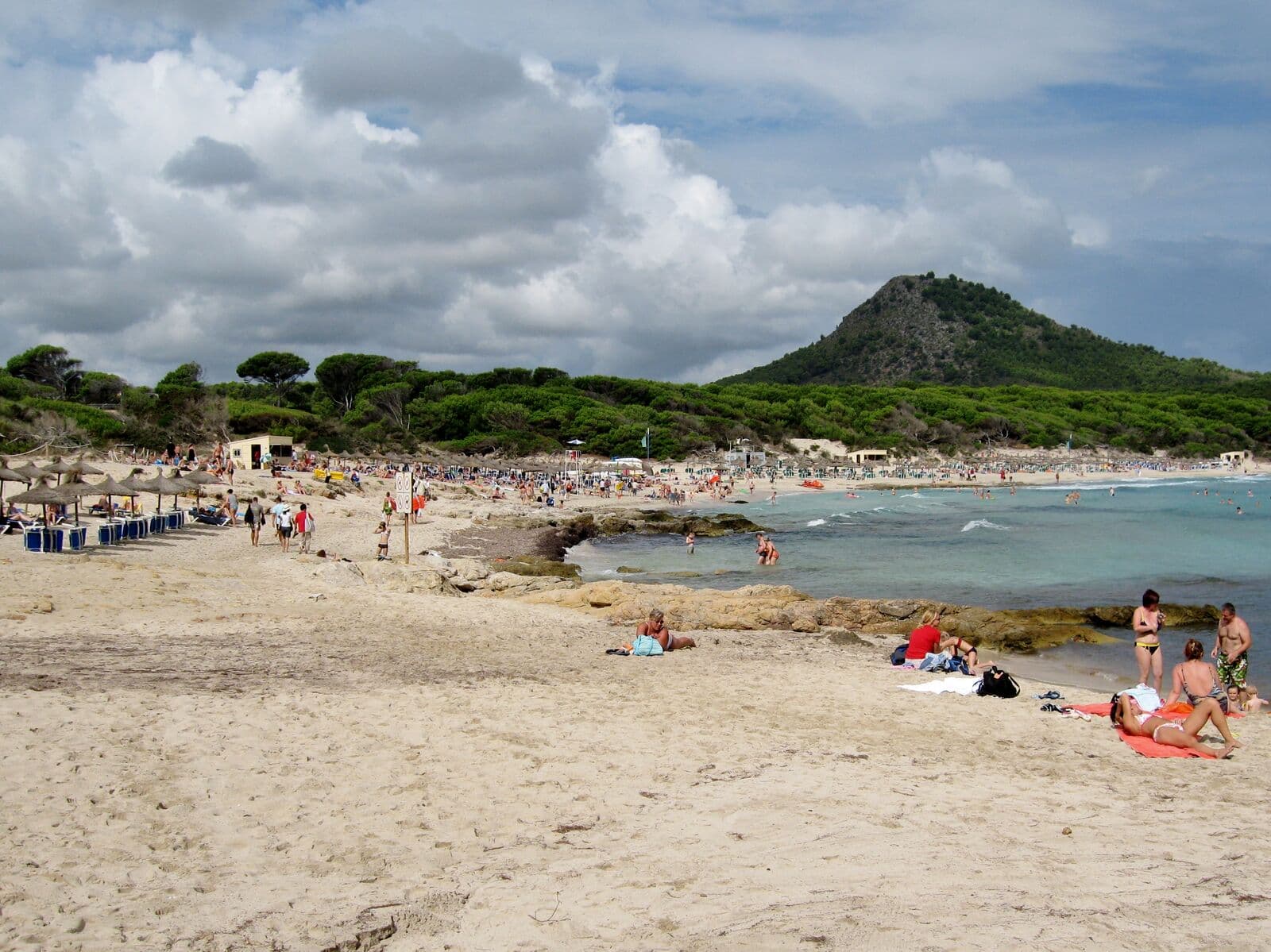
It's the fullest season for beaches and coves, and the liveliest in the resort areas, but also the one with the most pressure: the best-known coves fill up early, parking is hard and some access roads are regulated. In 2026, for example, the DGT (Spain's traffic authority) limits car access to Formentor from 15 May to 18 October. In our guide to the best coves in Mallorca we explain how to reach each one and what to know in summer.
With so much demand, it's worth booking accommodation, a car and excursions well in advance. And in the middle of the day, the heat makes walking and cycling routes hard going.
Mallorca in autumn
September keeps summer temperatures, with an average maximum of almost 28 °C, and October drops to about 24 °C. But autumn is also the wettest season: on average, October is the month with the most rain and September the one with the most days of thunderstorms.
For the beach, September is usually a good option; in October there may still be pleasant days, but it's best not to plan a beach-only trip counting on them. As the heat eases, the hiking and cycling season returns.
Visitor numbers drop from August but remain high: according to Ibestat, about 1.74 million tourists arrived in Mallorca in September 2025 and 1.33 million in October. In November the figure falls sharply. Some seasonal services end in autumn: in 2026, the TIB shuttle to Formentor runs until 15 October.
Mallorca in winter
From November to February, the average maximum in Palma ranges from about 15 to 19 °C, with several days of rain a month, and at the airport the average minimums fall below 5 °C in January and February. December is, on average, the month with the fewest hours of sunshine.
It's the quietest time: according to Ibestat, between about 240,000 and 320,000 tourists a month arrived in Mallorca in January, February, November and December 2025. Mallorca doesn't close, but it changes: Palma is lively all year round, while in the most touristy coastal areas some hotels and other services close out of season and TIB's summer routes don't run. If you travel in winter, our guide on where to stay in Mallorca explains why Palma is the most reliable base.

In return, winter has its own calendar. According to Turespaña, Spain's national tourism board, the almond trees blossom between late December and March, depending on the year, and the Sant Antoni festivities on 16 and 17 January are among the most traditional of the Balearic winter. In Palma, 20 January is Sant Sebastià, the city's patron saint. Turespaña also highlights winter hiking on the GR 221 and GR 222.
The best time for your kind of trip
For beaches and coves
June to September. July and August are the hottest and busiest months; June and September offer beach weather with somewhat less pressure. In high summer, getting up early makes all the difference to finding space at the best-known coves.
To avoid the biggest crowds
Avoid July and August, the months with the most arrivals. According to Ibestat's 2025 data, visitor numbers stay high from April to October and drop sharply from November to March. If you want good weather with fewer people, the edges of the season, such as May or October, are usually a good compromise.
For a tighter budget
There's no guaranteed cheap month: the cost depends on flights, accommodation, area, how far ahead you book and events. As a reference, Spain's National Statistics Institute (INE) publishes the average daily rate of hotels: in 2025, on the island of Mallorca it was clearly lower in January and February than in June and July, and also lower in September and October than in high summer. It's an average of the hotels open each month and doesn't include flights, so take it as a trend, not a price promise.
For hiking
Spring, autumn and clear winter days, when temperatures are moderate. In July and August, with average maximums above 31 °C in Palma, routes in full sun are hard going. In autumn and winter, bear in mind the rain and that it gets dark earlier.
For cycling
The same rule as for walking: the cooler months. Mallorca has hundreds of kilometres of signposted cycling routes, according to Turespaña. If you go in summer, set off early and avoid the middle of the day.
For travelling with children
If you depend on school holidays, July and August are the most practical, but also the busiest: book ahead and choose an area within easy reach of a beach. If you can choose, June and September combine beach weather with less pressure.
For nightlife
The coastal resort areas are at their busiest, nightlife included, in high season, from June to September. Palma has bars and restaurants open all year round. If you want to choose where to go out, see our up-to-date selection of nightclubs in Mallorca, with options in Palma, Magaluf and other areas.
For villages and Palma
Any time works, but outside summer is more comfortable: it's less hot and there are fewer day visitors in villages such as Valldemossa or Deià, which get very busy in high season. Palma works all year and makes a good winter break.

For a road trip around Mallorca
Spring and autumn: mild temperatures and less pressure on access roads and car parks. In summer some access roads are regulated, such as Formentor's, and mountain roads to places such as Sa Calobra can get congested. If you want a complete route, in Mallorca in 7 days we suggest a week with and without a car, and our guide on getting around Mallorca explains how transport changes with the season.
Mallorca month by month
Temperatures are AEMET average maximums at Palma airport (1981–2010); visitor figures come from Ibestat's 2025 data.
- January: an average maximum of about 15 °C. A quiet month, with the Sant Antoni and Sant Sebastià festivities; good for Palma, villages and walking.
- February: about 15 °C. Few visitors and, depending on the year, almond blossom.
- March: about 18 °C. The island starts to liven up; a good month for hiking and cycling.
- April: about 20 °C. The tourist season gets going; a good month for outdoor activities and villages.
- May: about 24 °C and little rain. A good balance for walking, cycling and the first beach days.
- June: about 28 °C and very dry. Beach season, with slightly fewer people than in July and August.
- July: over 31 °C; the driest and sunniest month. Very busy: beaches, coves and a lively atmosphere.
- August: as hot as July and the month with the most tourists in 2025. Book ahead and get up early for the coves.
- September: almost 28 °C, but with more thunderstorms. Still beach weather, with fewer people than in August.
- October: about 24 °C; on average the wettest month. Hiking, villages and the odd beach day if the weather allows.
- November: about 19 °C and wet. Visitor numbers drop sharply; a time for Palma and nature.
- December: about 16 °C and the month with the fewest hours of sunshine. Quiet, for city breaks.
Frequently asked questions
What is the best month to go to Mallorca?
There isn't just one. For the beach with somewhat fewer people, June and September are good candidates; for walking or cycling, spring and autumn; and for Palma without crowds, winter.
When is it cheapest to travel to Mallorca?
It depends mainly on flights and the accommodation you choose. According to the INE, in 2025 the average hotel rate on the island was lower in winter than in high summer, but it's an average and doesn't guarantee the price of your trip.
Can you go to the beach in October?
There may be good beach days, but on average October is the wettest month of the year. Don't plan a beach-only trip counting on it.
Is Mallorca worth visiting in winter?
Yes, if you're after Palma, villages, nature and peace and quiet. It's not beach season, and in the most touristy coastal areas some of the offer closes, so it's best to stay in Palma or in a village that's lively all year round.
When are there fewest tourists in Mallorca?
From November to March. According to Ibestat, in 2025 the months with the fewest arrivals were January and December, with about 240,000 tourists each, compared with over 2 million in August.
Related guides
Travel
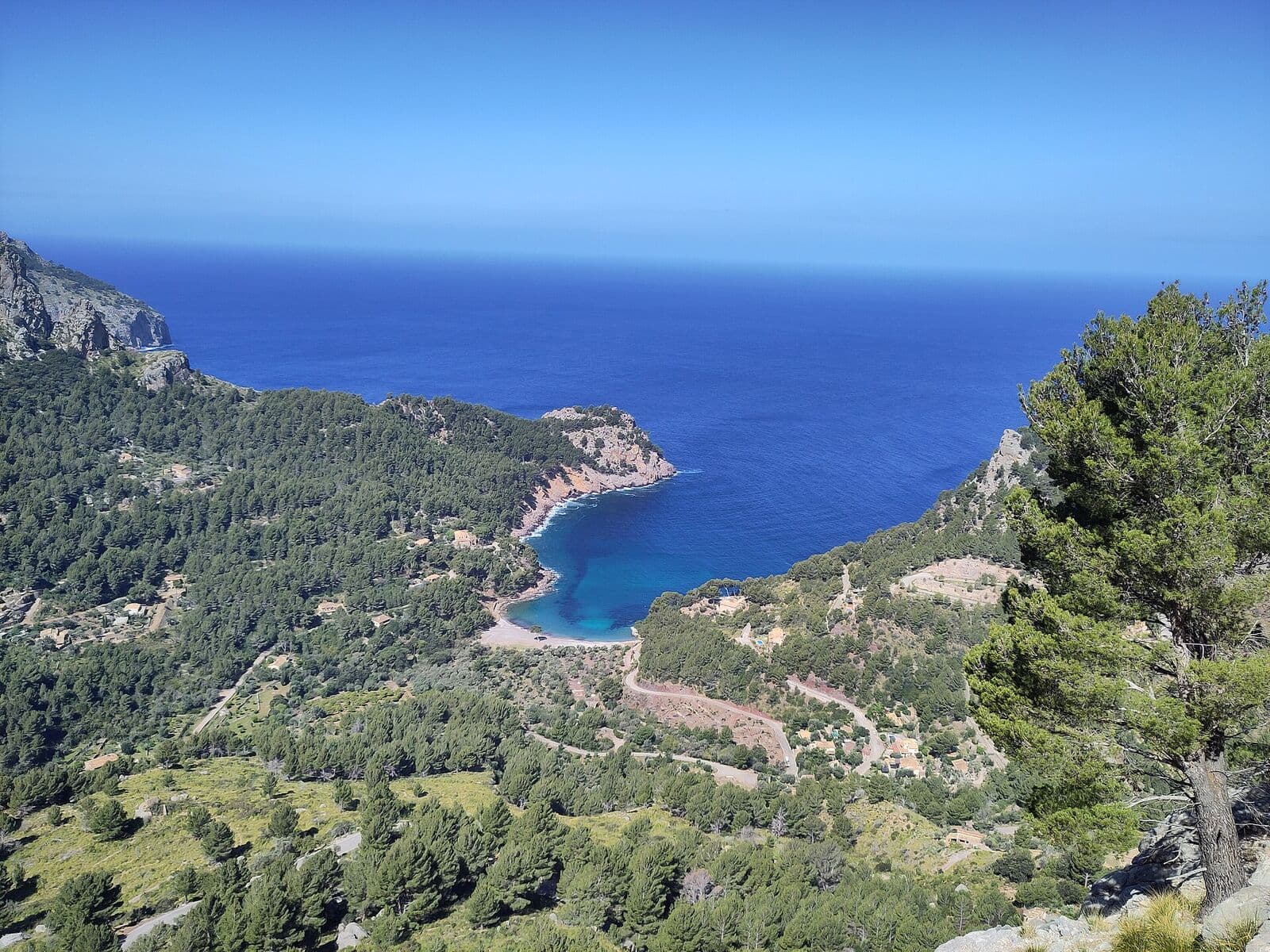
Best coves in Mallorca
How to choose a cove in Mallorca for your plans (families, snorkelling, scenery, easy access or peace and quiet) and what to know about access, parking and facilities before you go.
11 min read
Travel
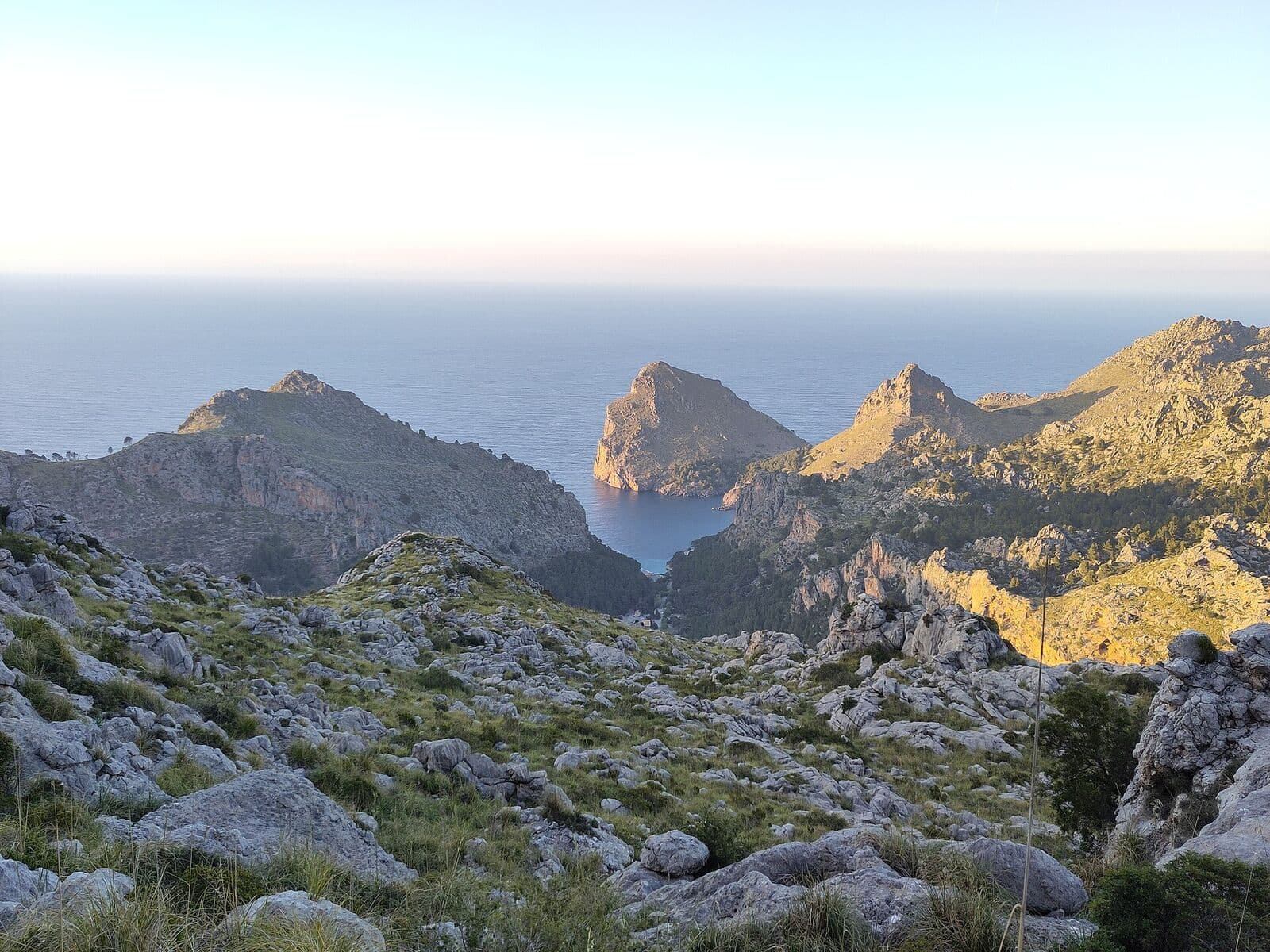
Mallorca in 7 days: a complete day-by-day itinerary
A balanced plan for a first week in Mallorca: Palma, the south-east coves, the Serra de Tramuntana, Sa Calobra, the north, Formentor and a flexible day, with options with and without a car.
13 min read

Travel
Getting around Mallorca: car, bus, train and car-free options
Which transport suits your Mallorca trip: when hiring a car is worth it, what works well by bus and train, how to leave the airport and which areas are harder without a car.
11 min read