
Best coves in Mallorca
How to choose a cove in Mallorca for your plans (families, snorkelling, scenery, easy access or peace and quiet) and what to know about access, parking and facilities before you go.
By TopicWeekPublished 11 min read
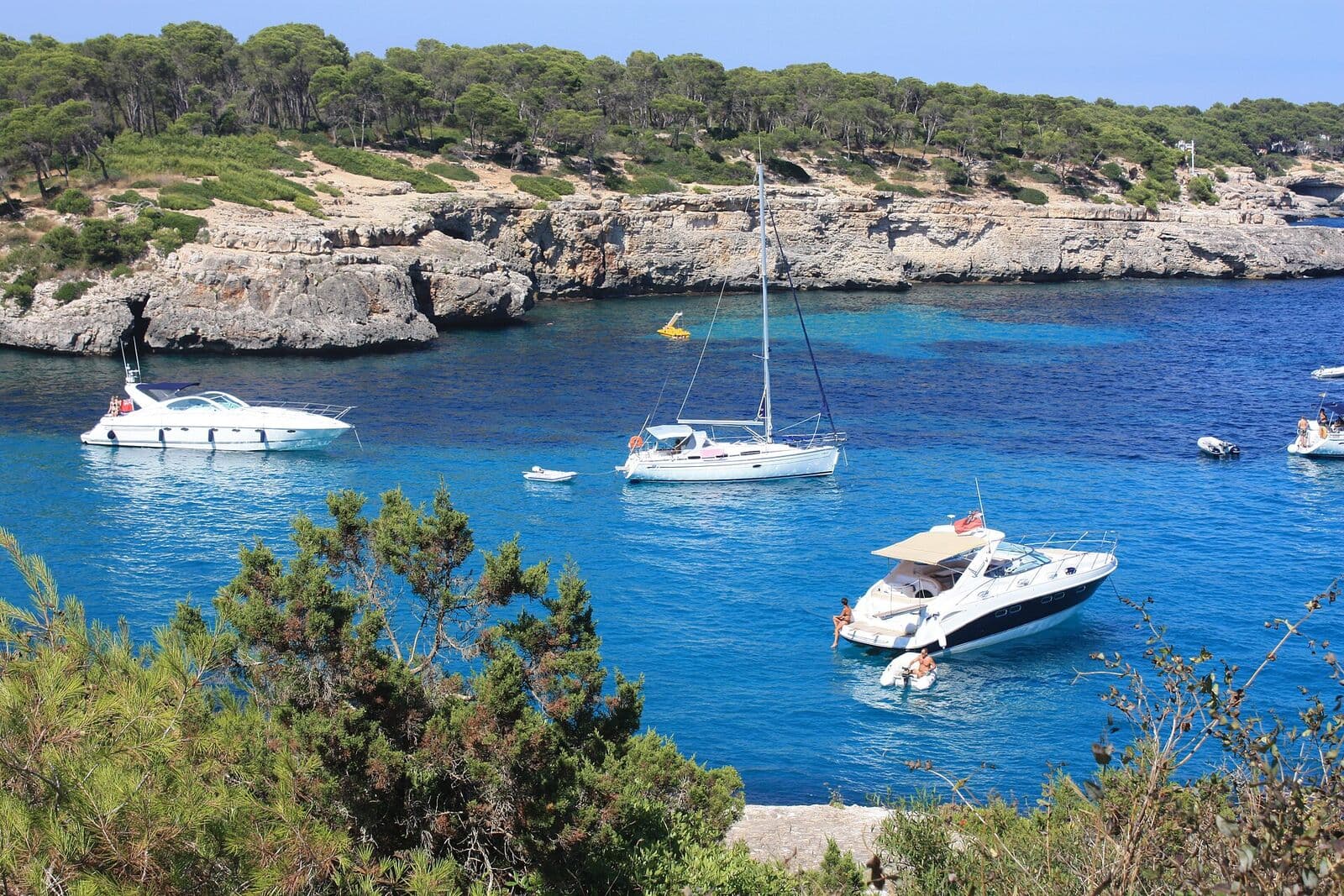
In this article
Mallorca has dozens of coves, and almost all of them appear on some list of "the most beautiful". Choosing well depends less on rankings than on your plans: a day with small children is not the same as looking for a good snorkelling spot, a coastal walk or a way to avoid the August crowds.
This guide brings together very different coves, from the calm waters of the south-east to the mountain coast of the Serra de Tramuntana, and explains who each one suits, how to get there and what to know before you go. It isn't a definitive ranking: the best cove in Mallorca is the one that fits what you want that day.
Which cove in Mallorca to choose for your plans
A quick summary to get your bearings. You'll find the details of each cove further down.
- With children: s'Amarador and Cala Mondragó, with calm water and designated car parks inside a natural park; Cala Llombards, well sheltered from the open sea; and Cala Agulla, a wide beach with plenty of facilities.
- Snorkelling and clear water: Caló des Moro, with a sandy and rocky bottom; Cala Pi, a sheltered bay suitable for diving; and the rocky coves of the Tramuntana when the sea is calm.
- Scenery: Sa Calobra and the mouth of the Torrent de Pareis, Cala Tuent among mountains and pines, and Caló des Moro, narrow and hemmed in by rock.
- Easy access: Cala Agulla, Cala Mesquida, s'Amarador and Cala Llombards, all easy to reach on foot from areas you can drive to.
- Peace and nature: Es Carbó, which you can only reach on foot or by boat, and Cala Tuent, in a barely developed setting.
- Walking: the coastal path to Es Carbó, the walk to Caló des Moro and, only with experience and equipment, the descent of the Torrent de Pareis.
South-east: calm water among pine woods
The municipality of Santanyí has some of the most photographed coves on the island: narrow inlets of pale rock, pine woods reaching the water's edge and shallow water. It's also the area where tourist pressure is most noticeable in summer, with regulated parking and restricted access roads.
Cala Mondragó and s'Amarador
Both are part of Mondragó Natural Park, declared in 1992, which protects around 766 hectares of coast, dunes, streams and farmland in Santanyí. There are two beach areas inside the park: ses Fonts de n'Alis, the cove usually known as Cala Mondragó, and s'Amarador, a slightly larger beach. A paved path links the two.
S'Amarador is a white-sand beach with calm water, pine trees down to the shore, and umbrella and sun lounger rental, according to the official Turespaña listing. Its calm water and easy access on foot make it one of the most convenient options in the south-east for families. The rocky sides of both coves, with clear water, are inviting for a swim with a mask.
What to know before you go:
- According to the Balearic government, the park has two car parks, at s'Amarador and at ses Fonts de n'Alis, which are paid in summer and free outside the season. Check the conditions when you arrive.
- The information centre is next to the ses Fonts de n'Alis car park; according to official information, it opens every day from 9 a.m. to 4 p.m.
- Park rules: dogs must be kept on a lead and are not allowed on the beaches; fires and drones are not permitted, and you must stay on the marked paths and park only in designated areas.
- It gets busy in season, so it's worth arriving early.
Caló des Moro
It's probably Mallorca's best-known cove on social media: a narrow inlet between rocks, with a small strip of white sand and gravel and very clear water over a sandy and rocky bottom. That fame has also made it a textbook case of overcrowding: Santanyí council commissioned the University of the Balearic Islands to study its carrying capacity during summer 2025.
The easiest way to get there is to park in the area at the entrance to Cala Llombards and walk about a kilometre and a half. In previous years, the council has restricted non-resident traffic on the streets closest to the cove, and for summer 2026 it announced the reopening of park-and-walk car parks in Cala Llombards and signs showing real-time occupancy: follow the signs you find when you arrive. The cove is surrounded by private land, and the closure of some paths has led to disputes between the landowner and local residents.
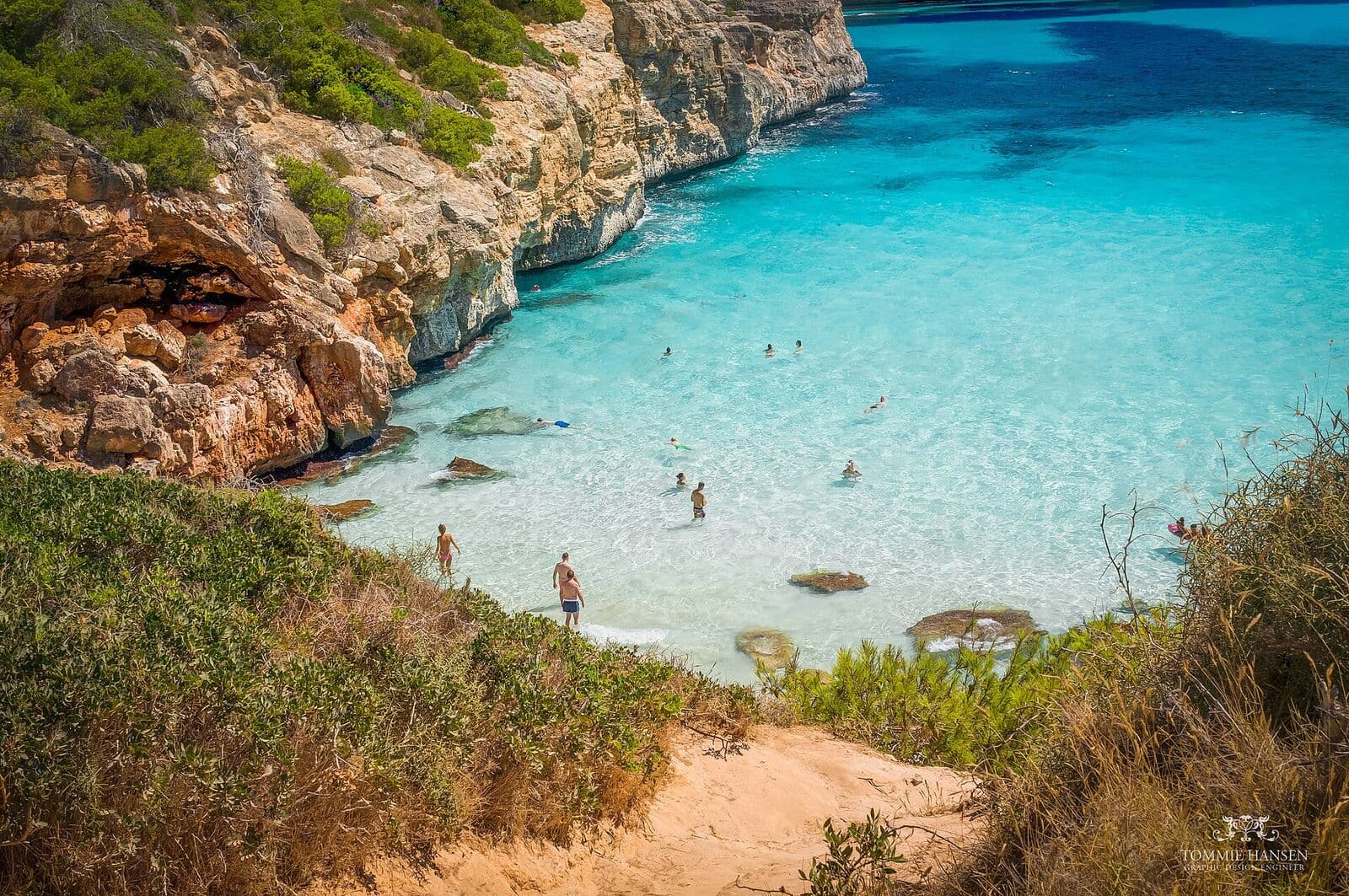
Who it suits: people looking for scenery and clear water who are willing to walk and get up early. It isn't the best choice with small children or in the middle of August.
Cala Llombards
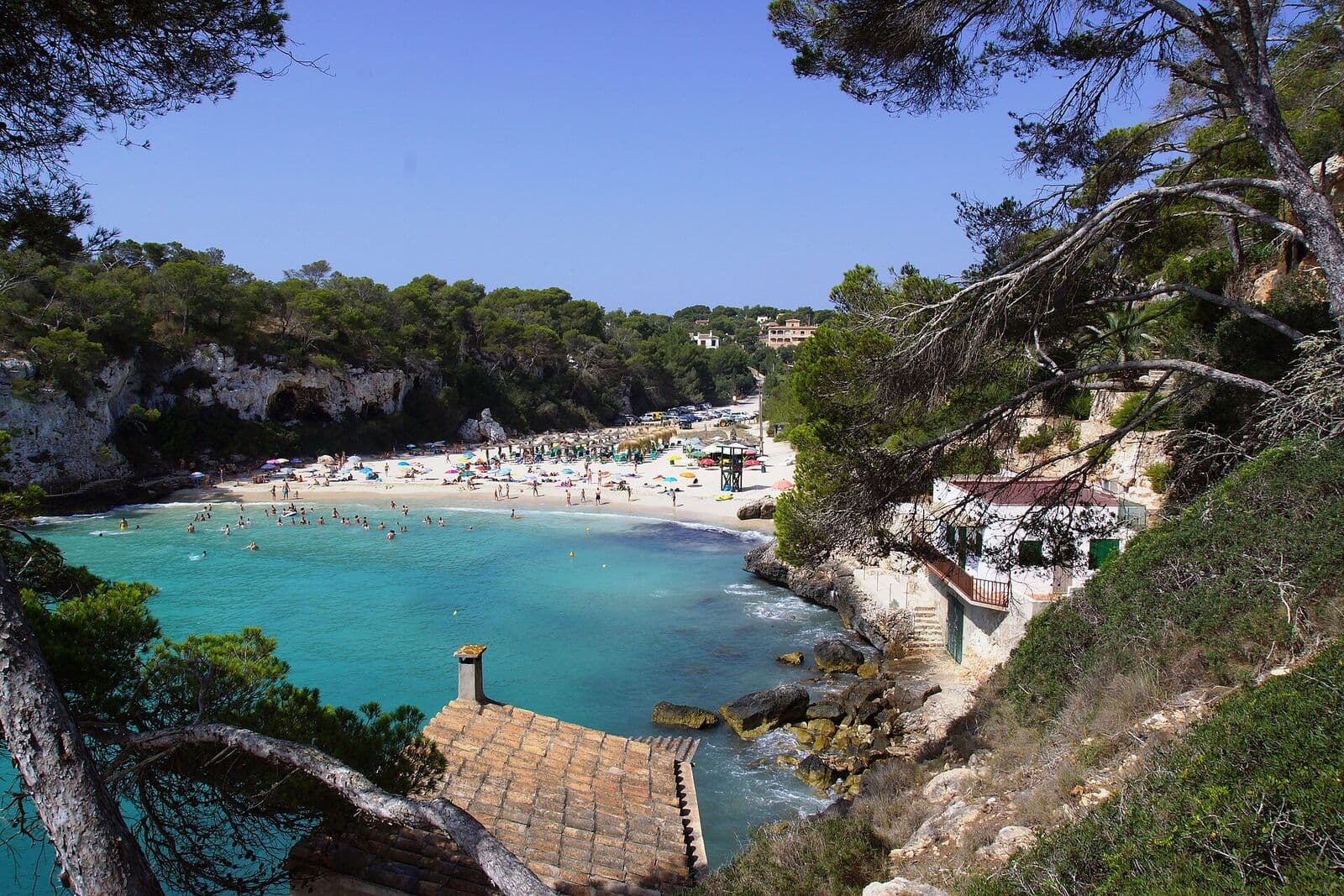
Close to Caló des Moro, Cala Llombards is a cove of fine white sand that reaches deep inland, which leaves it well sheltered from the open sea. According to the official listing, it has umbrella and sun lounger rental, a cleaning service and easy access on foot from the MA-6100 road.
It's a good alternative for families in this area: the water is usually calm and it takes far less effort to reach than Caló des Moro. It also fills up in high season, so the advice to arrive early still applies.
North-east: open beaches in Capdepera
At the north-eastern tip of the island, near Cala Ratjada, the beaches are wider and open to the sea. They offer more space and facilities, but also bigger waves when the sea is rough.
Cala Agulla
Cala Agulla is a beach of about 520 metres of white sand, backed by pine woods and looking out to the open sea. According to the official Turespaña listing, it has umbrella, sun lounger and water-sports rental, toilets, showers, foot showers and a cleaning service, which makes it a convenient option for a day out with children.
Car access has changed. The old car park next to the beach was dismantled in February 2025 and, since May 2026, a barrier stops cars from entering the beach area, which lies inside the natural park; the local police fine illegal parking. As an alternative, Capdepera council opened a car park at Clot de sa Grava, and in June 2026 the Balearic government authorised the use of the land for a new car park with around 450 spaces, which the council expected to open that same summer. Before driving there, check which car parks are open.
Cala Mesquida
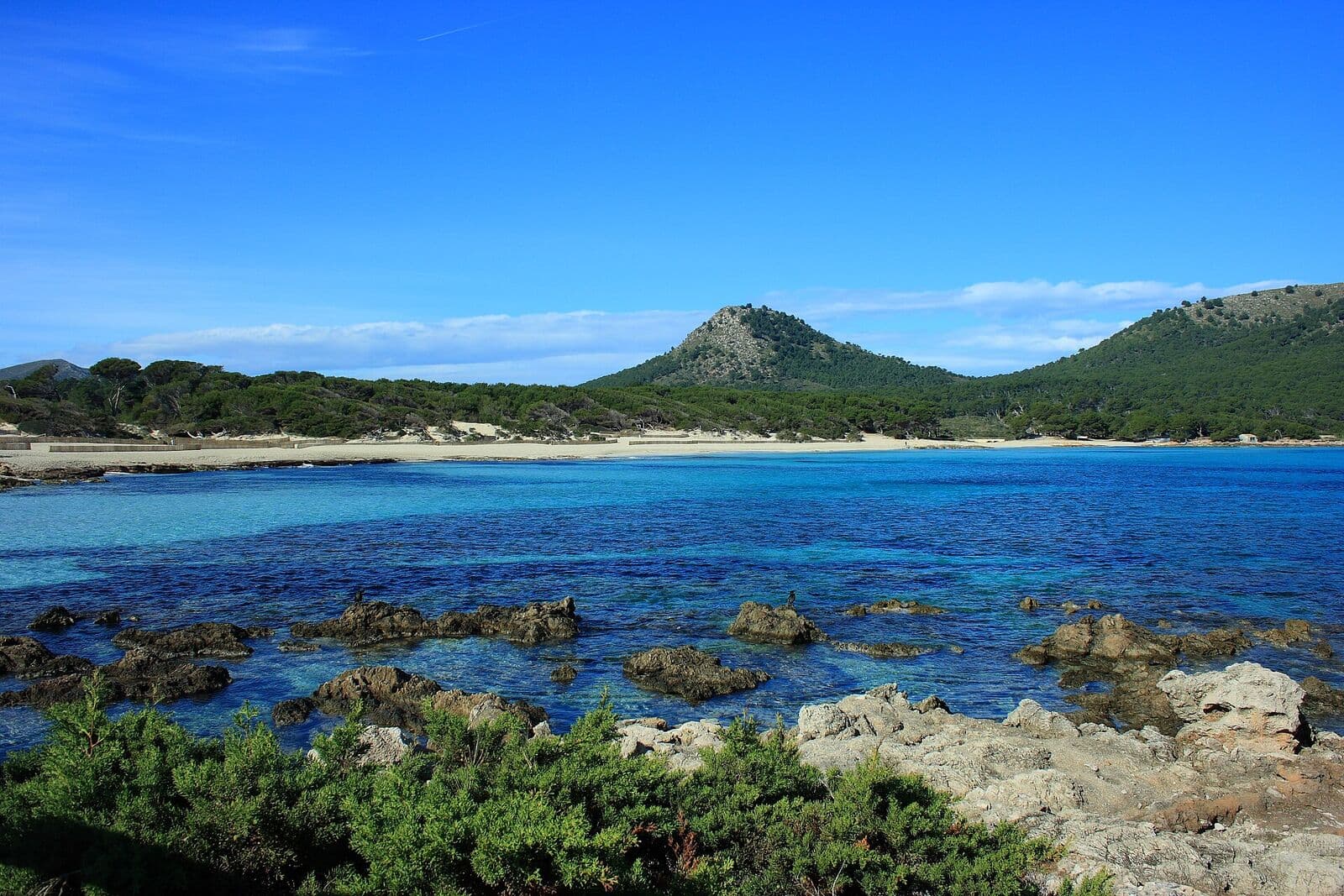
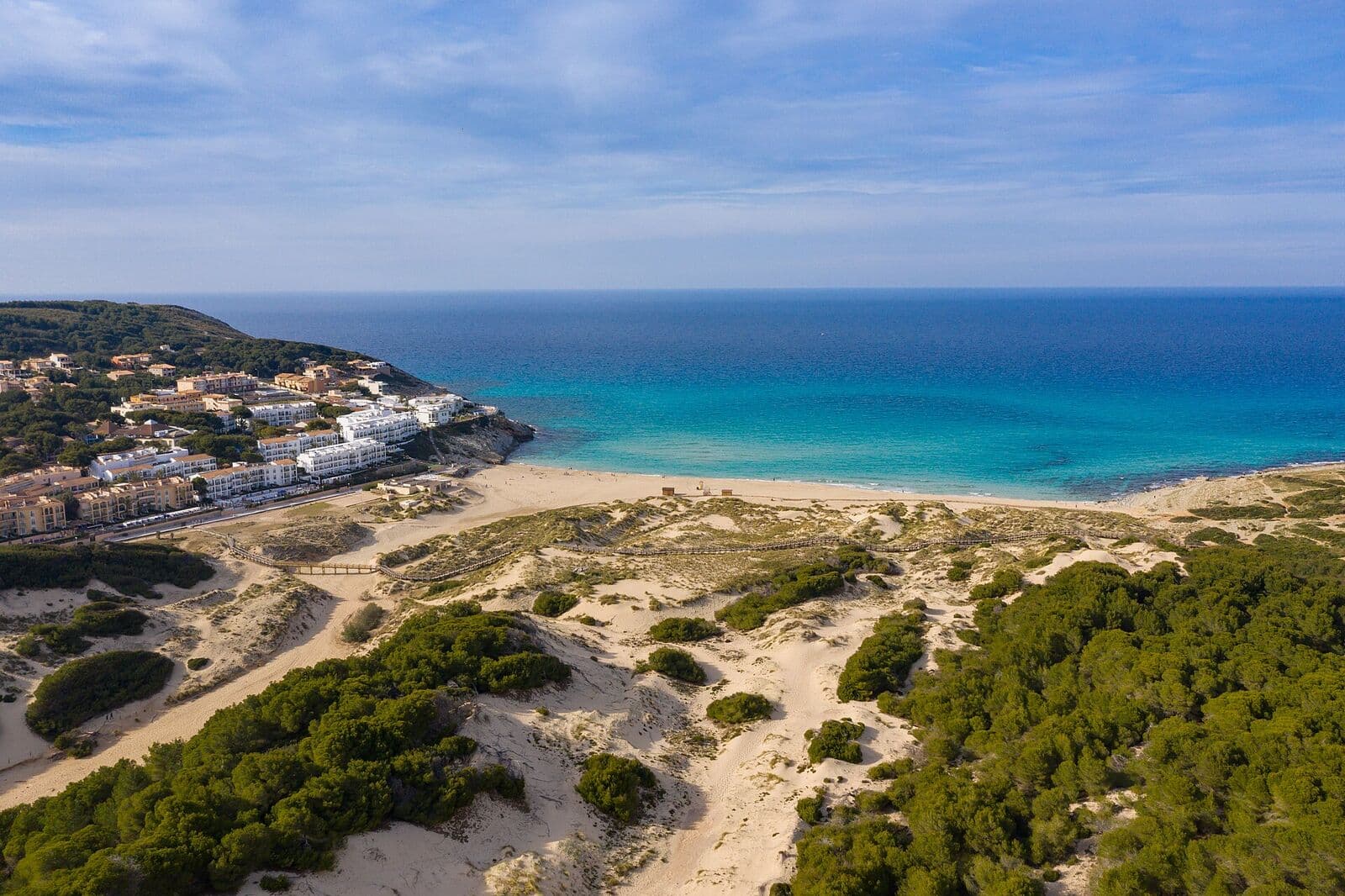
North of Cala Agulla, Cala Mesquida is an open white-sand beach of about 300 metres, with dunes behind it and a hill topped by a watchtower closing off one end. It has umbrella, sun lounger and water-sports rental.
The official listing describes it as having strong waves, which is common on this open coast. It's a beach for enjoying the scenery and a wide stretch of sand, but when the sea is rough it isn't the best choice for small children. Use the boardwalks and keep off the dunes.
South: Cala Pi and Es Carbó
Cala Pi
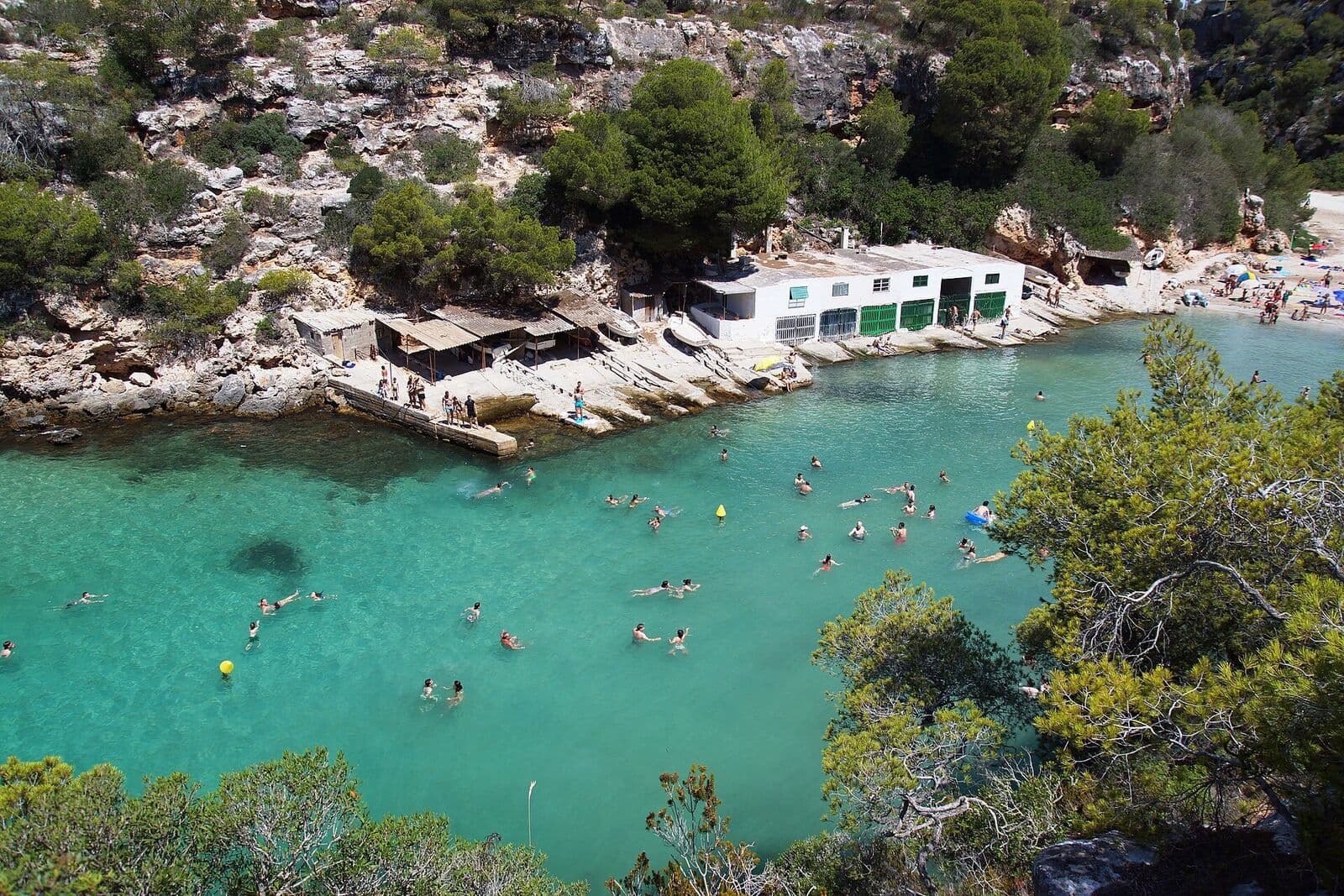
In the municipality of Llucmajor, Cala Pi sits at the end of a long, narrow inlet between cliffs. The beach is small, with white sand and calm water, and the sheltered bay attracts many moored boats. The official listing notes that it's suitable for diving and mentions toilets and umbrella and sun lounger rental.
Several guides describe a long staircase down to the sand, which is worth bearing in mind if you have a pushchair or anyone with reduced mobility. When the sea is calm, it's a good spot for swimming with a mask.
Es Carbó
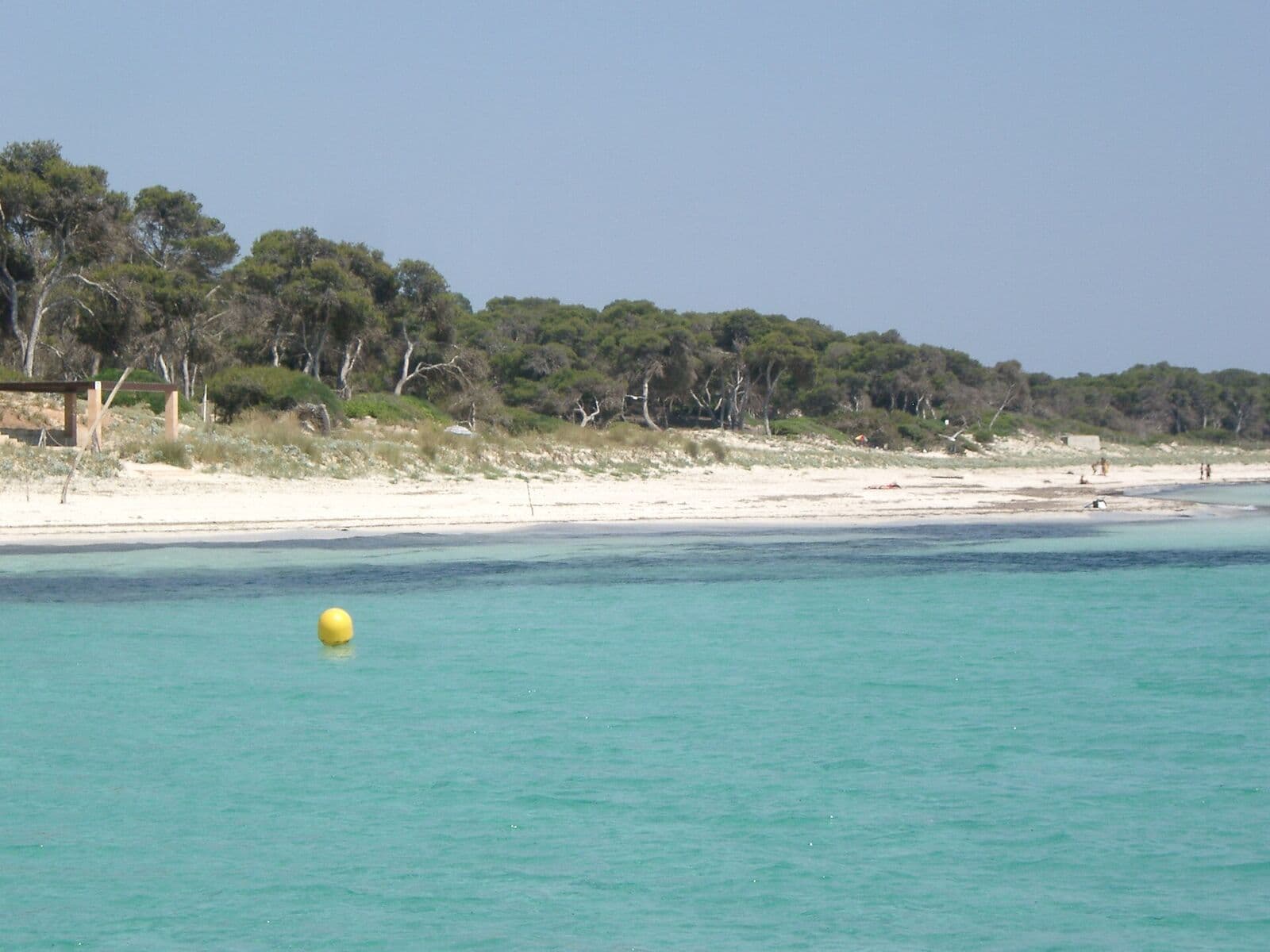
Es Carbó, in Ses Salines, is a long white-sand beach of around one and a half kilometres, facing the islet of na Moltona with views towards Cabrera. The vegetation reaches the sand and the surroundings are almost entirely undeveloped.
You can't drive to the beach: it's reached on foot along the coastal path from Colònia de Sant Jordi or from the Ses Salines lighthouse, or by boat. The only facilities in the official listing are bins, so bring water, food and shade. It's a good option if you want a walk by the sea and a quieter atmosphere than at coves with car parks.
Tramuntana: mountain coves
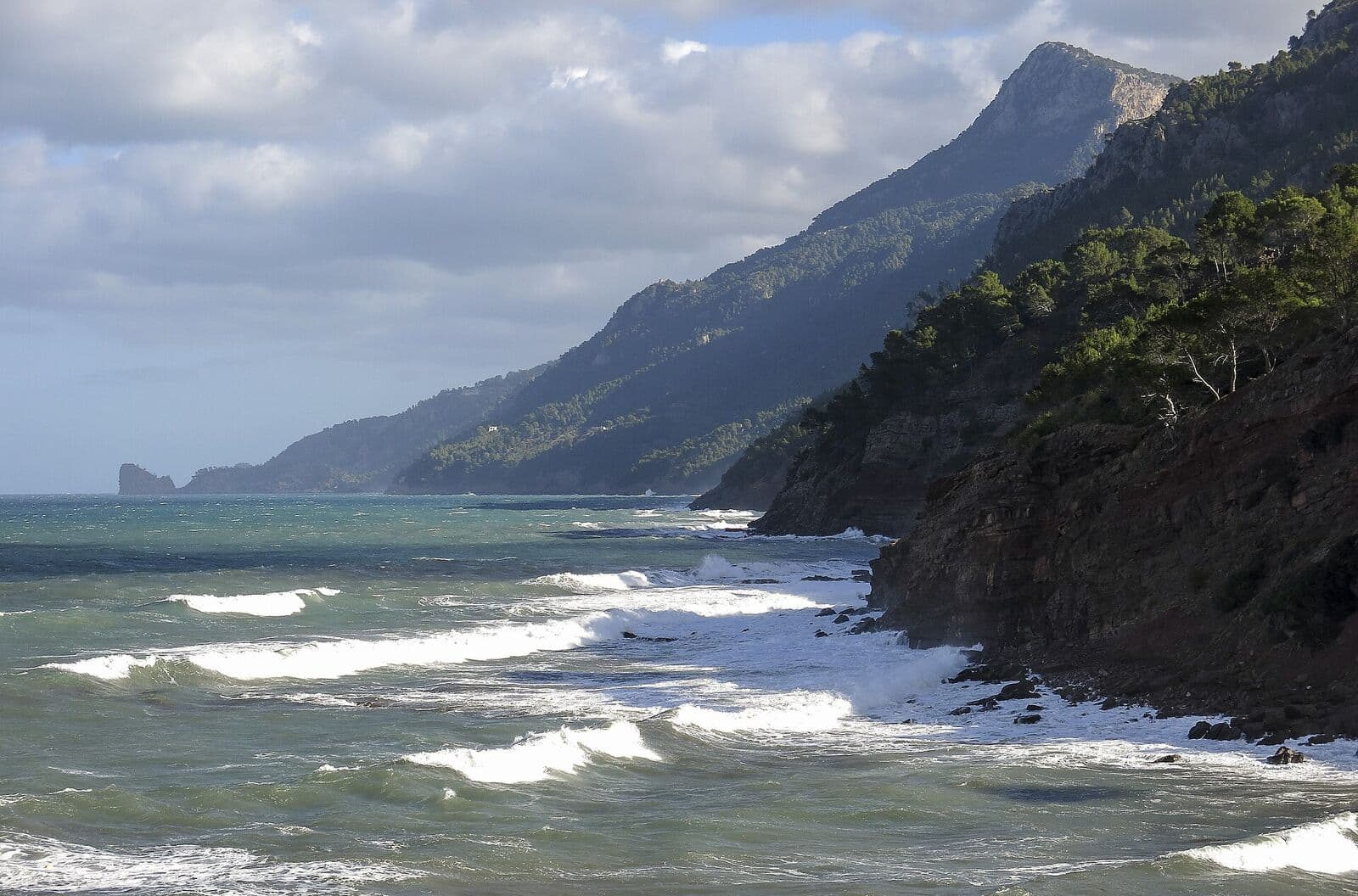
On the north-west coast, in the Serra de Tramuntana, the coves are made of pebbles or gravel, with deep water and mountain scenery. You reach them on winding roads, so the drive is part of the trip and it's worth allowing plenty of time.
Sa Calobra and the Torrent de Pareis
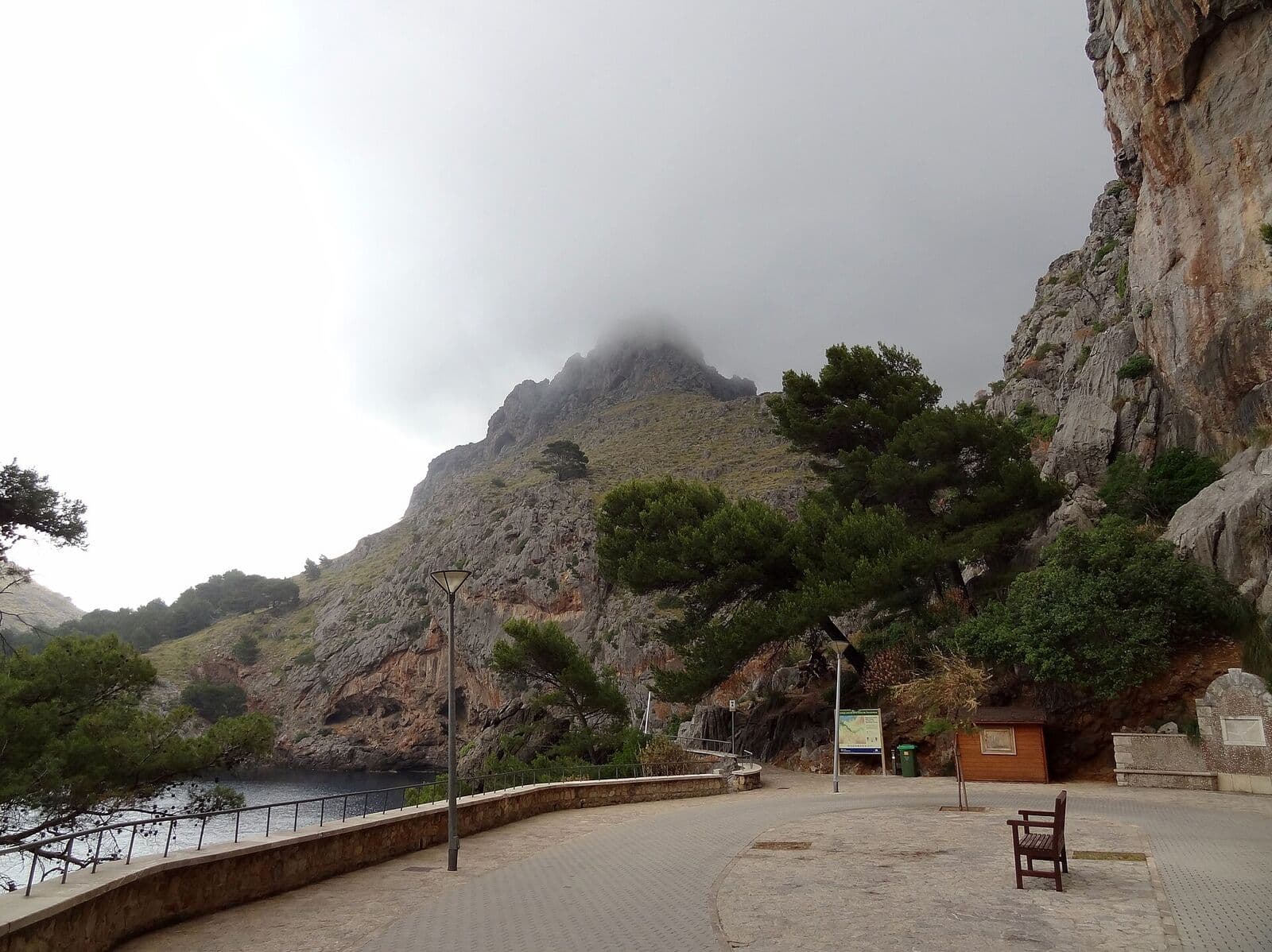
Sa Calobra, in Escorca, is one of the best-known landscapes on the island. From the small cove by the jetty, a footpath along the cliffs that passes through a tunnel leads to the mouth of the Torrent de Pareis, a beach of sand, gravel and pebbles wedged between sheer rock walls.
The Torrent de Pareis has been a Natural Monument since 2003. Walking the gorge is a technical and demanding route: the Balearic government advises checking the AEMET forecast and not setting off if there are yellow, orange or red warnings for rain or storms, because of the risk of flash floods, and carrying mountain footwear, enough water and rope for some sections. It's not an excursion to improvise.
Getting there: by car on the Ma-2141, which leaves the Ma-10 and descends through very tight bends. At the start of the 2026 season, the local press again reported traffic jams, especially between Coll dels Reis and Sa Calobra, where coaches and hire cars struggle to pass each other. There are also boat trips from Port de Sóller, some of which stop at Cala Tuent.
Cala Tuent
Very close to Sa Calobra, also in Escorca, Cala Tuent is a cove of gravel and small pebbles, about 180 metres long, surrounded by a pine-covered mountain and with a small wooden jetty. You reach it by car from the same Ma-2141 road, and the surroundings are barely developed.
It's a good choice if you like the scenery of Sa Calobra but prefer a calmer atmosphere. The official listing doesn't mention any facilities on the beach, so bring what you need, and bear in mind that there may be moderate waves.
Cala Deià
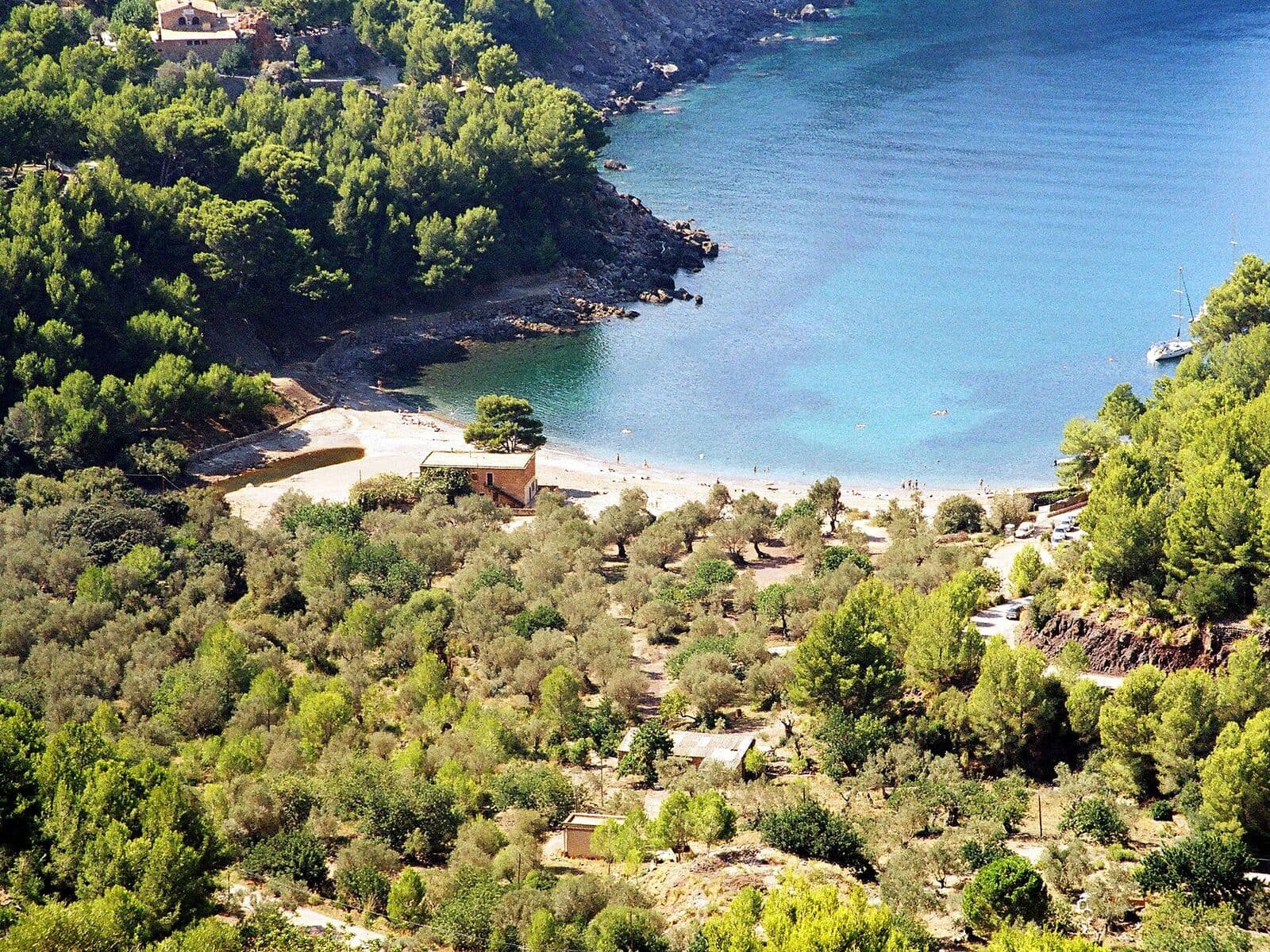
Cala Deià is a small cove of pebbles and rock below the cliffs of Deià. You can walk down from the village. Car access is limited: in 2024, the council operated an automatic barrier at the turn-off to the cove from the Deià–Sóller road, which closed when the car park was full. Check the current situation before driving there.
If you can't get in, don't wait on the road: the council itself has warned about the safety problems caused by cars stopping there. When the sea is calm, the clear water and rocks make it a good place to swim with a mask. Bring shoes for the stones.
Port des Canonge
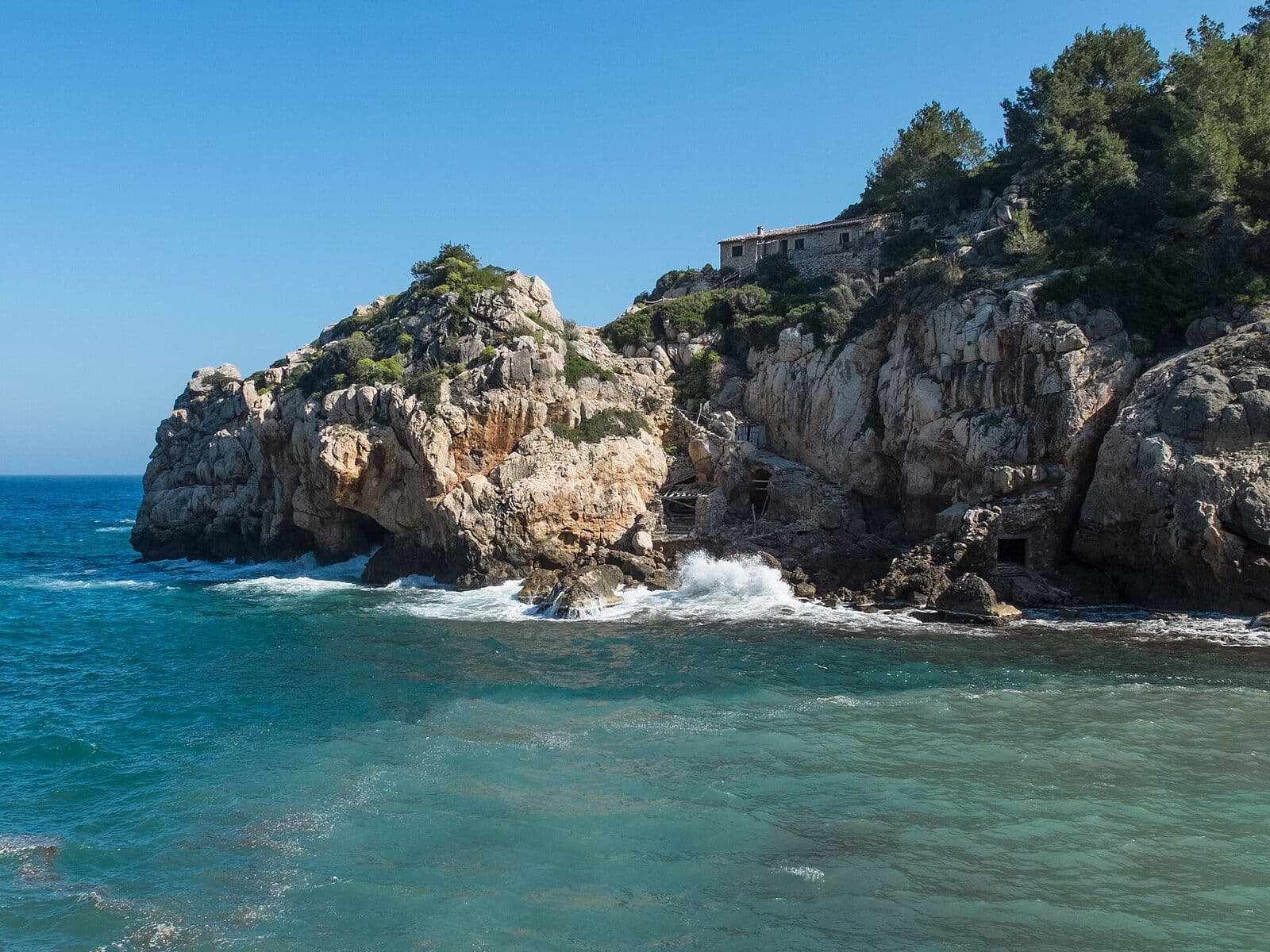
In Banyalbufar, Port des Canonge is a small fishing harbour with a pebble beach and boathouses. It's more of a place for a quiet swim or a break on a coastal walk than for a full beach day. The last stretch of road is very winding.
Practical tips for your beach day
- Start early in summer: at many coves, parking is limited, paid or regulated in season, and it fills up fast.
- Public transport: check current lines and timetables on the TIB website; they change during the year.
- Footwear: at the pebble and rock coves of the Tramuntana, water shoes make swimming much more comfortable.
- Water, food and shade: essential at coves without facilities such as Es Carbó, Caló des Moro or Cala Tuent.
- Sea conditions: on open beaches like Cala Mesquida or Cala Agulla the waves can be strong; follow the flags and any lifeguards' instructions.
How to look after the coves
Many of these coves are in protected areas or under huge pressure in summer. A few simple habits help to preserve them:
- Park only in designated areas and don't block paths or residents' access.
- Stay on the marked paths and keep off the dunes.
- Take your rubbish with you, cigarette ends included.
- In natural areas such as Mondragó, fires and drones are not allowed.
- If a cove is full, choose another: there's almost always an alternative nearby.
Frequently asked questions
What's the best cove in Mallorca for children?
S'Amarador, Cala Mondragó, Cala Llombards and Cala Agulla combine usually calm water, easy access and, in several cases, facilities. On days with waves, the coves of the south-east tend to be more sheltered than the open beaches of the north-east.
Which coves in Mallorca are good for snorkelling?
Rocky coves with clear water, such as Caló des Moro, Cala Pi or those of the Tramuntana, are the most interesting with a mask and snorkel, always when the sea is calm. Stay close to the shore and watch out for boats.
When is the best time to visit Mallorca's coves?
July and August are the busiest months. Outside those weeks, or first thing in the morning in summer, it's easier to find space and parking. If you haven't picked your dates yet, our guide to the best time to visit Mallorca compares the weather and visitor numbers month by month.
Can you reach the coves by public transport?
Some areas have bus services, especially in season, but they vary from year to year. Check the current lines with TIB before planning your day. If you're deciding between a car and public transport, see our guide to getting around Mallorca.
Are there quiet coves in Mallorca?
Few famous coves are quiet in August. Those that require a walk, such as Es Carbó, or Tramuntana coves away from the main access roads tend to be calmer, especially early in the day or outside the season.
More travel guides
If you're planning your trip, you'll find more ideas in our travel guides. And if you have a week, our 7-day Mallorca itinerary combines several of these coves with Palma, the Tramuntana and the north.
Related guides

Travel
Where to stay in Mallorca: the best areas for your trip
Which part of Mallorca to choose as your base for the kind of trip you're planning: Palma, the north, the east coast, the south-west, the Serra de Tramuntana or the south, with pros, cons, transport and whether you need a car.
14 min read
Travel
Mallorca in 7 days: a complete day-by-day itinerary
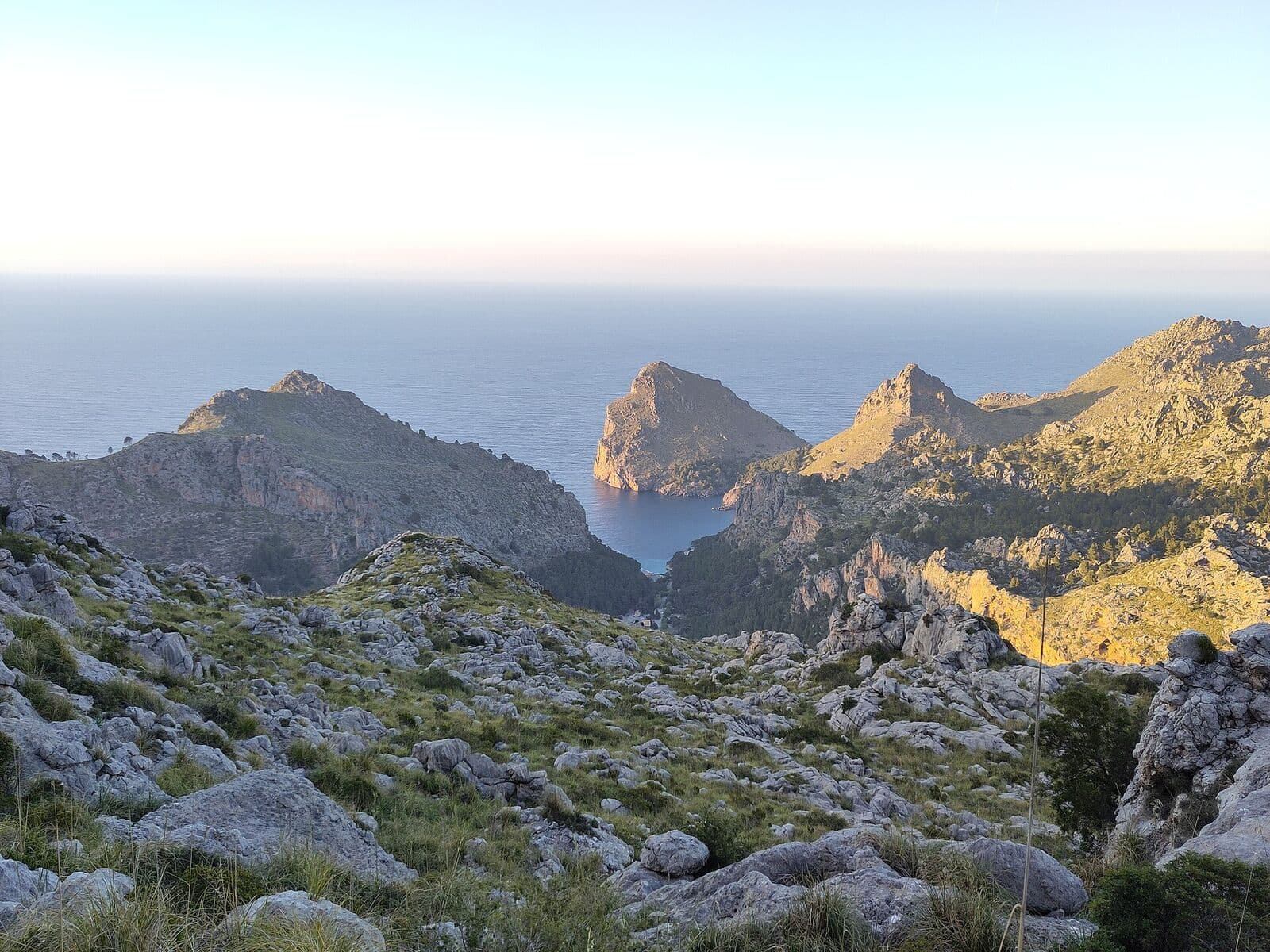
A balanced plan for a first week in Mallorca: Palma, the south-east coves, the Serra de Tramuntana, Sa Calobra, the north, Formentor and a flexible day, with options with and without a car.
13 min read

Travel
Japan in 10 days: a first-trip itinerary
A realistic 10-day Japan itinerary for a first visit, linking Tokyo, Kyoto and Osaka with transport, budget, entry and booking advice.
22 min read