
Mallorca in 7 days: a complete day-by-day itinerary
A balanced plan for a first week in Mallorca: Palma, the south-east coves, the Serra de Tramuntana, Sa Calobra, the north, Formentor and a flexible day, with options with and without a car.
By TopicWeekPublished 13 min read

In this article
A week is a good amount of time for a first visit to Mallorca, but it isn't enough to see everything. The island combines a capital with plenty to see, coves with clear water, a mountain range listed as World Heritage, long bays in the north and inland villages. Trying to cover it all in seven days usually means hours in the car and little time to enjoy each place.
This itinerary is a balanced plan for a first visit, not the only possible route. It groups the days by area so you don't cross the island several times, keeps two or three main stops a day and leaves time for the beach and for resting. Further down you'll find how to adapt it if you're travelling without a car, with children, if you'd rather walk or if you want a slower pace.
Mallorca in 7 days: the route at a glance
The route starts in Palma, heads to the south-east and the Serra de Tramuntana and ends in the north of the island. That way each day stays within a single area:
- Day 1 — Palma: the cathedral, the old town and Bellver Castle.
- Day 2 — South-east: the coves of Mondragó Natural Park and the area around Santanyí.
- Day 3 — Serra de Tramuntana: Valldemossa, Deià, Sóller and Port de Sóller.
- Day 4 — From the mountains to the north: Sa Calobra and the Lluc sanctuary, changing accommodation.
- Day 5 — Alcúdia: the walled old town, the Roman city of Pollentia and the beach or s'Albufera.
- Day 6 — Formentor and Pollença: viewpoints, a beach among pine trees and Pollença's old town.
- Day 7 — Flexible day: the north-east (Capdepera and its coves), a beach day or an easy return towards Palma and the airport.
In geographical terms: Palma is on the bay in the south, the Mondragó coves are in the south-east, Valldemossa, Deià and Sóller are on the western side of the Tramuntana, Sa Calobra and Lluc are in the heart of the mountains, and Alcúdia, Pollença and Formentor are in the north. The order follows that path from south to north along the west of the island, with the north-east as an option for the last day.
Before you start: car, accommodation and pace
Three decisions shape the rest of the trip.
With or without a car
The itinerary is designed to be done by car, which is what lets you link coves, viewpoints and villages freely. Even so, Palma, the Sóller area and the northern bays can be enjoyed by public transport. Days 2 and 4 are the ones that change most without a car; we explain them in the section on travelling without a car.
Where to stay
The option that needs the least driving is to split the week between two bases: the first three nights in (or near) Palma and the next four in the north, around Alcúdia or Port de Pollença. A single base also works, but some days get longer: from Palma, Formentor is a long way; from the north, the south-east is. Our guide on where to stay in Mallorca compares each area as a base.
The pace
The plan has two or three stops a day. It may look like little on paper, but in Mallorca mountain roads, full car parks in summer and time in the water fill the days by themselves. If you feel like more beach and fewer visits on a given day, drop a stop rather than adding one.
Day 1 — Palma: the cathedral, the old town and Bellver
You don't need a car on the first day. Palma lets you start the trip without rushing while you get your bearings.
- The cathedral and the old town. La Seu, by the sea, is the city's best-known landmark. From there you can explore the old town on foot through narrow streets, courtyards and squares.
- Bellver Castle. According to Palma's official tourism website, it's the only Gothic-style castle with a circular floor plan in Spain; it houses the Museum of the City's History and offers one of the best views of the bay.
- The seafront. At the end of the day, the seafront and the cycle lane along the bay, which according to the official Balearic tourism website is used all year round, are a good way to wind down.

If you're hiring a car, you don't need it yet: in central Palma, parking is harder than getting around on foot. Picking it up at the end of the first day or on the morning of the second saves a day of hire and parking.
Day 2 — South-east: the Mondragó coves and Santanyí
The second day heads to the south-east, the area of pale-sand coves with pine trees down to the shore. It's a beach day, so it's best to start early and not string together too many coves.
- Mondragó Natural Park. Protected since 1992, it includes the cove known as Cala Mondragó and s'Amarador beach, linked by a path. According to the Balearic government, the park has two car parks, paid in summer, and an information centre.
- Santanyí. The village, in the same municipality as the coves, is an easy stop for lunch or a stroll after the beach.
- Another cove, if there's time. The south-east has other famous coves, such as Caló des Moro and Cala Llombards, but in summer access and parking there are tightly regulated and fill up early.
To choose a cove for what you're after (families, snorkelling, fewer people) and to see how to reach each one, see our guide to the best coves in Mallorca. From Palma, this day is a there-and-back trip across the south of the island, without going through the mountains.

Day 3 — Serra de Tramuntana: Valldemossa, Deià and Sóller
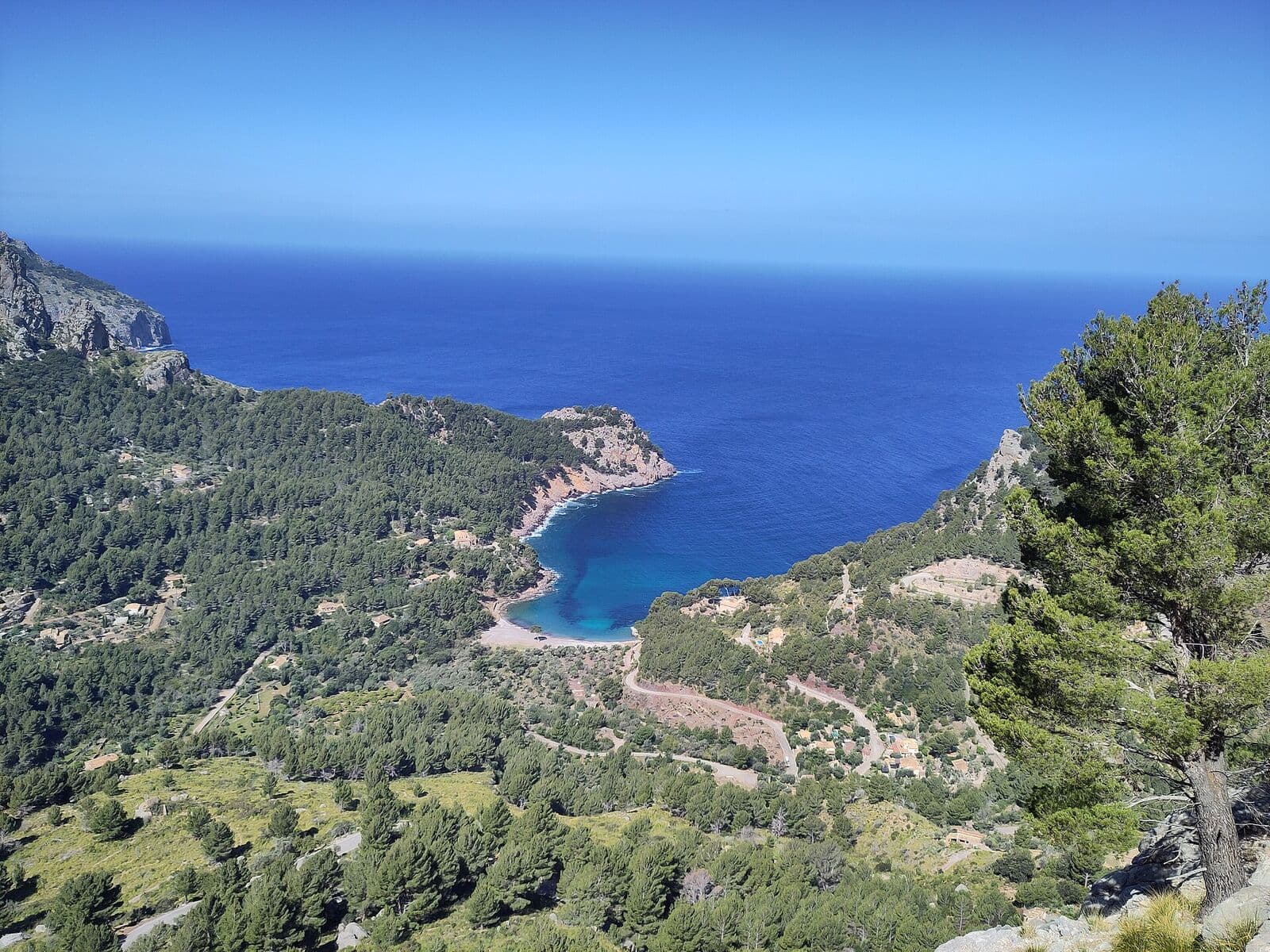
The Serra de Tramuntana, inscribed by UNESCO on the World Heritage List as a cultural landscape in 2011, runs along the north-west coast. This day links three of its best-known villages along the coast road, from south to north.
- Valldemossa. The village is home to the Charterhouse (Cartuja) where Frédéric Chopin and George Sand spent the winter of 1838–1839. It's worth arriving early: in high season it gets many day visitors.
- Deià. A village of stone houses stepped up the hillside. On its outskirts is the house of the writer Robert Graves, now a museum run by the Fundació Robert Graves.
- Sóller and Port de Sóller. The Sóller valley rounds off the day. A tram links the town with the port, where a walk along the bay is a good way to finish.
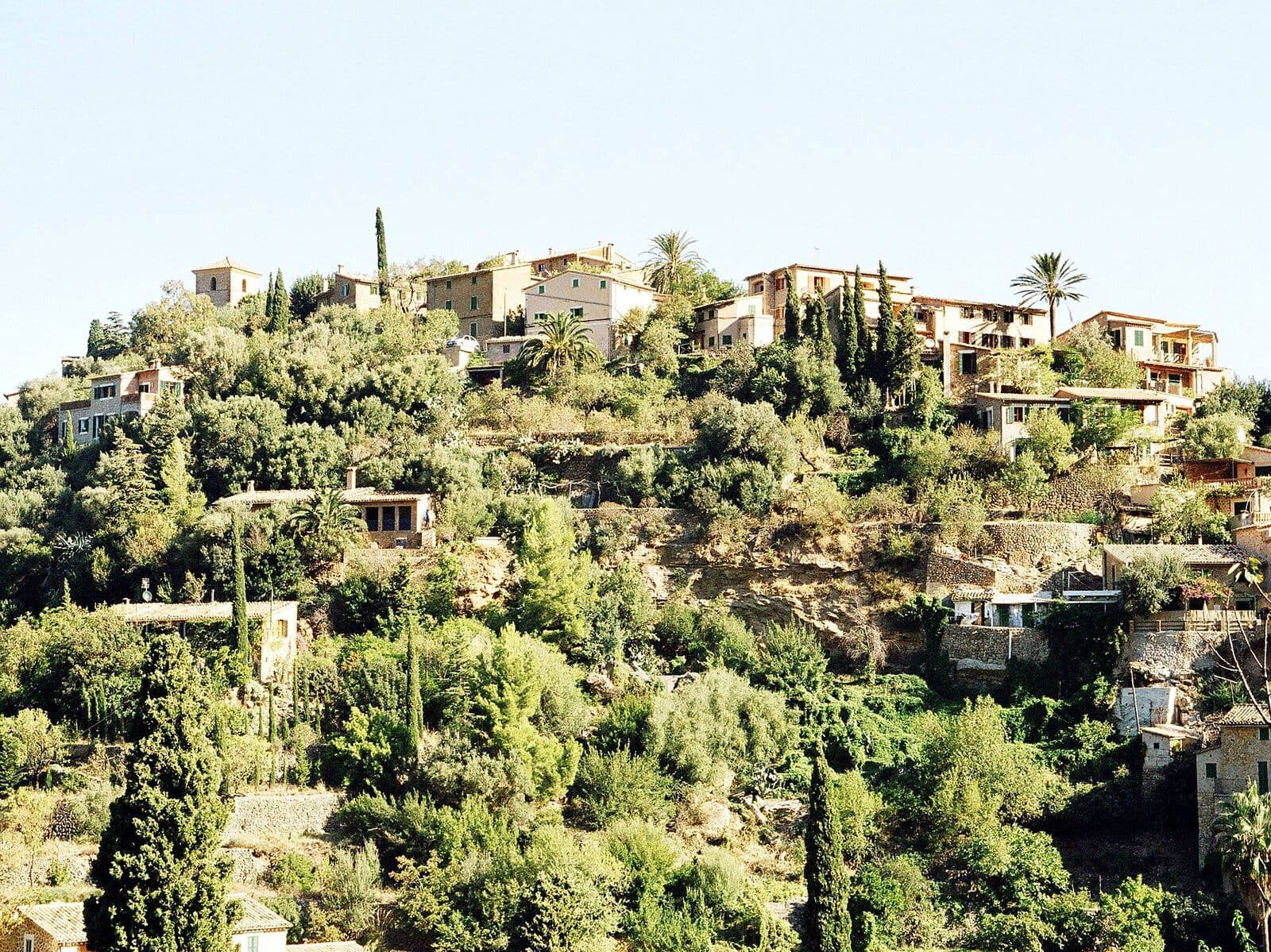
If you'd rather walk, Port de Sóller and Deià are common starting points for sections of the GR 221 route. In that case, leave Valldemossa for another day and spend the morning walking.
Without a car, this is one of the easiest days: TIB route 203 links Palma, Valldemossa, Deià, Sóller and Port de Sóller, and the Sóller Train, a wooden train opened in 1912, takes you from Sóller back to Palma across the mountains. Check timetables and seats before you set off, because buses in this area are very full in summer.
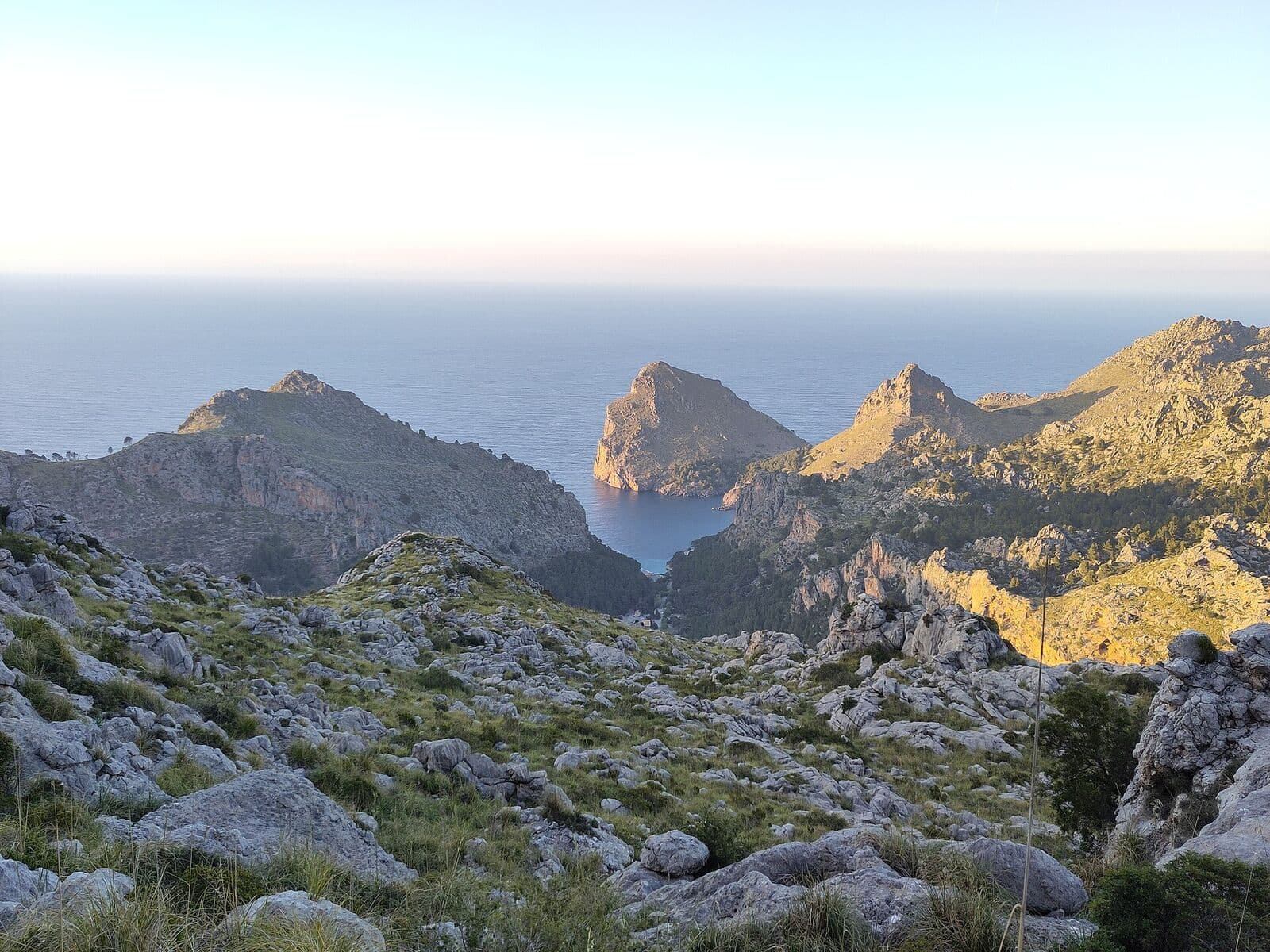
Day 4 — From the mountains to the north: Sa Calobra and Lluc
The fourth day crosses the highest part of the Tramuntana and ends in the north, where your second base is. It's the day with the most mountain driving, so take it slowly with few stops.
- Sa Calobra and the Torrent de Pareis. The road down to Sa Calobra has very tight hairpin bends. From the cove, a footpath with a tunnel leads to the mouth of the Torrent de Pareis, protected as a natural monument since 2003. At the start of the 2026 season, the local press again reported traffic jams on this road when coaches and cars meet.
- The Lluc sanctuary. In the centre of the mountains, in the municipality of Escorca, it's one of the island's most important pilgrimage sites and a starting point for walks.
- Arriving in the north. From Lluc, the road descends towards Pollença. In the afternoon, settle into your accommodation in the north and rest.
As this is the day you change base, keep your luggage stowed out of sight in the car and keep an eye on it at the busiest car parks. If you'll arrive late at your new accommodation, let them know your arrival time.
Day 5 — Alcúdia: city walls, Pollentia and s'Albufera
After a day on the road, the fifth day is short and close to your base.
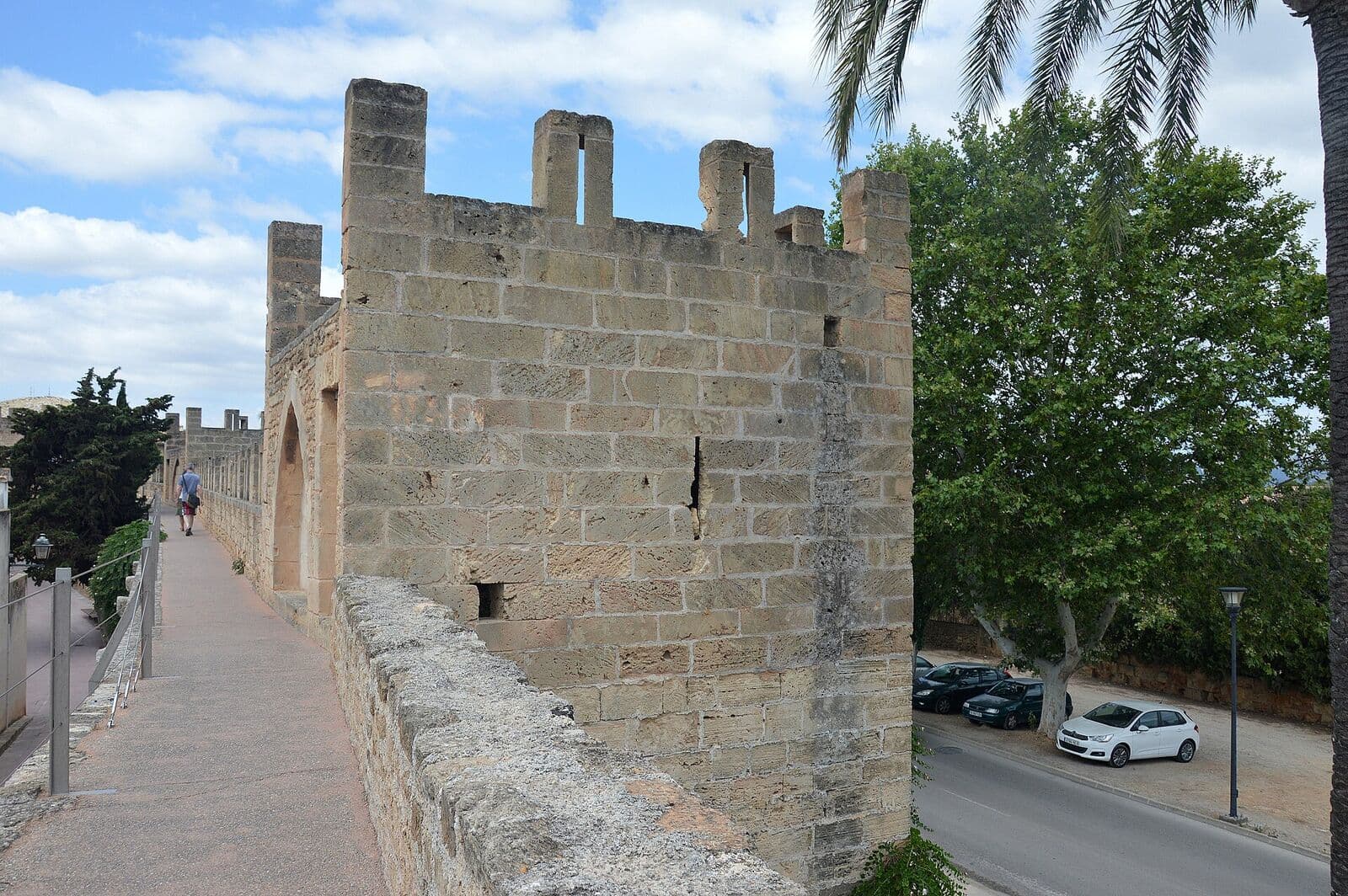
- Alcúdia's old town. The centre keeps its medieval walls, parts of which you can walk along the top of.
- Pollentia. Next to the old town are the remains of the Roman city of Pollentia, founded after the conquest of the island in 123 BC. According to the site's official leaflet, you can visit the residential district of La Portella, the forum and the theatre.
- Beach or s'Albufera. In the afternoon, Alcúdia beach, long and with calm water, or s'Albufera Natural Park, the largest wetland in the Balearic Islands. According to the Balearic government, you need a free permit from the Sa Roca reception centre to explore it, and dogs aren't allowed.
If you're travelling with children, this is the easiest day of the week: short journeys, a walk around the old town and a calm-water beach in the afternoon. If you prefer nature, swap the beach for s'Albufera and bring binoculars.
Day 6 — Formentor and Pollença
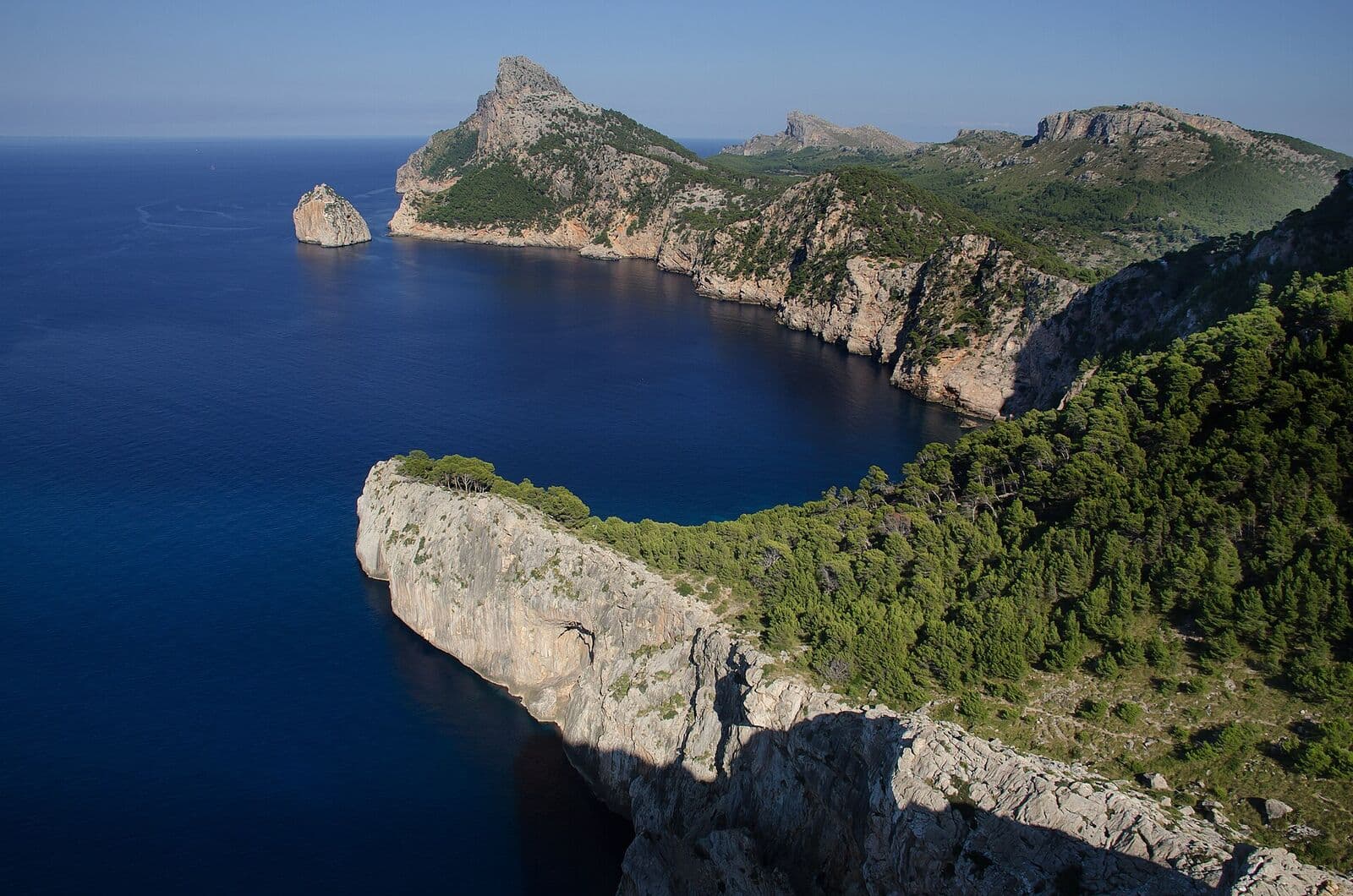
The Formentor peninsula is one of the island's most spectacular landscapes, and one of its most regulated roads in summer.
- Formentor. The Es Colomer viewpoint, facing the islet of the same name, and Formentor beach, among pine trees, are the usual stops. The lighthouse on the cape is at the end of a narrow mountain road.
- Pollença. In the afternoon, Pollença's old town and the Calvari staircase, with its 365 steps and views over the town and the mountains.
- Port de Pollença. If you're staying in the north, an evening walk along the bay rounds off the day with no more driving.
According to the DGT, in 2026 the Ma-2210 road is restricted from 15 May to 18 October, from 10:00 to 22:00: access to the beach is managed by capacity and only authorised vehicles may continue to the lighthouse. The TIB shuttle bus (route 334), which links Alcúdia, Port de Pollença and Formentor, is authorised; the Balearic government announced it would run from 15 May to 15 October in 2026. Outside those dates, check for any new restrictions before you go.
Day 7 — Flexible day: north-east, beach or back to Palma
The last day depends on your flight time and on what you've missed. Three sensible options:
- The north-east. Capdepera, with its medieval walled enclosure on the hill, and one of the nearby coves, such as Cala Agulla or Cala Mesquida. At Cala Agulla, since May 2026 a barrier stops cars entering the beach area; check which car parks are open. This option works if your flight is in the afternoon or the next day.
- A beach day without the car. If you're staying in Alcúdia or Port de Pollença, spending the day on the bay is the most relaxed way to end the week.
- Back towards Palma. If your flight is early, head south on the Ma-13 motorway, which links the Bay of Palma with the north, and catch up on anything you missed in the city, such as Bellver or the seafront.

Mallorca in 7 days without a car
Without a car, the route works best with two well-connected bases, Palma and the north, and by giving up some of the south-east coves.
- Palma (days 1 to 3): you can get around the city on foot and by city bus, and TIB route 203 to Valldemossa, Deià and Sóller and the Sóller Train both leave from Palma.
- Sa Calobra: instead of the road, the boat from Port de Sóller in season.
- The north (days 4 to 7): TIB routes link Palma with the Alcúdia and Pollença area; from there, Alcúdia and its beach are walkable and Formentor has a shuttle bus in season.
- The south-east: this is the hardest part without a car. If it's a must for you, check which TIB routes reach the area on your dates or choose a cove you can reach from a town served by bus.
Transport timetables and calendars change by season, and TIB runs extra summer routes every year. Always check tib.org before you finalise your plan. How to pay, which connections leave from the airport and which areas are easiest without a car: we cover it all in our guide to getting around Mallorca.
How to adapt the route
- If you'd like more beach time: make day 5 a full day on Alcúdia beach and day 7 a cove day in the north-east. Our guide to Mallorca's coves has ideas.
- If you're travelling with children: keep days 1, 5 and 7 and simplify day 4 (Sa Calobra by boat, or straight to the north on the motorway). The northern bays, with calm water, are a good base for families.
- If you like walking: the Serra de Tramuntana has the GR 221 long-distance route, the Dry Stone Route (Ruta de Pedra en Sec). You can replace part of day 3 or 4 with a walking stage, checking the weather forecast first.
- If you prefer villages: spend more time in Valldemossa, Deià, Sóller and Pollença and drop a cove.
- If you want a slower pace: drop the third stop each day and keep a free afternoon at each base.
- If you're travelling out of season: Palma works all year, but some summer bus routes and some boats don't run in winter. Check what's operating on your dates.
Practical tips
- Start early on the days with coves, Valldemossa, Sa Calobra and Formentor: that's when car parks have space and the roads are quieter.
- Don't put two long driving days back to back. That's why day 5 is short after day 4.
- Have a plan B for bad weather. With wind or rain, swap a beach day for Palma, Alcúdia or a village, and stay out of gorges and mountain routes when there are warnings.
- Bring water and suitable footwear for coves you reach on foot and for the mountain paths.
- Book anything with limited places. Seasonal boats fill up in summer, and in July 2026 TIB started trialling advance seat booking on one route 203 service.
- Check restrictions before you set off: the DGT for Formentor, and the official council or park information for access and parking at each cove or natural area.
Frequently asked questions
Are 7 days enough to see Mallorca?
They're enough for a complete first visit if you choose well: Palma, a coves area, the Serra de Tramuntana and the north. They aren't enough to see the whole island calmly, and you don't need to. It's better to come back another time than to spend the week in the car. If you only have three days, see our Mallorca in 3 days route, which narrows the trip down to Palma, the Serra de Tramuntana and the north.
What's the best route around Mallorca by car?
One that avoids crossing the island several times. This plan goes from Palma to the south-east and the Tramuntana and ends in the north, changing accommodation mid-week to cut down on driving.
Where should you stay for this route?
The most practical option is three nights in Palma and four in the north. If you'd rather have a single base, Palma is the best choice without a car, and a base in the north or east works well with one. We explain this in detail in our guide to areas to stay in.
Can you go to Formentor in summer?
Yes, but with restrictions. In 2026, from 15 May to 18 October, between 10:00 and 22:00, car access is limited and the TIB shuttle bus is allowed through. Check each year's dates on the DGT website.
Related guides

Travel
Where to stay in Mallorca: the best areas for your trip
Which part of Mallorca to choose as your base for the kind of trip you're planning: Palma, the north, the east coast, the south-west, the Serra de Tramuntana or the south, with pros, cons, transport and whether you need a car.
14 min read
Travel
Best coves in Mallorca
How to choose a cove in Mallorca for your plans (families, snorkelling, scenery, easy access or peace and quiet) and what to know about access, parking and facilities before you go.
11 min read

Travel
Japan in 10 days: a first-trip itinerary
A realistic 10-day Japan itinerary for a first visit, linking Tokyo, Kyoto and Osaka with transport, budget, entry and booking advice.
22 min read