
Mallorca in 3 days: what to see and a route for a first visit
A realistic three-day route around Mallorca: Palma on foot, the Serra de Tramuntana from Valldemossa to Sóller, and the north with Pollença and Alcúdia, with rough travel times, car-free options and where to stay.
By TopicWeekPublished 11 min read

In this article
Three days are enough to see a representative part of Mallorca, but you'll have to choose. The island has a capital with plenty to see, a mountain range listed as a World Heritage Site, long bays in the north and coves in the south-east, and it won't all fit into a short trip without spending much of it on the road.
This route is designed for a first visit of three full days: one day in Palma, one in the Serra de Tramuntana and one in the north, with a single base and two or three stops a day. It puts seeing each place properly ahead of adding more places, and explains which stop deserves more time and which one you can skip. If you have a week, our Mallorca in 7 days itinerary covers more areas at a different pace.
Mallorca in 3 days: the itinerary at a glance
The route uses Palma as a base for all three nights and makes two out-and-back trips in different directions:
- Day 1 — Palma: the cathedral, the old town, the Passeig del Born and the Llotja, then Bellver Castle or the Santa Catalina neighbourhood at the end of the day. All on foot or by city bus.
- Day 2 — Serra de Tramuntana: Valldemossa in the morning, Deià as a short stop and the afternoon between Sóller and Port de Sóller.
- Day 3 — The north: Pollença and its Calvari steps, Alcúdia with its walled old town and the Roman city of Pollentia, and an afternoon on the beach in the bay.
Days 2 and 3 are planned with a car, which lets you link the stops flexibly, but both have a public transport version, explained further down. Palma is within reasonable reach of both areas, so there's no need to change accommodation.
Day 1: Palma on foot
You don't need a car on the first day: central Palma is best explored on foot, and parking there is harder than walking. If you're hiring a car, picking it up at the end of the day or the next morning saves a day of rental and parking.
The cathedral and Parc de la Mar
La Seu, by the sea, is the island's best-known monument and a good place to start. According to its official website, tourist visits run from Monday to Saturday, with shorter hours on Saturdays and in winter, and it doesn't open for tourist visits on Sundays; tickets can be bought online. Allow about an hour inside. Between March and November there are also guided tours of the terraces, lasting an hour and for visitors aged 9 and over. Outside, Parc de la Mar, at the foot of the cathedral, gives you the classic view of the building over the water.
The old town, the Born and the Llotja
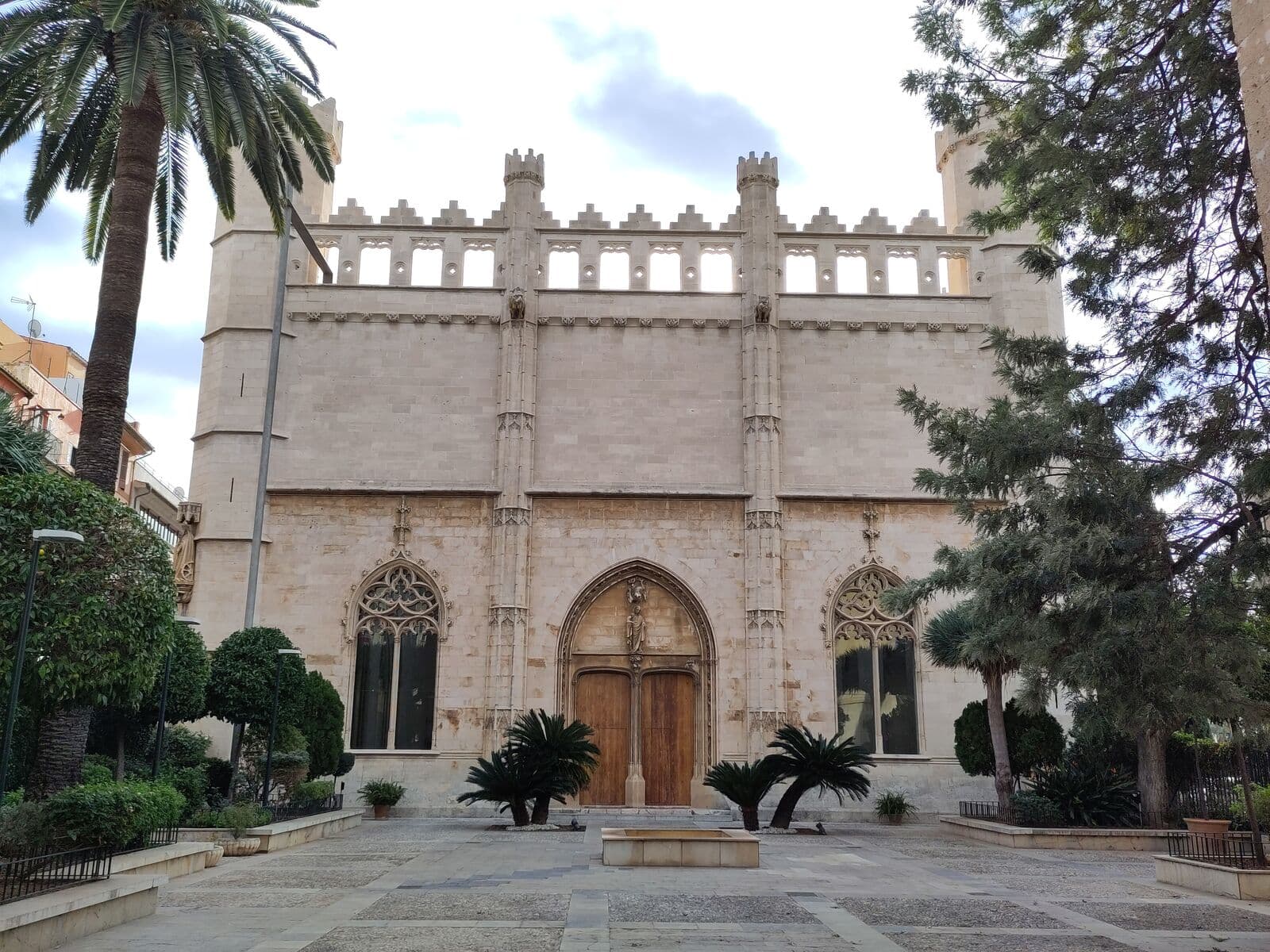
From the cathedral, the old town is a walk through narrow streets, courtyards and squares. Allow an hour or two without rushing, then head down to the Passeig del Born and the Llotja, the old merchants' exchange, a Gothic building by Guillem Sagrera. According to Visit Palma, the interior can be visited free of charge during its opening hours, which are worth checking. The Born and Llotja area is full of cafés and restaurants, so it's a good place for lunch.
Bellver Castle
In the afternoon, Bellver Castle, on a hill above the bay, is the best option if you want views. According to Palma's official tourism website, it's the only circular Gothic castle in Spain, and it houses the Museum of the City's History. According to the castle itself, it's closed on Mondays, has shorter hours and free entry on Sundays, and you can walk up from Plaça Gomila by a long flight of steps (about 20 minutes) or reach the car park area by city bus or taxi. Allow an hour or a little more for the visit, plus the climb.
Santa Catalina to end the day
If you'd rather not go up to Bellver, or once you're back down, the Santa Catalina neighbourhood, next to the centre, is a good choice for dinner. Its market, according to Visit Palma, is one of the city's food hubs and opens from Monday to Saturday during the day.
Day 2: Serra de Tramuntana (Valldemossa, Deià and Sóller)
The Serra de Tramuntana, listed by UNESCO as a cultural landscape in 2011, runs along the north-west coast. This day follows the mountain road from south to north and returns to Palma through the Sóller tunnel, without retracing your steps. By car, allow about 30–40 minutes from Palma to Valldemossa, about 15–20 from Valldemossa to Deià, about 20 from Deià to Sóller and about 35–45 from Sóller back to Palma: around two hours of driving in total, split into short stretches, not counting stops or parking.
Valldemossa: the long morning stop
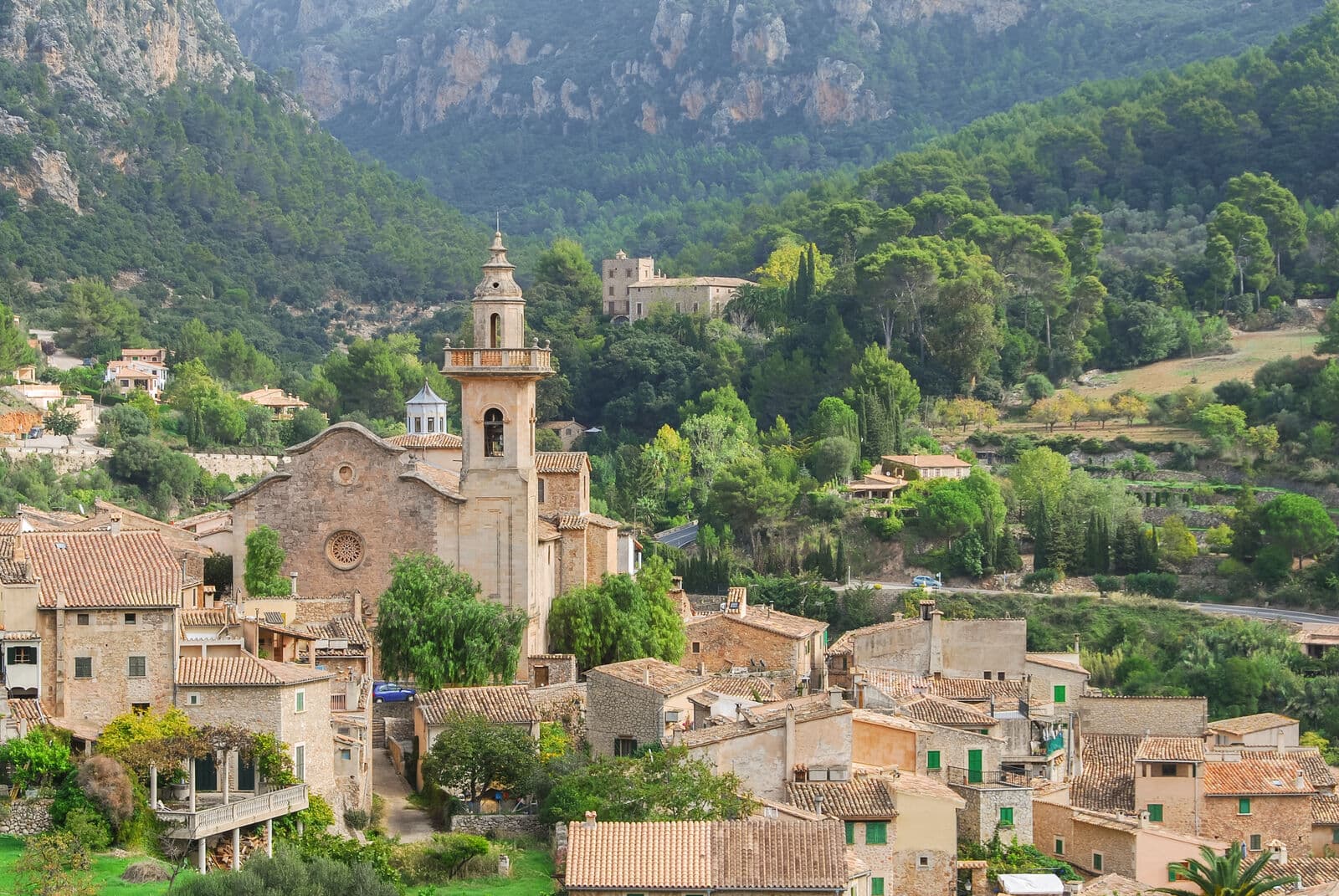
Valldemossa deserves the longest stop of the day: two or three hours to walk around the village and visit the Charterhouse, where Frédéric Chopin and George Sand spent the winter of 1838–1839. According to its website, the Charterhouse opens from Monday to Saturday, so don't leave it for a Sunday. Arrive early: in high season the village gets many day visitors, and the car parking, regulated by the town council, fills up quickly.
Deià: a short (or optional) stop
Deià, a village of stone houses stepped up the hillside, can be seen in a short one-hour stop or, if you're short of time, from the road itself. On the outskirts is the writer Robert Graves's house, now a museum run by the Fundació Robert Graves; if you want to visit it, check the opening days first. Parking in the village is limited and regulated, so this is the easiest stop to cut.
Sóller and Port de Sóller: the afternoon
Sóller, in a valley of orchards surrounded by mountains, is the second long stop. From the town, a historic tram runs down to Port de Sóller, an almost enclosed bay where you can end the afternoon by the sea. If you're driving, park once and take the tram down to the port. Returning to Palma through the tunnel avoids repeating the mountain road.
Day 3: the north, between Pollença and Alcúdia
The third day heads north on the Ma-13 motorway, the most direct link between Palma and the Bay of Alcúdia. It combines two historic towns with an afternoon on the beach in a calm-water bay. By car, allow 50 minutes to an hour from Palma to Pollença, about 15–20 minutes from Pollença to Alcúdia and 45 minutes to an hour to get back from Alcúdia to Palma.
Pollença: the Calvari in the morning
Start with Pollença, ideally first thing, before the heat. From the town centre, the Calvari steps, 365 of them between cypress trees, climb to a small chapel with views over the town and the valley. Allow an hour and a half to two hours for the climb and a walk around the centre.
Alcúdia: walls and the Roman city
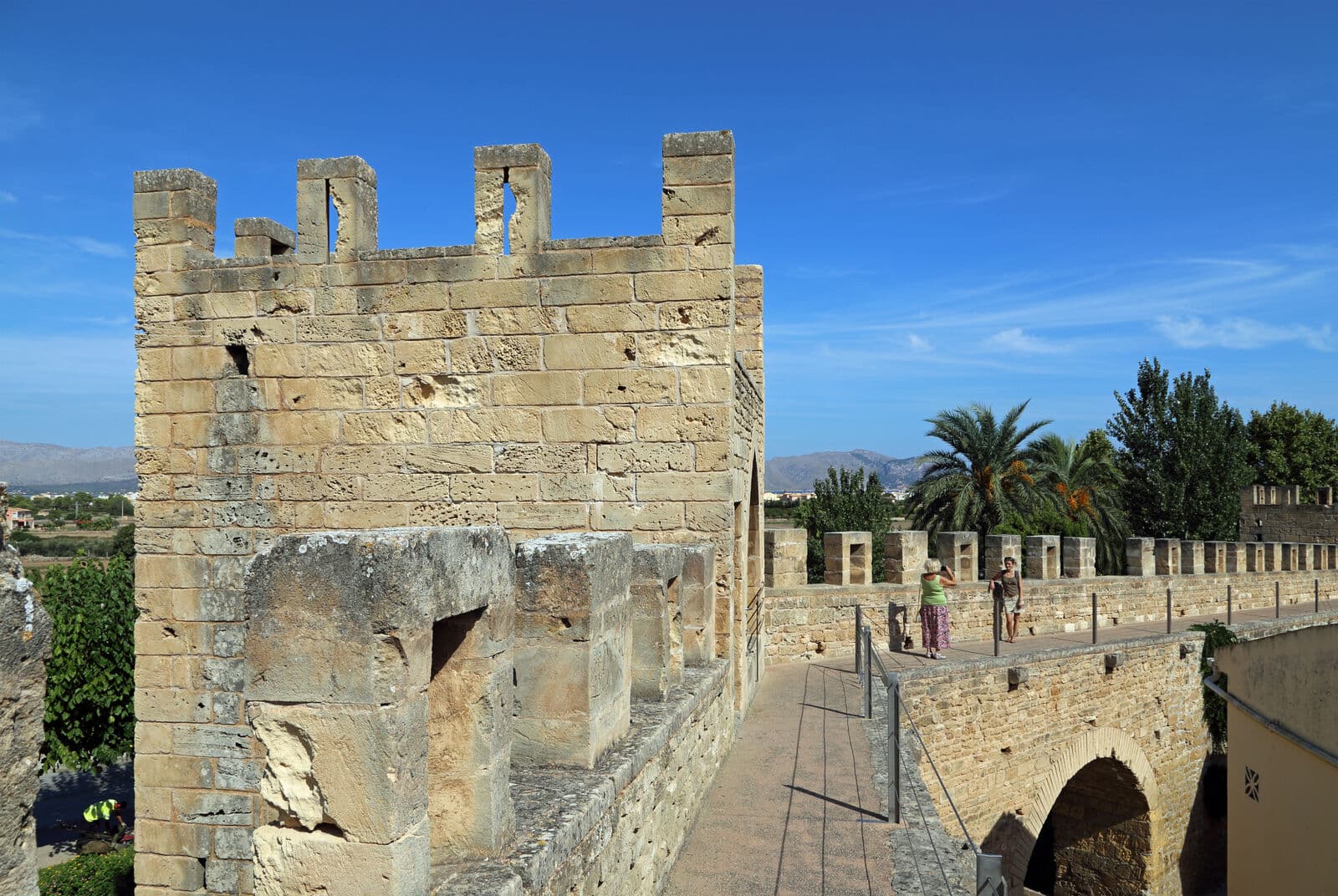
Alcúdia keeps a walled old town of medieval origin, part of which you can walk along the top of, and next to it the remains of Pollentia, the Roman city founded after the conquest of the island in 123 BC. According to the town council, the visitable areas of the site are La Portella, the forum and the theatre. According to the council's tourism leaflet, the site and its museum are closed on Mondays and public holidays; check the opening hours before you go. Between the old town and Pollentia, allow two or three hours, including lunch.
The afternoon, on the beach in the bay
End the day on Alcúdia beach, which Turespaña describes as long with calm water, or on the beach at Port de Pollença if you prefer a more village-like feel. In summer it's the best time for a swim; out of season, a walk along the seafront rounds off the day just as well.
If you'd rather have a day of coves
If you're after a cove with pale sand and pine trees more than towns, swap this day for the south-east: the Mondragó Natural Park, about an hour's drive from Palma, is a good option for a single day. In summer its car parks charge a fee and fill up early. To compare more coves and how to reach each one, see our guide to the best coves in Mallorca.
Do you need a car for 3 days in Mallorca?
It isn't essential, but it saves time. The Palma day is better without a car. On days 2 and 3, a car lets you link the stops at your own pace and arrive early; on the other hand, in high season you'll have to deal with full, paid car parks in Valldemossa, Deià and Sóller.
Without a car, the Tramuntana can be done by public transport. A TIB bus route links Palma with Valldemossa, Deià, Sóller and Port de Sóller, and to get back you can take the direct bus from Port de Sóller or the Tren de Sóller, the wooden train opened in 1912, which has its own tickets and timetable. A tram runs between Sóller and the port.

In the north, TIB runs routes from Palma to the Bay of Alcúdia and Port de Pollença, but combining Pollença, Alcúdia and the beach in a single day without a car takes longer: it's better to focus on Alcúdia and its bay. Bear in mind that there are more services in summer than during the rest of the year. Our guide to getting around Mallorca explains how TIB, the train and card payment work.
Where to stay for a 3-day route
For three days, the most practical option is to spend all three nights in Palma. The first day is done on foot from your hotel, the city has direct bus links with the airport and with both day trips, and it stays lively out of season. Changing accommodation halfway through isn't worth it on such a short stay.
The sensible alternative is Sóller or Port de Sóller if you want to wake up in the mountains: day 2 gets shorter, but the Palma day and the north day get longer. Our guide to where to stay in Mallorca compares the areas in detail.
When to do this route
The route works for much of the year, but it changes with the season:
- Spring and autumn: mild temperatures for walking around Palma and the mountains, and less pressure on car parks than in high summer. This is when it fits best.
- Summer: day 3 gains from the beach, but the heat is intense in the middle of the day and Valldemossa, Sóller and the northern beaches get crowded. Start early and leave swimming for the afternoon.
- Winter: the days are shorter, monuments have reduced hours and some of what the coastal resorts offer closes. Cut one stop a day and prioritise Palma, Valldemossa and Sóller.
Also, plan the order of the days around the calendar: the cathedral doesn't open for tourist visits on Sundays, the Valldemossa Charterhouse opens from Monday to Saturday, and Bellver and Pollentia are closed on Mondays. To choose dates by weather and crowds, see our guide to the best time to visit Mallorca.
Tips for making the most of 3 days in Mallorca
- Start early on days 2 and 3. Reaching Valldemossa and Pollença first thing makes a real difference for parking and crowds.
- One long stop per half day. If a visit runs over, drop the next short stop rather than rushing through all of them.
- Park once per town. In Sóller, leave the car and take the tram down to the port.
- Check opening hours the day before. The cathedral, the Charterhouse, Bellver and Pollentia have closing days and hours that change with the season.
- Don't try to add Formentor or the south-east coves to the north day. Each of those areas needs its own day.
Frequently asked questions
Are 3 days enough to see Mallorca?
They're enough to see Palma, part of the Serra de Tramuntana and the north on a first visit, but not the whole island. They leave out, for example, the south-east coves, Sa Calobra or Formentor, which fit better into a longer trip.
Can you do this route without a car?
Yes, with some changes. Palma is explored on foot; the Tramuntana has TIB buses, the Tren de Sóller and the tram; and in the north it's better to focus on Alcúdia and its bay. The days will be somewhat slower and depend on timetables.
Why doesn't it include Formentor?
Because, added to the north day, it makes the day much longer, and in high season car access is restricted (in 2026, from 15 May to 18 October, 10:00 to 22:00, according to the DGT, Spain's traffic authority). In three days, that time is better spent on Pollença, Alcúdia and the beach.
What about the Caves of Drach?
They're in Porto Cristo, on the east coast, about an hour from Palma and in the opposite direction from the Tramuntana and the north. If they interest you, they can replace day 3, but it's not a good idea to add them to another day of this route.
What if I have one or two more days?
Add a day of coves in the south-east and, if you have another, Formentor or Sa Calobra. With a week, our 7-day itinerary suggests two bases to cover more areas without crossing the island several times.
Related guides
Travel
Mallorca in 7 days: a complete day-by-day itinerary
A balanced plan for a first week in Mallorca: Palma, the south-east coves, the Serra de Tramuntana, Sa Calobra, the north, Formentor and a flexible day, with options with and without a car.
13 min read

Travel
Getting around Mallorca: car, bus, train and car-free options
Which transport suits your Mallorca trip: when hiring a car is worth it, what works well by bus and train, how to leave the airport and which areas are harder without a car.
11 min read

Travel
Where to stay in Mallorca: the best areas for your trip
Which part of Mallorca to choose as your base for the kind of trip you're planning: Palma, the north, the east coast, the south-west, the Serra de Tramuntana or the south, with pros, cons, transport and whether you need a car.
14 min read