
How to Save Money on Heating in Winter: Practical Ways to Cut Costs
Adjust heating schedules and thermostats to cut energy use safely. Guidance for boilers, heat pumps, electric heaters and renters, with cost examples.
By TopicWeekPublished 10 min read
In this article
Lower heating bills rarely come from one universal trick. Matching temperature and schedules to occupancy, keeping heat moving, addressing unwanted draughts and maintaining equipment can help. Results depend on the home, weather, heating system and tariff. This guide distinguishes boilers, heat pumps, resistance heaters and shared heating, and uses hypothetical calculations so you can substitute your own bill data.
Why heating costs vary
Heat demand depends on outdoor weather, home size and layout, insulation, air leakage, setpoint and operating hours. Equipment efficiency and heat distribution matter too. Two homes with the same system can use different amounts.
Separate energy use from cost. Use is the billed energy, commonly in kWh; variable cost is that use multiplied by the applicable unit rate. Bills can also include standing charges, taxes, services and time-of-use rates. Fewer kWh do not guarantee the same percentage reduction in the total bill.
What temperature should you set?
There is no ideal setting for every person or home. Spain’s IDAE cites about 20–21°C for a general household situation with suitable clothing; Energy Saving Trust gives 18–21°C as a common comfort range in its UK context. These are guidance, not laws or medical prescriptions. The thermostat reading may differ from other rooms.
Measure where people spend time and adjust gradually. Age, health, activity, humidity, draughts and insulation affect comfort. WHO proposes 18°C as a safe, balanced indoor temperature to protect the general population in temperate or cold climates. The evidence does not set an exact threshold below which harm is the same for everyone; some older people, infants or people with health conditions may need more warmth. Do not keep a home dangerously cold to save money.
Switch heating off or leave it on?
It depends on the system. With a conventional boiler and radiators, scheduling heat for occupied periods and reducing it during absence is often useful; maintaining a high setting all day can extend heat loss. IDAE generally advises switching it off at night, but a home that cools sharply, vulnerable occupants or damp risks may call for a different approach.
Heat pumps often work well with smaller, steadier changes, but the best control depends on equipment, weather and installation. Energy Saving Trust recommends long daytime operation in the UK; this is not a universal rule or a requirement to run every unit at one setting 24/7. Underfloor heating responds slowly. Resistance heaters use electricity according to power and effective run time. Shared heating may offer little control. Follow the manual or installer.
Program controls around your routine
A useful schedule follows when each area is occupied, not a universal template. With a boiler, you can set heat before waking and reduce or switch it off when leaving, then observe how long the home takes to feel comfortable. For example, if you leave at 08:00 and return at 18:00, try reducing heat when you leave and restarting it with enough lead time for your home to feel comfortable on return; adjust the lead time to the building’s actual response.
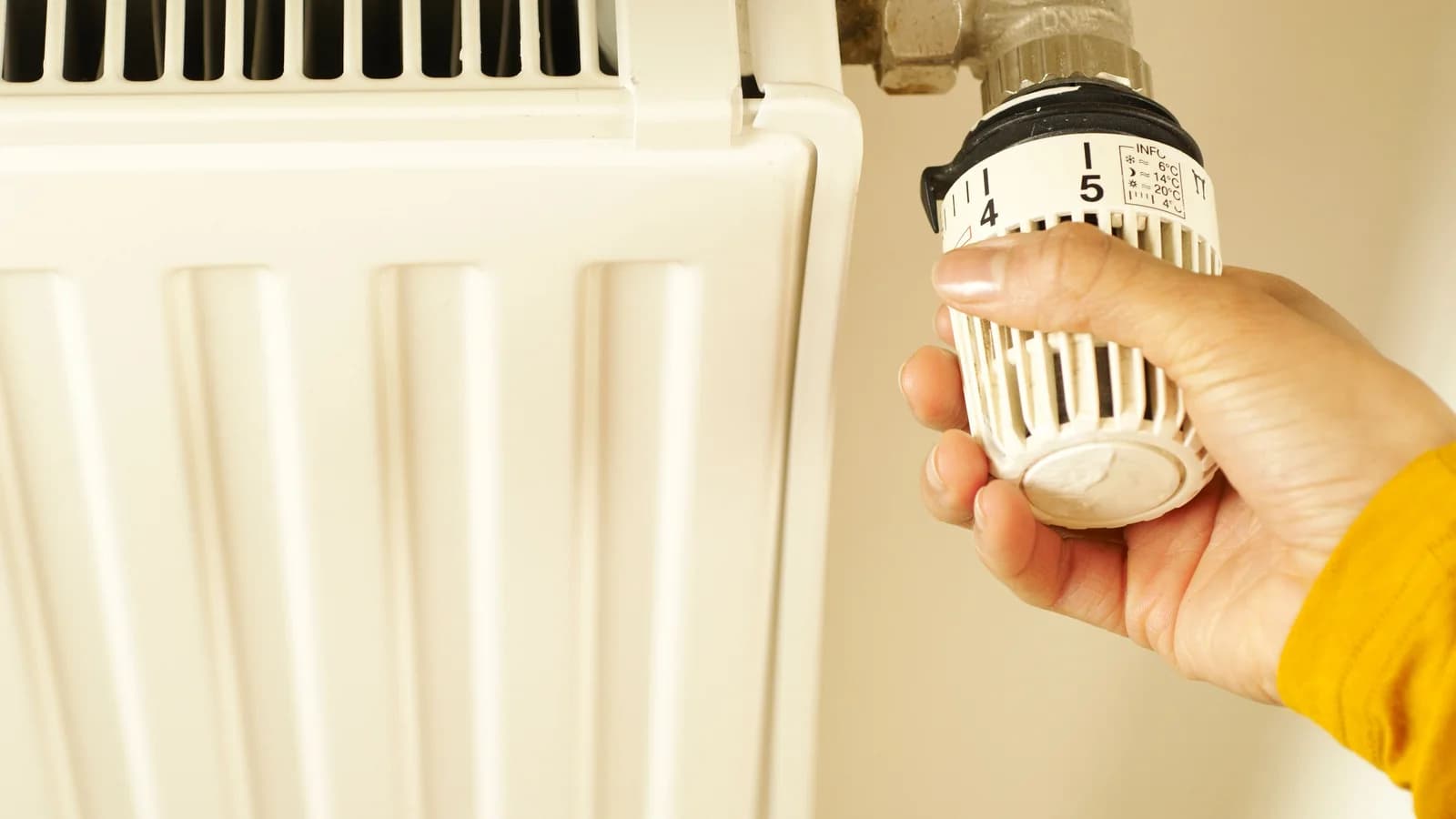
Manual thermostats need frequent adjustment; programmable controls automate periods; connected controls can help remotely but do not guarantee savings. On a compatible water-based radiator, a thermostatic radiator valve senses nearby air and adjusts hot-water flow. Numbered settings are not exact temperatures across all models, and a curtain or furniture can distort the reading; it does not control an electric resistance radiator. A TRV does not replace the main thermostat. Check electrical, hydraulic and heat-pump compatibility before buying. For long absences, use the manufacturer’s holiday or frost-protection mode and consider pipes and local weather.
Get more from radiators
Keep space around radiators clear: furniture, laundry and long curtains can obstruct convection. Check that valves move and rooms respond to adjustments. Uneven heat, noises or leaks may need diagnosis; bleeding is not the answer to every problem.
Some water circuits need bleeding when air is present, but frequency and method depend on the system. Follow the manual and avoid hot or pressurised components. Call a service professional if unsure, if pressure drops, a leak appears or several radiators fail. Do not cover a radiator or use a cover that distorts a valve’s temperature reading.

Reduce draughts without blocking ventilation
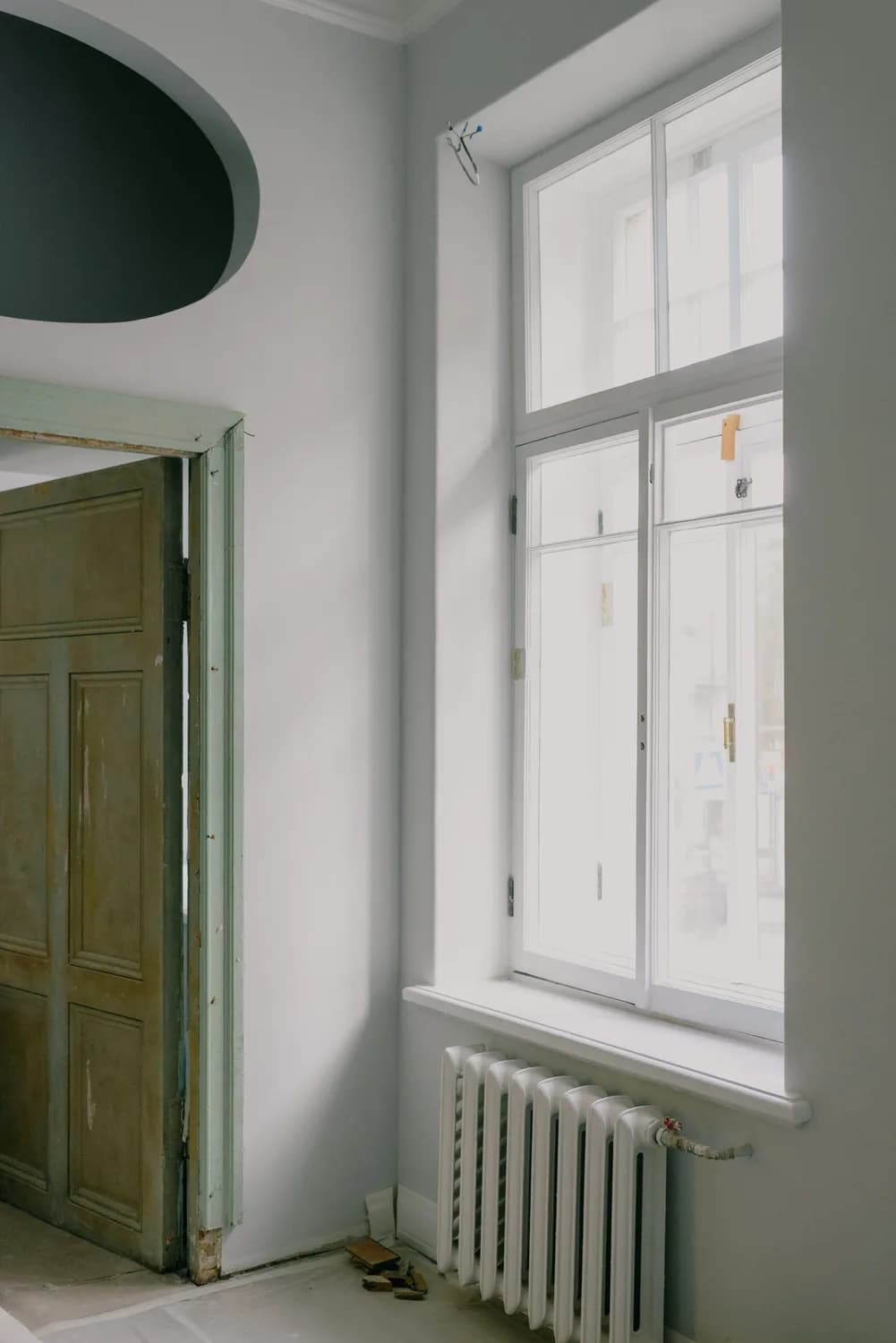
Suitable seals on defective joints, repaired latches and closed curtains at night can improve comfort. Check draughts with your hand or a strip of paper, never a flame. A reversible fix may help around a sash-box or frame, but first check the window and any designed air inlets.
Do not seal grilles, ducts or openings needed to ventilate a home or supply a combustion appliance. An accidental draught is not the same as necessary ventilation. Major window or insulation work needs a whole-building assessment and may require a landlord or building-owner’s permission.
Ventilate without wasting heat
Ventilation renews indoor air and helps manage moisture and pollutants. Avoid leaving windows open for long periods with heating on when brief effective airing is enough; duration depends on size, occupancy, weather and ventilation system. Reduce heat while airing if practical, then close windows before heating resumes.
Do not disable mechanical ventilation to save energy. Persistent condensation or mould needs a cause identified—leaks, thermal bridges, inadequate ventilation or something else—not simply a higher thermostat. There is no single number of minutes that fits every home. For persistent home moisture, see our guides to window condensation and mould on walls.
Use sunlight and improve comfort
Let useful sunlight warm rooms, then close blinds or curtains at dusk to reduce the cold feel of glazing. Suitable clothing, blankets and furniture placement can improve comfort. These measures do not automatically cut kWh: savings occur only if they let you adjust heating without losing comfort.
Keep textiles and furniture safely away from hot heaters and do not cover vents. Soft furnishings are not a substitute for insulation.
Adjustments by heating system
Gas or fuel boiler: schedule around occupancy, follow the manufacturer’s maintenance instructions and use a qualified technician. Do not alter burners, flues or ventilation. Heat pump: avoid large setpoint swings unless the manual recommends them; check controls and emitters with the installer.
Resistance electric heater: consider its kW rating and effective operating hours; a thermostat may interrupt full-power use. Shared heating: use available room controls and ask how costs are allocated; occupants may not control the plant room. Underfloor heating: thermal inertia may require gradual changes. Do not replace equipment on a generic savings rule.

Which small improvements may pay off?
Start with no-cost changes: schedules, settings, occupied rooms, blinds and clear emitters. A room thermometer may help if the thermostat is poorly placed. Low-cost seals and minor repairs must preserve ventilation and comply with a rental agreement.
Zoning controls or radiator valves may help where the system supports them. Windows, insulation and replacement equipment are larger investments: obtain an assessment and compare total cost, useful life, energy, labour, maintenance, finance and climate. Without those inputs, payback cannot be calculated or promised.
Estimate a possible saving
A simple estimate of variable cost is billed energy × variable unit rate. Match units and billing period. Exclude standing charges, tax or services if they do not change with use. If a bill combines gas, electricity and hot water, it may not isolate heating; use a meter or explained estimate rather than assigning all household energy to heat.
Hypothetical example A: 5,000 kWh of billed heating energy a year at €0.12/kWh equals €600 variable cost. If use fell by 8% as an assumption only, that is 400 kWh less: 4,600 kWh and €552. The difference is €48 a year in variable cost. Eight percent is not a promise or a saving attributed to a specific measure. Fixed charges and other items are excluded.
Electric heater example
Use energy (kWh) = electrical power (kW) × effective hours at full power. A 1.5 kW heater running the equivalent of three full-power hours uses 4.5 kWh. At a hypothetical €0.25/kWh, variable cost is €1.125, or about €1.13.
Being plugged in for six hours does not mean it used full power for all six: a thermostat may switch it off, and cycling depends on insulation, setpoint and weather. Use measured consumption where possible. Do not confuse rated power with energy used.
Ten common mistakes
1. Turning the thermostat far up rarely heats faster: use a sensible setting. 2. Leaving windows open while heating: ventilate deliberately. 3. Covering radiators: keep them clear. 4. Ignoring draughts: locate leaks without blocking vents. 5. Copying someone else’s schedule: adapt it.
6. Skipping maintenance: follow the maker and local rules. 7. Heating empty rooms unnecessarily: zone where possible. 8. Buying controls without checking compatibility: ask the installer. 9. Confusing kW with kWh: power versus energy. 10. Switching off ventilation or sealing air inlets: retain necessary air renewal.
Saving in a rented home
Try reversible changes such as schedules, curtains and furniture placement that leaves emitters clear. Removable seals may help if they do not damage frames or restrict required air inlets; check the tenancy and landlord first. Record faults and report cold radiators, broken controls, leaks or mould.
Do not alter gas, wiring, shared boilers or building fabric without permission and qualified help. Maintenance responsibilities and tenancy rules vary by country and agreement.
Safety: when not to turn the heat down further
Do not trade health for savings. WHO notes the health importance of adequate indoor warmth; older people, infants and people with some conditions may need warmer conditions. Watch for damp, condensation and mould, but find the cause and keep ventilation. If the home cannot stay comfortable, contact the landlord, building manager or local energy and health services.
Gas, wood, coal and oil appliances can produce carbon monoxide if faulty, poorly installed or maintained. Keep flues and ventilation clear, fit suitable alarms under local rules and instructions, and arrange qualified maintenance. Never use barbecues, improvised braziers, camping stoves, kitchen ovens or generators indoors for heat. If CO is suspected—headache, dizziness, nausea or confusion—get outdoors, seek local medical or emergency help from outside, and do not return until advised. Never disable alarms.

A safe checklist for lower heating costs
Before changing anything, identify your system and controls; measure the temperature where you spend time; fit schedules to occupancy; keep emitters clear; reduce accidental draughts without sealing ventilation; air rooms; and compare equivalent variable costs on bills.
Follow the specified maintenance and seek a professional for leaks, combustion, electrical faults, abnormal pressure, persistent mould or compatibility questions. Then check whether comfort remains and billed energy changes; different weather or prices can explain part of any difference.
Sources and scope
Technical guidance: IDAE (Spain), IDAE: managing a heating system, Energy Saving Trust (UK), WHO, NHS (UK) and the US Department of Energy. Advice varies by country and system; check local rules and the manufacturer’s instructions.
Frequently asked questions
- What is a reasonable heating temperature? It depends on occupants and the home. IDAE cites 20–21°C as Spanish household guidance; it is not a universal rule.
- Should I leave heating on all day? A conventional boiler can usually be scheduled around occupancy; heat pumps and high-inertia systems may need different control. Follow the manual.
- How much might I save by lowering the setting one degree? There is no universal percentage. IDAE says each one-degree increase in indoor temperature raises energy use by about 7% in its Spanish guidance. That does not mean lowering it by one degree will reduce a particular home’s use by exactly 7%; the effect depends on the building, system and conditions.
- How can I save with radiators? Keep them clear, use compatible controls and seek help if they heat unevenly or leak. Do not bleed an unfamiliar circuit.
- How do I save in a small flat? Set a suitable temperature, avoid heating unused rooms, reduce accidental draughts and keep ventilation. Floor area alone does not determine cost.
- What changes with a heat pump? A steadier setting and smaller changes may suit some systems; weather, equipment and emitters matter. Follow the installer and manual.
- What if I feel cold while the heat is on? Check the reading, draughts, clothing, humidity and emitters. If it persists, investigate a fault or health need rather than raising the setting indefinitely.
Related guides
Home
Window condensation: why it happens and how to prevent it
Why condensation appears on windows, what causes it indoors and what you can do to reduce it without relying on simplistic fixes.
6 min read
Home
Mold on walls: why it appears and how to prevent it from returning
How to investigate the source of mold, clean a small area carefully, and reduce the chance that it will return.
8 min read
Home
How to Paint a Room Step by Step: Materials, Preparation and Common Mistakes
Plan materials, prepare walls, estimate paint quantity and apply it safely with a roller and brush. Includes drying times, common mistakes and a worked example.
11 min read