
Christmas Dinner Ideas: 5 Complete Menus for Every Budget
Five complete Christmas dinner menus (traditional, budget, vegetarian, no-oven and make-ahead), one worked out for six people with recipes, a prep plan, a shopping list, allergens and food safety.
By TopicWeekPublished 26 min read
In this article
A good Christmas menu isn't the longest one; it's the one that suits the people at the table, your budget and your kitchen. This guide suggests five complete menus — traditional, budget, vegetarian, no-oven and almost entirely make-ahead — and works one of them out for six people, with recipes, a work plan and a shopping list. It works for a Christmas Eve dinner, Christmas Day lunch or a New Year's Eve meal.
How to choose your Christmas menu
The decisions that shape a menu most are made before you think about recipes. Go through this list in good time, ideally a week ahead:
- Number of guests: count adults and children separately; children usually eat less and prefer simple dishes.
- Allergies and intolerances: ask each guest directly rather than assuming. An allergy changes ingredients, utensils and the way you work.
- Diets: check whether anyone is vegetarian (no meat or fish) or vegan (no animal products at all, including dairy, eggs and honey), or avoids certain foods for religious, cultural or health reasons.
- Time available: separate hands-on time from oven or slow-cooking time, when you can do other things.
- Kitchen equipment: how many hobs, whether there's an oven and how big it is, how many large pans and dishes you have, and whether you own a food thermometer.
- Fridge and freezer space: running out of room at Christmas is common; plan what goes where.
The five menus at a glance
Each menu has a starter, a main course, a side and a dessert, with alternatives. Difficulty ratings are a guide and depend on your experience:
- Menu 1, traditional and family-style: pumpkin and carrot soup, roast chicken with lemon and herbs, roast potatoes and vegetables, and pears poached in orange syrup. Medium difficulty. This is the menu worked out for six people.
- Menu 2, budget: hummus with crudités, oven-baked chicken legs with onion, red cabbage and apple salad, and rice pudding. Easy.
- Menu 3, vegetarian: beetroot salad with cheese and walnuts, pumpkin stuffed with rice and chickpeas, sautéed green beans and apple crumble. Medium difficulty, with a vegan variant.
- Menu 4, no oven: fennel and apple salad, pan-cooked chicken thighs in mushroom sauce, couscous with vegetables, and yoghurt pots with compote. Easy.
- Menu 5, make-ahead: lentil salad, beef stew, freshly made mashed potatoes and panna cotta. Medium difficulty; almost everything is made the day before.
Menu 1: a traditional family Christmas dinner
A menu many tables will recognise, with no expensive ingredients or tricky techniques. Chicken is easier to find and handle than a whole turkey; if your family's traditional dish is something else, just swap the main course.
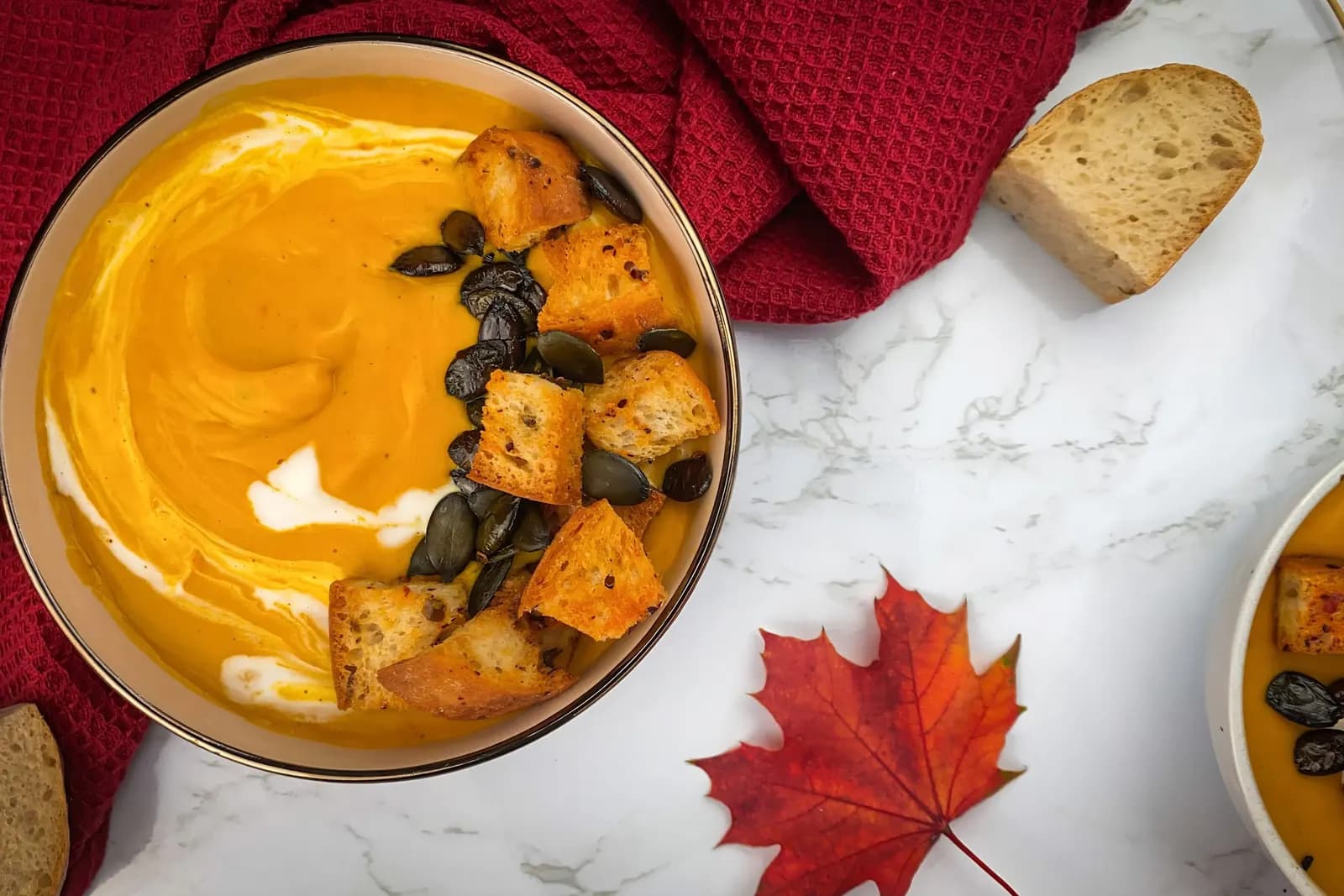
- Starter: pumpkin and carrot soup.
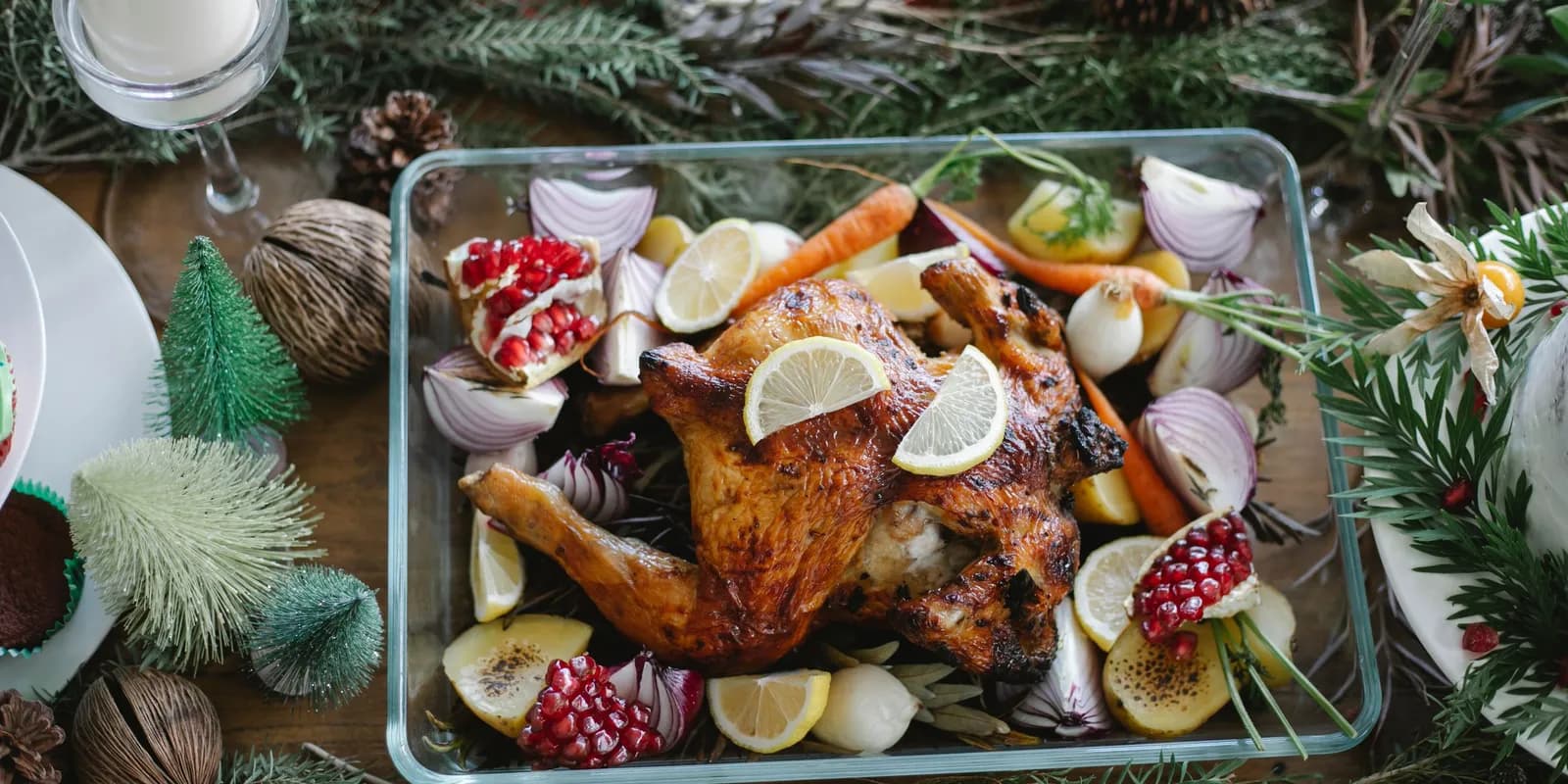
- Main course: roast chicken with lemon, garlic and herbs.
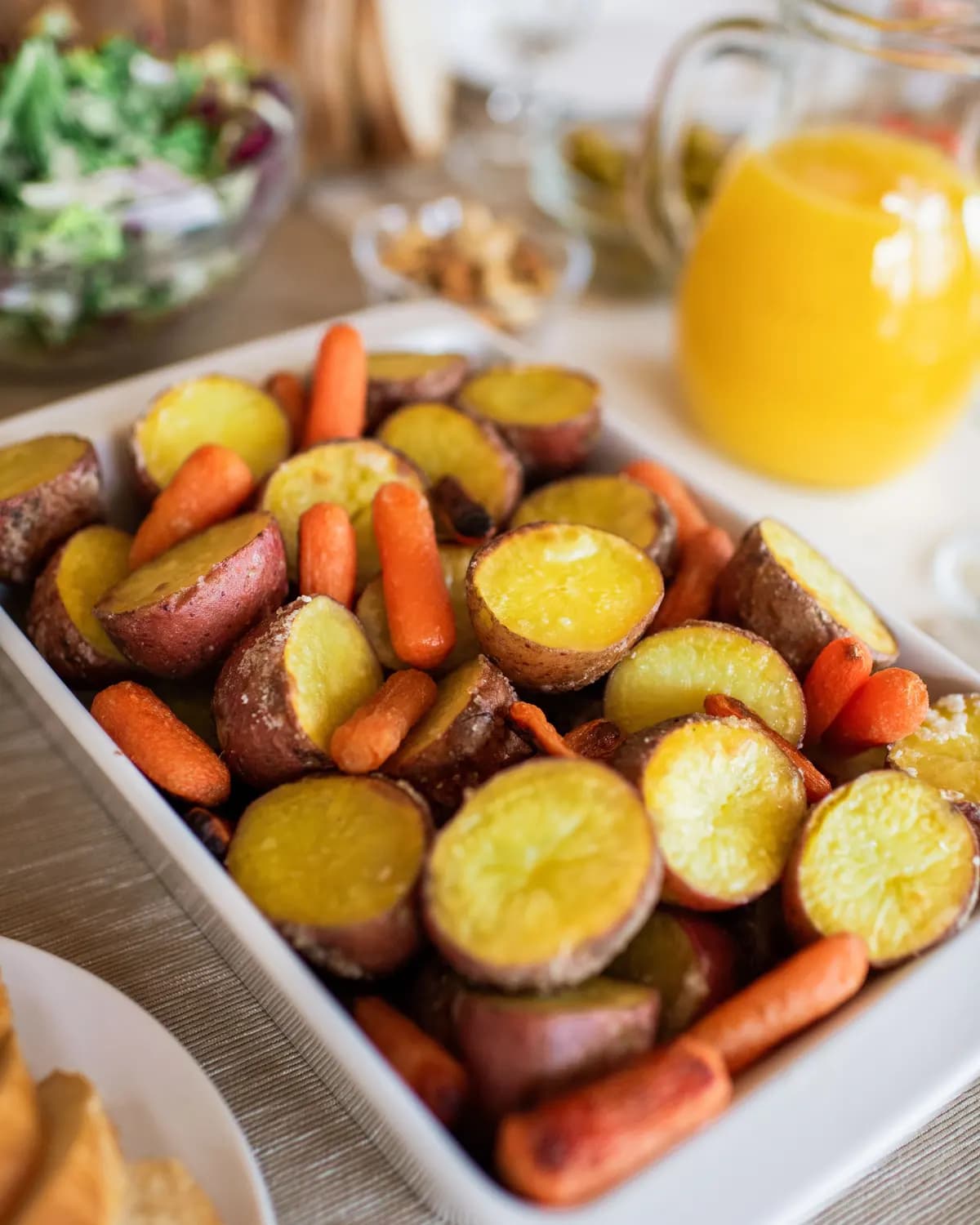
- Side: roast potatoes, carrots and onion, with optional Brussels sprouts.
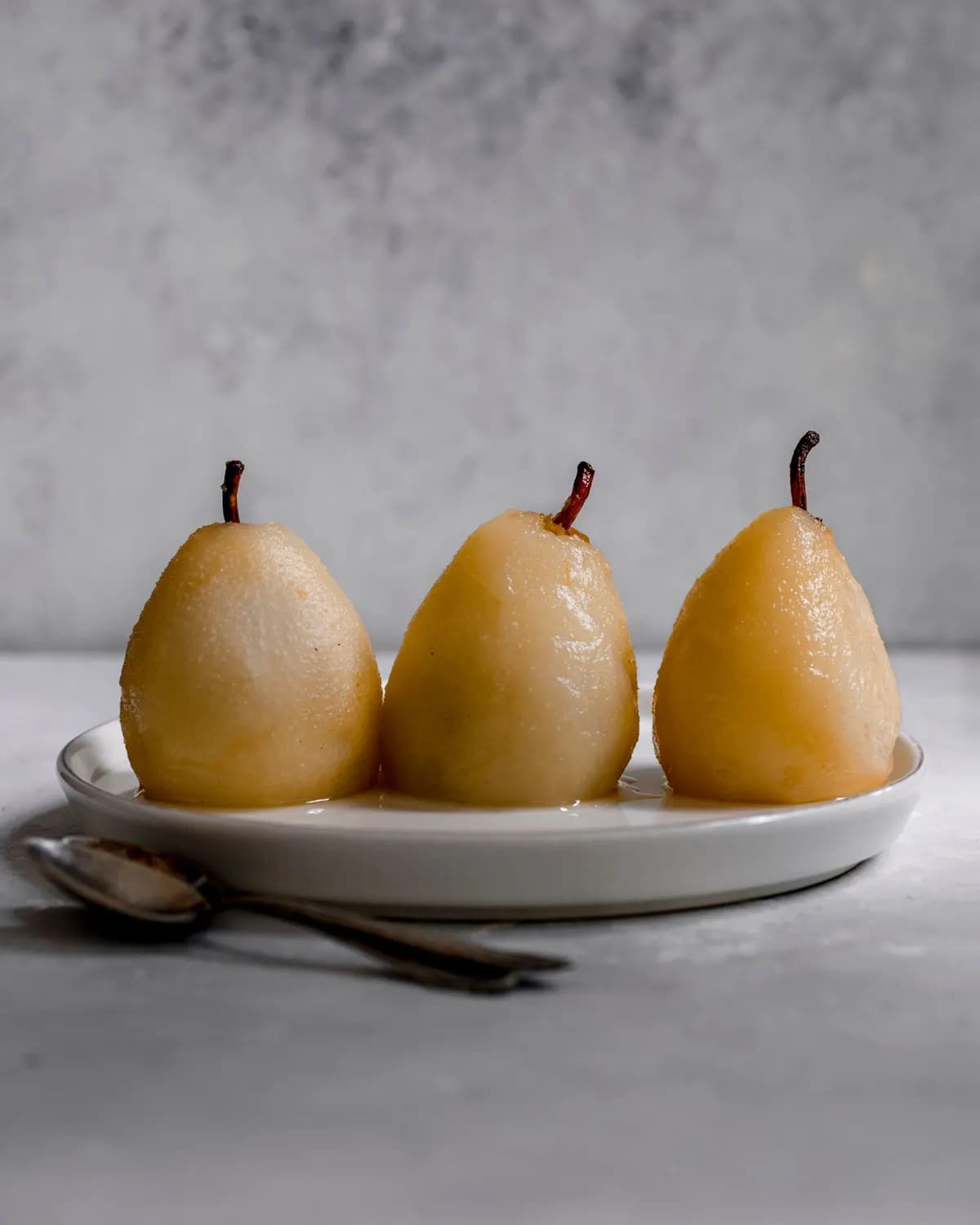
- Dessert: pears poached in orange juice with cinnamon.
- Alternatives: turkey or turkey breast instead of chicken (see the safety section on thawing and temperatures); a seasonal vegetable soup instead of pumpkin; for vegetarian guests, the stuffed pumpkin from menu 3.
- Difficulty: medium. None of the recipes is hard, but on the day the oven, the resting roast and the reheated soup all overlap.
- Basic plan: the soup and pears are made the day before; on the day you only roast the chicken and vegetables.
- Allergens to check: shop-bought stock may contain celery or gluten; croutons contain gluten; cream or yoghurt for serving contains milk.
- To avoid hitches: check beforehand what fits in your oven at the same time (the recipes explain how to organise it), and keep a food thermometer to hand.
Traditional menu for six: step-by-step recipes
These recipes are an editorial proposal based on common cooking techniques and on the safety temperatures published by food authorities; TopicWeek has not cooked or photographed them. Times are a guide: they change with the size of the pieces, the oven and the dish. Oven temperatures are for a conventional oven with top and bottom heat; if yours is a fan oven, check the manufacturer's manual. Spoon measures are tablespoons.
Pumpkin and carrot soup
Serves 6. Hands-on time: about 20 minutes; cooking: about 30 minutes. Equipment: large pan with a lid and a blender. Can be made the day before.
- 1 kg pumpkin, peeled and deseeded (prepared weight)
- 300 g carrots
- 1 medium onion (about 150 g)
- 1 medium potato (about 200 g)
- 2 tbsp olive oil
- 1.2 litres vegetable stock or water
- Salt and pepper; nutmeg (optional)
- To serve (optional): toasted pumpkin seeds or croutons
- Peel the pumpkin, carrots, onion and potato and cut them into similar pieces, about 3 cm, so they cook at the same rate.
- Heat the oil in the pan and soften the onion over a medium heat for 5 to 8 minutes, until soft and translucent but not browned.
- Add the pumpkin, carrot, potato and stock. Bring to the boil, lower the heat, cover and simmer for about 20 to 25 minutes, until the carrot crushes easily with a fork.
- Blend until smooth. Take care: hot liquid splashes; if you use a jug blender, don't fill it more than halfway.
- Taste and adjust the salt, pepper and nutmeg. If it's too thick, add a little hot stock or water.
- If you make it the day before, divide it into shallow containers and put it, covered, in the fridge within two hours. Before serving, heat it until it boils.
Roast chicken with lemon, garlic and herbs
Serves 6. Hands-on time: about 20 minutes; oven: around 1 h 15 min to 1 h 30 min, plus 10 to 15 minutes' resting. Equipment: oven, one large roasting dish that holds both chickens without them touching (or two dishes) and a food thermometer.
- 2 whole chickens of about 1.5 kg each (between 1.4 and 1.8 kg), unstuffed
- 2 lemons
- 1 head of garlic
- 3 tbsp olive oil
- Rosemary and thyme, fresh or dried
- Salt and pepper
- If the chickens are frozen, thaw them in the fridge, in a container on the bottom shelf, allowing at least a day (more details in the food safety section). Before cooking, check that no part is still frozen.
- Preheat the oven to 180 °C. The FoodSafety.gov chart for whole chicken uses 350 °F, about 177 °C.
- Don't wash the chickens: the water spreads germs around the sink and worktop. Pat them dry with kitchen paper, throw the paper away and wash your hands with soap and water.
- Rub the chickens with the oil, salt, pepper and herbs. Put half a lemon and a few garlic cloves inside each one and scatter the rest of the lemon and garlic around them. Place them breast side up, with a little space between them so the heat can circulate.
- Roast them on the middle shelf. As a guide, FoodSafety.gov gives 1 h 15 min to 1 h 30 min for unstuffed whole chickens of 1.4 to 1.8 kg; with two chickens and a tray of vegetables in at once, or an oven that runs cool, it can take longer.
- Start checking about 15 minutes before the expected end, testing each chicken separately: the thermometer should read at least 74 °C (ideally 75 °C) in the thickest part of the breast and the innermost part of the thigh and wing, avoiding the bone. If one isn't there yet, keep roasting it and check again every 10 to 15 minutes; the one that's done can wait, covered.
- Rest the chickens for 10 to 15 minutes, loosely covered with foil, and carve them on a clean board with utensils that haven't touched raw meat.

Roast potatoes and vegetables
Serves 6. Hands-on time: about 20 minutes; oven: 45 to 60 minutes. Equipment: one or two baking trays.
- 1.2 kg potatoes
- 500 g carrots
- 2 red onions
- 400 g Brussels sprouts (optional; broccoli also works)
- 4 tbsp olive oil
- Salt, pepper and rosemary or thyme
- Wash the potatoes and cut them into 3 to 4 cm chunks; peel the carrots and cut them into batons; cut the onions into wedges and the sprouts in half.
- Toss the potatoes, carrots and onion with 3 tbsp of the oil, the salt, pepper and herbs and spread them out in a single layer. If they're crowded, use two trays: that way they brown instead of steaming.
- Roast them at the same temperature as the chicken, on another shelf, for 45 to 60 minutes. Turn them halfway through and, if you use two trays, swap their shelves. They're ready when they're tender when pierced and golden at the edges.
- Add the Brussels sprouts, tossed in the remaining tablespoon of oil and a little salt, for the last 25 to 30 minutes.
- If your oven can't take the chickens and the vegetables at the same time, roast the vegetables before the chickens, keep them covered and put them back in the oven while the chickens rest, until piping hot. Don't leave them at room temperature for more than two hours; if it will be longer, put them in the fridge.
Pears poached in orange and cinnamon syrup
Serves 6. Hands-on time: about 15 minutes; cooking: 25 to 45 minutes in total. Equipment: medium pan with a lid that holds the pears snugly. Can be made the day before.
- 6 firm pears, not too ripe
- 500 ml orange juice (from about 5 or 6 oranges, or bought with no added sugar)
- 250 ml water
- 2 tbsp sugar (optional, depending on how sweet the juice is)
- 1 cinnamon stick and 3 cloves (optional)
- Peel of 1 orange, without the white pith
- To serve (optional): plain yoghurt or cream
- Peel the pears, leaving the stalk on, and cut a thin slice off the base so they stand up.
- Put the juice, water, sugar, cinnamon, cloves and orange peel in the pan and heat until it starts to boil.
- Add the pears, cover and simmer gently for 15 to 30 minutes, turning them now and then, until a knife slides in without resistance. The time depends on the variety and how ripe they are.
- Lift out the pears and boil the liquid uncovered for another 10 to 15 minutes, until it thickens slightly into a light syrup. Remove the cinnamon, cloves and peel.
- Serve warm or cold with the syrup. If you make them the day before, keep them in the fridge covered in syrup, in a lidded container.
Menu 2: a budget Christmas dinner
This menu relies on ingredients that are often affordable in many markets — pulses, bone-in chicken pieces, cabbage, apples, rice and milk — but prices vary a lot between countries and years: compare before you buy and swap anything that's expensive where you live. You also save by reusing ingredients across dishes and cooking the right number of portions. If you want to set a spending limit, our guide to making a personal budget from scratch can help.
- Starter: hummus made with cooked chickpeas, lemon, garlic, oil and cumin, served with carrot and cucumber sticks and toast.
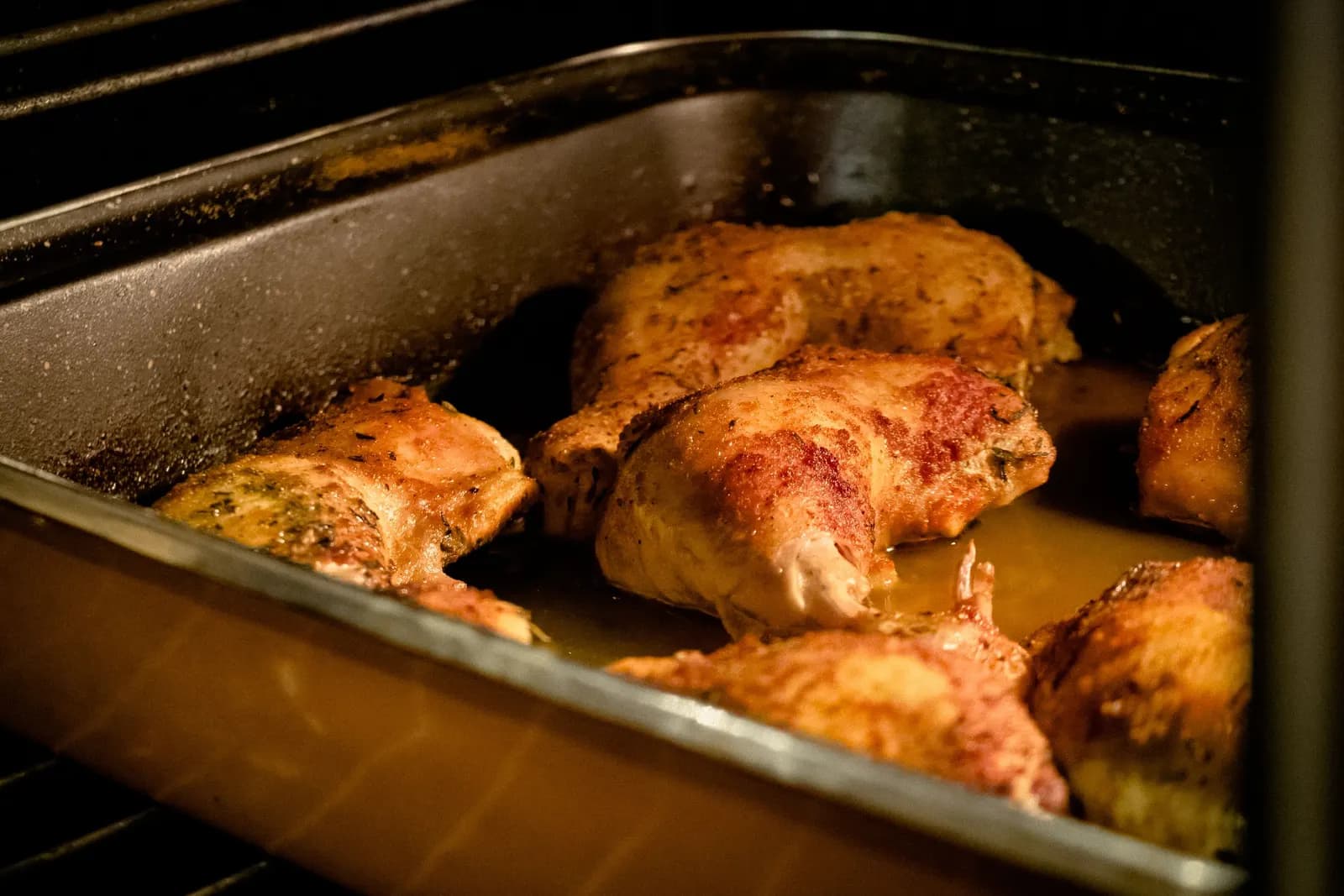
- Main course: bone-in chicken legs or thighs roasted on a bed of onion and potato, with lemon and garlic. For 6 people, about 12 pieces, in one large tray or two if they don't fit in a single layer.
- Side: grated red cabbage and apple salad with a vinaigrette.
- Dessert: rice pudding with cinnamon and lemon peel, made in the morning and served cold.
- Alternatives: turkey legs instead of chicken; lentils instead of chickpeas; grated carrot salad if you can't find cabbage; seasonal fruit instead of rice pudding.
- Difficulty: easy. The main course is cooked in one large tray (or two) and everything else is prepared ahead.
- Basic plan: the hummus the day before; the rice pudding the same morning, because cooked rice shouldn't be kept for more than 24 hours (see the leftovers section); the cabbage salad a few hours ahead, and the chicken last. Bone-in legs must also reach 74–75 °C near the bone, without touching it.
- Key ingredients: chickpeas (dried or tinned), bone-in chicken pieces, potatoes, onions, red cabbage, apples, pudding rice and milk.
- Allergens to check: tahini, if you add it to the hummus, is sesame; bread contains gluten; the vinaigrette may contain mustard; rice pudding contains milk (for a lactose-free or vegan version, use a plant-based drink and check its label).
- To avoid hitches: don't buy things "just in case"; with a fixed list, leaving out one dish usually saves more than a cheaper brand.

Menu 3: a vegetarian Christmas dinner
A menu without meat or fish designed so nobody misses a main course: the stuffed pumpkin looks impressive and contains pulses and a grain, which make it filling. It's vegetarian as written provided the cheese isn't made with animal rennet (some traditional cheeses are: check the label); to make it vegan you need to change several ingredients, as explained below. A plant-based menu isn't automatically free of allergens.
- Starter: roast or cooked beetroot salad with goat's cheese or feta, walnuts, baby salad leaves and an orange vinaigrette.
- Main course: small roast pumpkin stuffed with rice, chickpeas, onion, dried cranberries or raisins and chopped almonds. For 6 people, 3 small pumpkins (half each) or one large one to cut into portions.
- Side: green beans sautéed with garlic and lemon zest.
- Dessert: apple and cinnamon crumble, baked in one dish.
- Alternatives: lentils instead of chickpeas; quinoa instead of rice; pear instead of apple in the crumble.
- Difficulty: medium. The pumpkin needs a fair amount of oven time; it's ready when a knife goes through the flesh easily, and the time depends on its size.
- Basic plan: the vegetables and chickpeas for the filling and the crumble topping the day before; the rice for the filling is best cooked on the day; the beetroot can be bought ready-cooked. On the day, bake the pumpkin and crumble and sauté the beans.
- Key ingredients: small pumpkins, rice, cooked chickpeas, beetroot, cheese, walnuts, green beans, apples, flour and butter.
- Allergens to check: milk (cheese, butter), tree nuts (walnuts, almonds), gluten (crumble flour) and, if you use shop-bought stock for the rice, celery or gluten.
- To avoid hitches: part-roast a large pumpkin before stuffing it, so the flesh and filling are ready at the same time; if the crumble won't fit in the oven alongside the pumpkin, bake it beforehand or while you eat the main course.
Vegan variant: leave the cheese out of the salad or use a plant-based alternative and, if there's also a tree-nut allergy, swap the walnuts and almonds for toasted pumpkin seeds. In the crumble, use oil or plant-based spread instead of butter and check the label: some spreads contain milk derivatives. Also check that the stock contains no animal ingredients, and don't sweeten anything with honey. A vegan version doesn't guarantee freedom from allergens either: it may contain nuts, soya, sesame or gluten.


Menu 4: a Christmas dinner without an oven
For small kitchens, homes without an oven or when the oven is already in use. Everything is done with two hobs, a large, deep frying pan with a lid, a medium saucepan with a lid and the fridge; a slow cooker or microwave can help but isn't needed.
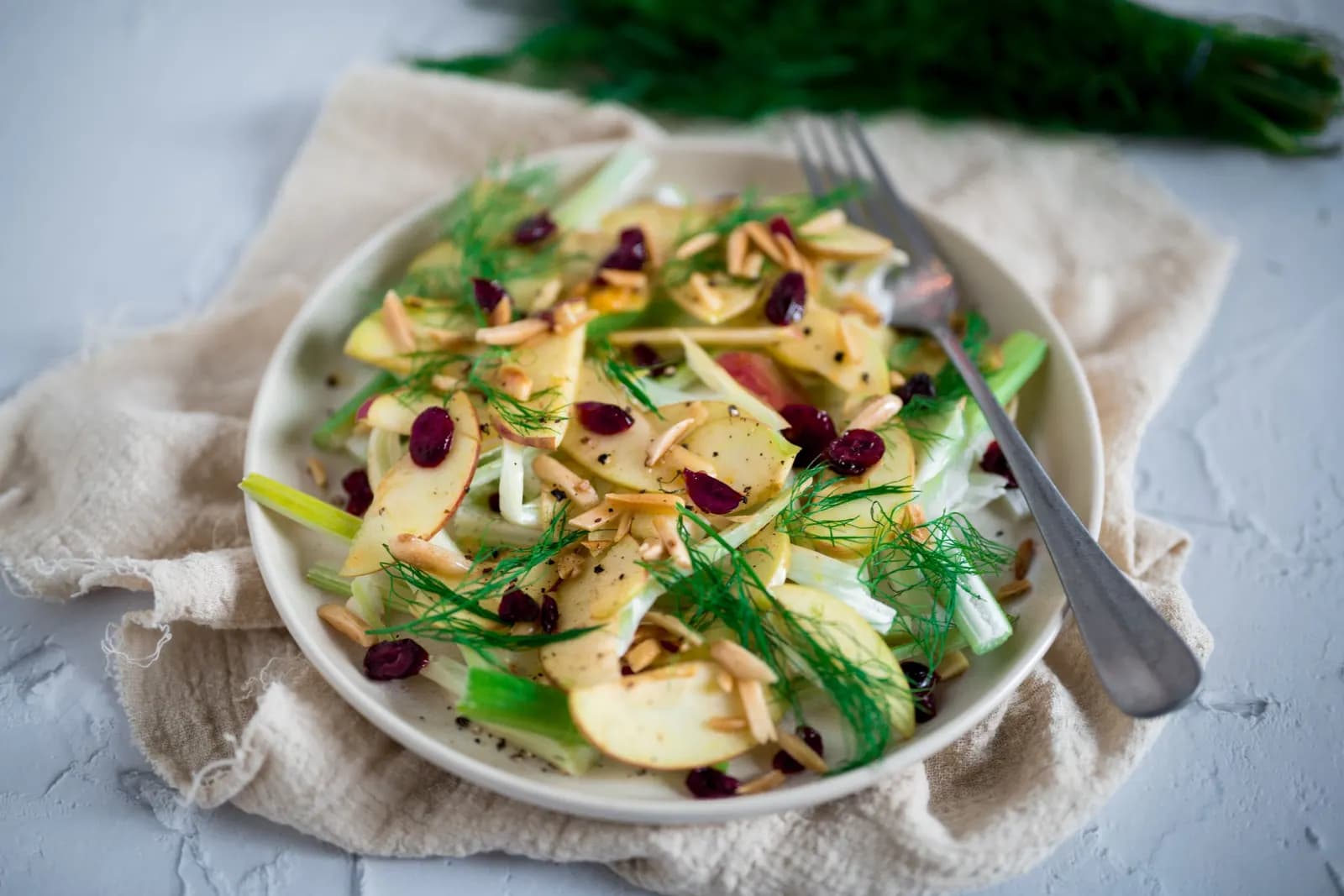
- Starter: thinly sliced fennel and apple salad with dried cranberries, flaked almonds and a citrus vinaigrette. No cooking needed.
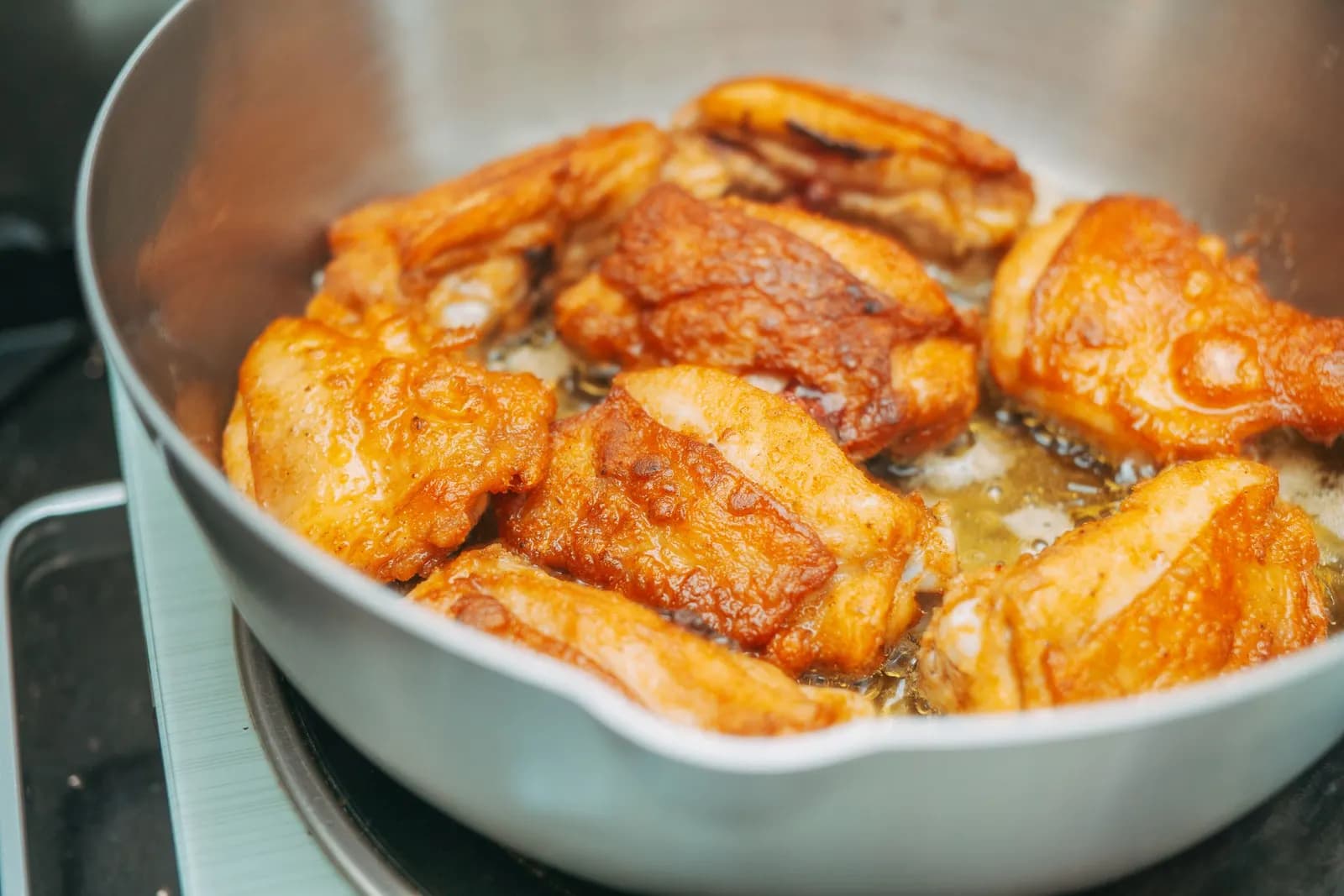
- Main course: chicken thighs browned in a frying pan and finished in a sauce of mushrooms, onion and stock, covered, over a low heat. For 6 people, about 12 thighs.
- Side: couscous with vegetables (courgette, pepper and onion): sauté the vegetables in the saucepan, add the water or stock and, when it boils, take the pan off the heat, stir in the couscous and leave it to stand, covered, for a few minutes.
- Dessert: yoghurt pots with a red-berry compote, made the day before in the same saucepan, and crushed biscuits.
- Alternatives: for vegetarian guests, the same sauce with mushrooms, chickpeas and vegetable stock; quinoa or rice instead of couscous if someone can't have gluten.
- Difficulty: easy. The only tricky point is the chicken: brown the skin side well, cover the pan and check the temperature in the thickest part (74–75 °C).
- Basic plan: the compote and vinaigrette the day before. On the day, start the chicken at least an hour before serving, because browning it in batches and finishing it in the sauce takes time; while it finishes, make the couscous on the other hob, and leave the salad until last so the apple doesn't brown.
- Key ingredients: fennel, apples, chicken thighs, mushrooms, couscous, vegetables for sautéing, plain yoghurt and frozen red berries.
- Allergens to check: tree nuts (almonds), gluten (couscous and biscuits), milk (yoghurt and, if you add it, cream in the sauce) and celery or gluten in shop-bought stock.
- To avoid hitches: don't overcrowd the pan: brown the thighs in two batches and finish them all together in the sauce, covered, turning them halfway through. Check the temperature in several thighs, not just one.

Menu 5: a make-ahead Christmas dinner
Designed so you sit down to dinner with the kitchen already tidy. Stews usually keep well from one day to the next, but not every dish improves when reheated: mashed potatoes, fried food and dressed leaf salads are best made fresh.
- Starter: cooked lentil salad with roast pepper, red onion, parsley and vinaigrette. Made the day before and kept in the fridge.
- Main course: beef stew with carrot, onion, garlic and stock, simmered slowly until the meat is tender. Made the day before.
- Side: freshly made mashed potatoes; this is the only thing worth leaving until the end.
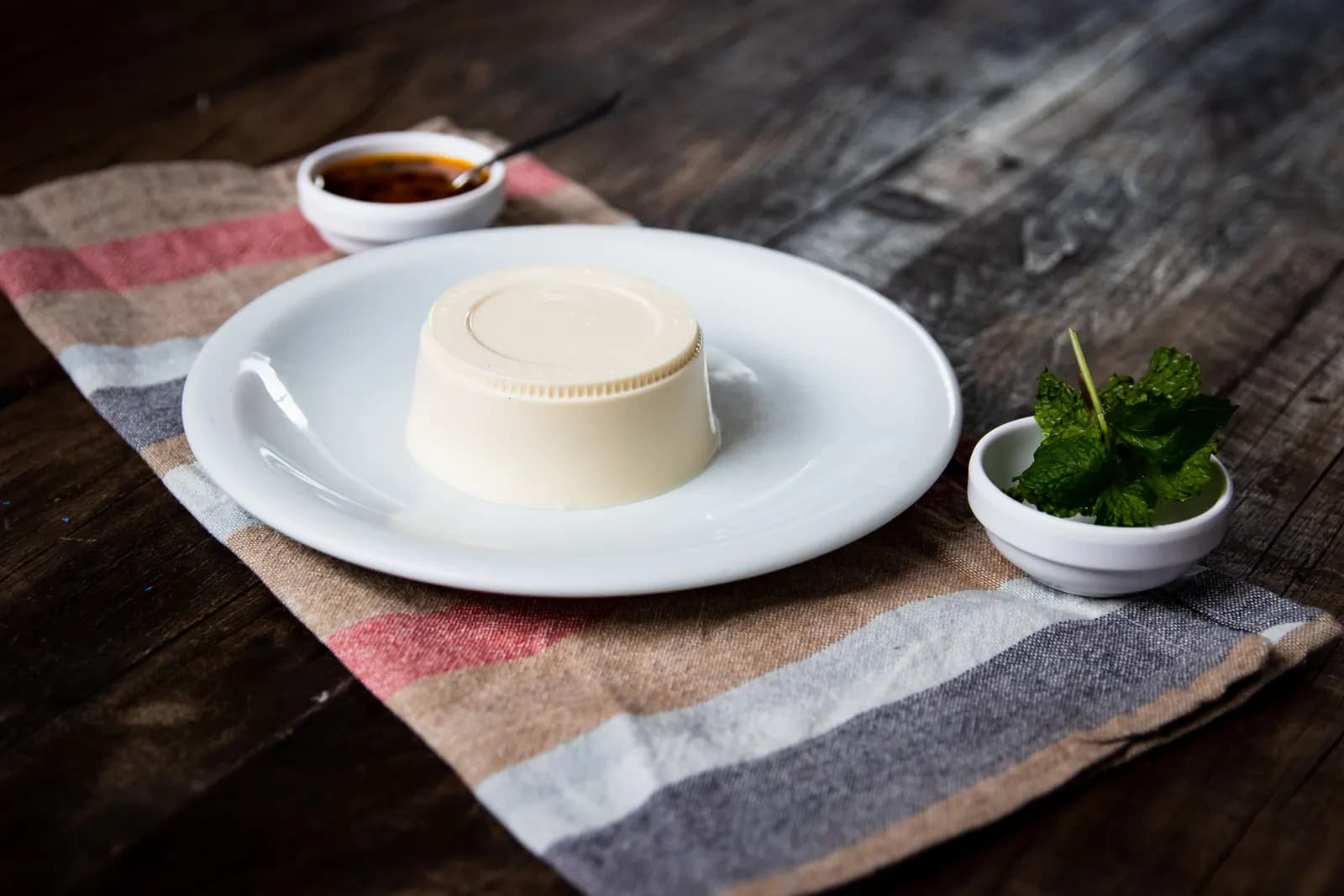
- Dessert: panna cotta with orange compote, which needs several hours in the fridge to set.
- Alternatives: mushroom and chickpea stew for vegetarian guests; plain rice instead of mash; poached fruit instead of panna cotta.
- Difficulty: medium. The stew isn't hard, but the cooking time depends on the cut of meat: it's ready when the meat falls apart with a fork, not at a fixed time.
- Basic plan: the day before, make the stew, lentil salad and panna cotta. Cool the stew divided into shallow containers and put it in the fridge within two hours. On the day, reheat it until it boils and is piping hot all the way through, and make the mash.
- Key ingredients: stewing beef, carrots, lentils, potatoes, cream, milk, sugar and gelatine.
- Allergens to check: milk (mash, panna cotta), celery and gluten in stock or flour if you thicken the stew, and sulphites if you add wine.
- To avoid hitches: gelatine is of animal origin. For a vegetarian panna cotta, follow a recipe written for agar-agar: it isn't used in the same quantity as gelatine, it has to be boiled to set, and the texture is firmer.

Prep plan for the six-person menu
This timetable is for menu 1 and is easy to adapt to the others. It doesn't set clock times: it orders the tasks by how long each recipe takes, counting back from serving time. If you're also setting the table, our guide to decorating a Christmas table has ideas for doing it with what you already have at home.
Two or three days before
- Confirm the number of guests and any allergies or diets, and settle the menu.
- Check the cupboards and write the shopping list; buy non-perishables first.
- Make room in the fridge: Food Standards Scotland points out that a very full fridge can warm up and recommends keeping it between 0 and 5 °C; a fridge thermometer helps you check.
- If the chickens are frozen, move them to the fridge, in a container on the bottom shelf, so they have time to thaw.
- Check you have a food thermometer, a blender, dishes of the right size and foil.
The day before
- Make the pumpkin soup, cool it in shallow containers and put it in the fridge.
- Poach the pears and keep them in the fridge covered in their syrup.
- Peel and cut the carrots and onions for roasting and keep them covered in the fridge; the potatoes are best cut on the day.
- Check the chickens have thawed completely and mix the oil, garlic and herbs.
- Check with the empty dishes that they fit in the oven at the same time, on two shelves and with room for the air to circulate; if not, decide what goes in first.
On the day
- About two hours before serving, preheat the oven, prepare the chickens and wash your hands and utensils well after handling them.
- Put the chickens in the oven, on the middle shelf; cut the potatoes and prepare the vegetable tray.
- When there's about an hour left before the chickens come out, put the vegetables in on another shelf; add the sprouts for the last 25 to 30 minutes. If everything won't fit, follow the alternative in the vegetable recipe.
- Start checking the temperature of each chicken about 15 minutes before the expected time; when they reach 74–75 °C, take them out and let them rest, covered.
- While they rest, heat the soup until it boils and take the pears out of the fridge if you want to serve them warm.
- Carve the chickens on a clean board and serve. Don't leave dishes on the table for hours: put leftovers in the fridge within two hours.
Shopping list for the six-person menu
Total quantities for the four menu 1 recipes. Cross off anything you already have; if you buy a whole pumpkin, remember it loses weight once peeled and deseeded.
- Vegetables and fruit: 1 kg prepared pumpkin (more if bought whole), 800 g carrots, 1 medium onion and 2 red onions, 1.4 kg potatoes, 400 g Brussels sprouts (optional), 2 lemons, 1 head of garlic, 6 firm pears, and oranges for 500 ml of juice plus one for the peel (or bought juice with no added sugar).
- Meat: 2 whole chickens of 1.4 to 1.8 kg.
- Dairy (optional): plain yoghurt or cream to serve with the dessert.
- Grains and bread (optional): bread or croutons for the soup.
- Store cupboard: 9 tbsp olive oil, 1.2 litres vegetable stock (or water), 2 tbsp sugar (optional), salt and pepper.
- Spices and herbs: rosemary, thyme, 1 cinnamon stick, 3 cloves (optional) and nutmeg (optional).
- Other: pumpkin seeds (optional), foil, kitchen paper and a food thermometer if you don't have one.
Quantities: adapting the menu for 4, 6 or 8 people
The menu 1 quantities are for six portions. There's no universal amount per person: it depends on appetite, the guests' ages and how many dishes there are. To adapt the recipes:
- For 4 people: use two thirds of each ingredient (for example, 650 g pumpkin and 800 ml stock) and a single chicken of about 2 kg or two small ones.
- For 8 people: multiply by 4/3 (for example, 1.3 kg pumpkin and 1.6 litres stock) and roast three medium chickens if they fit, or two larger ones.
- Times don't multiply: a bigger chicken takes longer, but not twice as long; the FoodSafety.gov chart gives 2 h to 2 h 15 min at 177 °C for whole chickens of 2.3 to 3.2 kg. Several dishes in the oven also slow things down. Let the thermometer decide.
- Salt, spices and sugar: start with a little less than the calculated amount and adjust to taste.
- Pans don't always scale: if you double the soup you may need two pans; if you crowd the vegetables, they won't brown.
Allergies and intolerances: adapting the menu
An allergic reaction can be triggered by a very small amount of a food, so an allergy isn't dealt with by picking the ingredient out at the table. In the European Union, the rules require 14 groups of allergens to be declared on labels (EFSA, European Commission): cereals containing gluten, crustaceans, eggs, fish, peanuts, soya, milk, tree nuts, celery, mustard, sesame, sulphur dioxide and sulphites, lupin and molluscs. Other countries have different lists, but this is a good basis for checking a home-cooked menu.
- Ask in good time: which foods each guest can't eat, and whether avoiding the ingredient is enough or traces matter too.
- Read every label, including stock, spice mixes, sauces, biscuits and bread; allergens are highlighted in the ingredient list of pre-packed foods in the EU.
- Avoid cross-contamination: make the allergen-free dish first, with clean utensils, boards and surfaces, and keep it covered and separate.
- Label the dishes or tell people at the table what's in each one, especially nuts, sesame, milk and gluten, which appear in several of these menus.
- Vegan doesn't mean allergen-free: a recipe without animal products may contain gluten, soya, tree nuts, peanuts or sesame.
- Lactose-free doesn't mean milk-free: lactose-free products are still milk and aren't suitable for a milk protein allergy.
Food safety at Christmas dinner
At Christmas we cook larger amounts than usual, the fridge is full and food spends longer on the table. The US CDC notes that outbreaks of Clostridium perfringens, a bacterium that grows in cooked food left at room temperature, are most common in November and December. These are the basic rules, with the source for each; if your national food authority gives different figures, follow those.
Cooking temperatures
- Poultry (chicken, turkey, duck), whole or in pieces, and stuffing: 74 °C (165 °F) inside according to the USDA; Food Standards Scotland recommends 75 °C or above in the thickest part.
- Roasts of beef, pork or lamb: 63 °C (145 °F) and at least 3 minutes' rest (USDA). A stew cooks for much longer, until the meat is tender.
- Reheating: the USDA gives 74 °C (165 °F) for leftovers; the Catalan Food Safety Agency gives at least 70 °C in the centre for 2 minutes, or an equivalent combination. Without a thermometer, food should be steaming hot all the way through, and soups, sauces and stews should come to the boil (USDA).
- Oven temperature: FoodSafety.gov advises against roasting meat or poultry below 163 °C (325 °F). The oven temperature tells you nothing about the inside of the food: always measure the food itself.
- Stuffing: the CDC considers it safest to cook it separately in a dish; if it goes inside the bird, it must also reach 74 °C in the centre.
Safe thawing
- In the fridge, at 4 °C or below: this is the method recommended by the USDA and Food Standards Scotland. Put the item in a container on the bottom shelf so the juices don't drip onto other food.
- Allow time according to weight: the USDA says at least one day for every 5 pounds (about 2.3 kg) for large items such as a turkey, and a full day even for small items. Food Standards Scotland estimates about 3 days for a 6 kg turkey in a 4 °C fridge.
- In cold water, as a faster alternative: the item in a leak-proof bag, submerged in cold water changed every 30 minutes, and cooked straight afterwards. If you use the microwave, it must also be cooked immediately.
- Never on the worktop, in hot water, on the balcony or in the garage: the outer layer can spend hours at temperatures where bacteria multiply, even if the centre is still frozen.
- If you run out of time: the USDA says food can be cooked from frozen, allowing about 50% more time; with a whole bird, a thermometer is essential.
Cross-contamination and hygiene
- Don't wash raw chicken or turkey: the CDC and Food Standards Scotland warn that the water spreads germs around the sink and surfaces.
- Use one board for raw meat and another for vegetables, bread and foods that won't be cooked.
- Don't put cooked food on a plate, board or dish that has held raw meat without washing it first.
- Wash your hands with soap and water for at least 20 seconds before and after handling raw meat, and wash utensils and worktops with hot soapy water.
- When shopping and storing: keep raw meat away from ready-to-eat food, in your shopping bags and in the fridge too.
If some guests are more vulnerable
According to the CDC, people aged 65 and over, children under 5, pregnant women and people with weakened immune systems are at higher risk of serious illness from food poisoning. None of the five menus in this guide uses raw egg or undercooked meat; the specific precaution is the cheese in menu 3. If there are pregnant, older or immunocompromised guests, use feta or goat's cheese made with pasteurised milk: the CDC advises them against raw-milk cheeses and, unless heated, fresh cheeses such as queso fresco or requesón. If you add other dishes, such as cured meats, raw fish or desserts with uncooked egg, check your health authority's advice.
How to store and use leftovers safely
Advice varies a little between bodies, so it's attributed here:
- Into the fridge within two hours: this is the advice of the CDC, Food Standards Scotland, the Catalan Food Safety Agency and the Balearic Islands Health Department. Don't wait for food to cool before storing it.
- Cool quickly: divide leftovers into clean, shallow, covered containers; cut large pieces, such as a chicken or a roast, into smaller portions.
- How many days? It depends on the authority. The Balearic Islands Health Department advises refrigerating what will be eaten the next day and freezing the rest; Food Standards Scotland and the Catalan Food Safety Agency (with the fridge between 1 and 4 °C) give a maximum of 2 days; in the United States, FoodSafety.gov gives 3 to 4 days for cooked meat and poultry and for soups and stews. These are each authority's own criteria, not a mistake: follow your country's and freeze whatever you won't eat within that time.
- Cooked rice, 24 hours at most: it can contain spores of Bacillus cereus that survive cooking. Food Standards Scotland advises cooling it as quickly as possible, ideally within an hour, keeping it in the fridge, eating it within 24 hours and never reheating it more than once. This applies to the rice pudding and the pumpkin filling.
- Freeze in small portions at −18 °C, labelling the container with the name of the dish, the date and the number of portions, as the Balearic Islands Health Department recommends.
- Reheat only what you'll eat, and only once, until piping hot all the way through (the reference temperatures are in the cooking section); don't store again anything you've already reheated.
Christmas dinner FAQ
What can I make for an easy Christmas dinner?
Choose a main course that more or less cooks itself, such as a roast chicken or a stew, and a starter and dessert you can make the day before. That's how menu 1 and menu 5 in this guide are planned.
How do I make a budget Christmas dinner?
Fix the number of guests, cook the right number of portions and base the menu on ingredients that tend to be affordable where you live, such as pulses, bone-in chicken pieces, seasonal vegetables and rice. Menu 2 is a complete example; compare prices locally, because they vary a lot between countries and years.
What can I make for Christmas dinner without an oven?
Combine a cold starter, a main course made in a frying pan or pot and a dessert assembled in glasses. Menu 4 does this with a fennel and apple salad, chicken thighs in mushroom sauce, couscous, and yoghurt with compote; two hobs, a frying pan with a lid and a saucepan are enough.
What can I make the day before Christmas?
Soups, stews, compotes, poached pears, panna cotta, pulse salads and vinaigrettes. Cool them in shallow containers, put them in the fridge within two hours and reheat anything served hot thoroughly. Rice pudding is best made on the day, because cooked rice shouldn't be kept for more than 24 hours. Best made fresh: mashed potatoes, fried food and dressed leaf salads.
How much food do I need for six people?
There's no universal figure. As a guide, the detailed menu in this guide uses two chickens of about 1.5 kg, 1.2 kg of potatoes and 1 kg of pumpkin for the soup for six portions. Adjust for your guests' appetites and how many nibbles there are.
Sources
- USDA FSIS: Safe Minimum Internal Temperature Chart (United States).
- USDA FSIS: The Big Thaw — Safe Defrosting Methods (United States).
- USDA FSIS: Leftovers and Food Safety (United States).
- FoodSafety.gov: Meat and Poultry Roasting Charts (United States).
- FoodSafety.gov: Cold Food Storage Charts (United States).
- CDC: Preparing Your Holiday Turkey Safely (United States).
- CDC: People at Increased Risk for Food Poisoning (United States).
- CDC: Preventing Listeria Infection (United States).
- Food Standards Scotland: Christmas food safety (Scotland, UK).
- Food Standards Scotland: food storage, including cooked rice (Scotland, UK).
- Catalan Food Safety Agency: using leftovers safely (Catalonia, Spain; in Spanish).
- Catalan Food Safety Agency: heat treatment (Catalonia, Spain; in Spanish).
- Balearic Islands Government: advice on Christmas leftovers (Balearic Islands, Spain; in Spanish).
- EFSA: food allergens (European Union).
- European Commission: allergies and allergen labelling (European Union).
Related guides

Home
How to Decorate a Christmas Table: Easy and Elegant Ideas
A practical guide to setting and decorating a Christmas table: colours, tablecloth, tableware, napkins, low centrepieces, safe candles and ideas for small tables and tight budgets.
14 min read

Home
How to Decorate Your Home for Christmas: Easy, Beautiful and Budget-Friendly Ideas
Room-by-room ideas to decorate your home for Christmas without spending much: living room, entryway, windows, shelves, bedroom and kitchen, plus simple crafts and safety.
15 min read

Home
How to Paint a Room Step by Step: Materials, Preparation and Common Mistakes
Plan materials, prepare walls, estimate paint quantity and apply it safely with a roller and brush. Includes drying times, common mistakes and a worked example.
11 min read