
Paris in 4 days: a complete itinerary for a first visit
Four days in Paris organised by area: Notre-Dame and the Latin Quarter, the Louvre, the Eiffel Tower, Montmartre and Le Marais, with bookings, closures, transport and budget.
By TopicWeekPublished 24 min read

In this article
Four full days are enough to get to know the main districts of Paris on a first visit, as long as you don’t try to see everything. This guide groups the city by area: day one covers the Île de la Cité and the Left Bank; day two the Louvre and the axis leading to the Arc de Triomphe; day three the Eiffel Tower, Les Invalides and the Seine; and day four Montmartre in the morning and Le Marais in the afternoon.
The route assumes four full days of sightseeing. If you arrive in the afternoon or leave in the morning, turn that day into a stroll and don’t count it as a full day. For each day you’ll find the main visits, optional extras and a version for a slower pace.
The itinerary at a glance
- Day 1 — Île de la Cité and the Latin Quarter: Notre-Dame → Sainte-Chapelle → banks of the Seine → Latin Quarter → Luxembourg Gardens. Priority booking: a Sainte-Chapelle time slot. Optional: Île Saint-Louis, Saint-Germain-des-Prés or the Panthéon.
- Day 2 — The Louvre and the monumental axis: Louvre Museum → Palais-Royal → Tuileries → Place de la Concorde → Champs-Élysées → Arc de Triomphe. Priority booking: a timed Louvre ticket. Optional: climbing to the Arc’s terrace.
- Day 3 — Eiffel Tower and the Seine: Trocadéro → Eiffel Tower → Champ-de-Mars → Les Invalides → walk along the Seine. Priority booking: an Eiffel Tower ascent. Optional: the Musée d’Orsay instead of Les Invalides, or a Seine cruise.
- Day 4 — Montmartre and Le Marais: Sacré-Cœur → Place du Tertre and the streets of Montmartre → metro to Le Marais → Place des Vosges. No essential booking. Alternative: replace the day with Versailles.
The order avoids crossing the city several times in one day: each day focuses on areas close to one another, and you only need the metro to link the longer stretches. Before fixing your dates, check the weekly closures: the Louvre is closed on Tuesdays, the Musée d’Orsay on Mondays and the Palace of Versailles also on Mondays. If one of your days falls on a closure, swap days rather than forcing the visit.
Before you travel: what to book
Not all bookings work the same way. Some sites sell tickets with a time slot, others are free with optional booking and others need nothing at all. These are the priorities for this route:
- Ticket with a time slot (book before your trip): the Eiffel Tower ascent, the Louvre Museum and the Sainte-Chapelle. If you choose the Musée d’Orsay or Versailles, book those in advance too.
- Free with optional booking: Notre-Dame Cathedral. The free booking gives you entry in a specific slot; without it you can still enter through the general queue, with possible waits. Slots are released only a few hours ahead, so this is handled on the day, not before the trip.
- Free access: the Sacré-Cœur Basilica, according to its official website, and the parks, squares and Seine banks on the route.
- Optional: a Seine cruise, the Notre-Dame towers, the Sacré-Cœur dome, the Arc de Triomphe terrace, Les Invalides and other museums.
Day 1: Notre-Dame, Sainte-Chapelle and the Latin Quarter
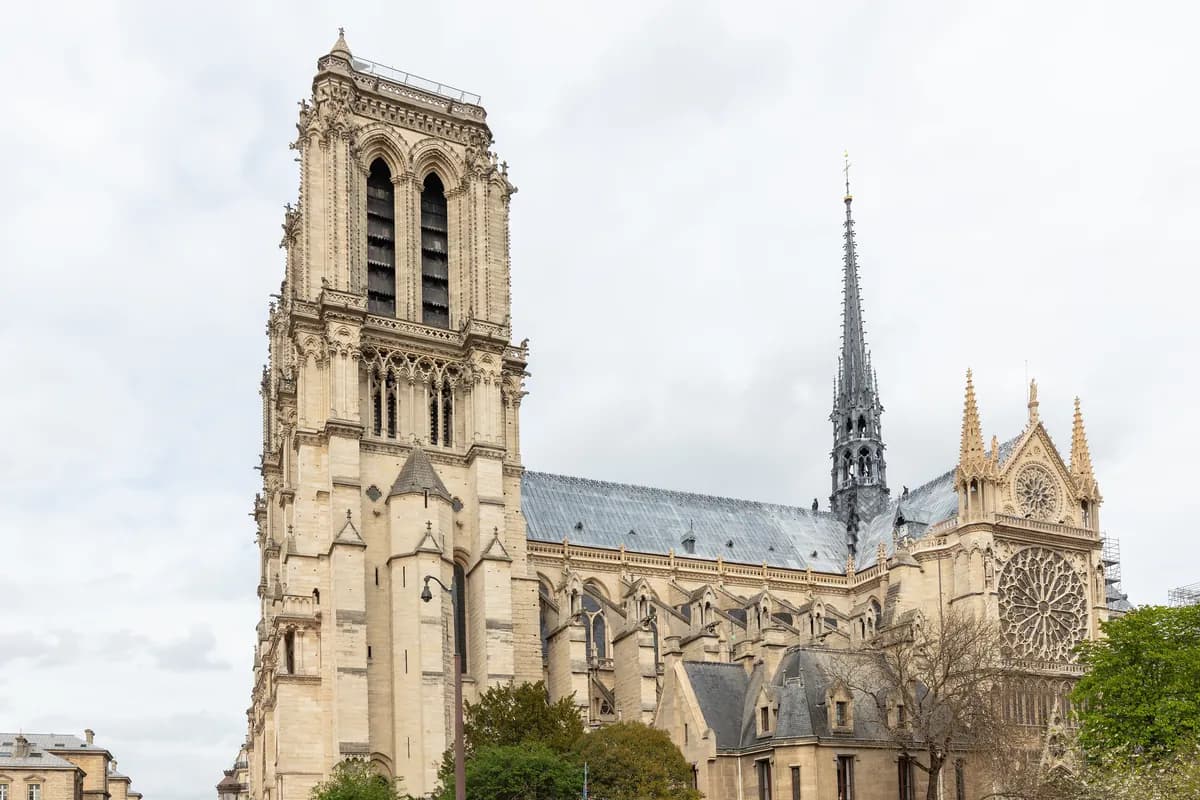
Morning: Notre-Dame Cathedral
Start on the Île de la Cité. Notre-Dame reopened after the restoration that followed the 2019 fire and, according to its official website, entry to the cathedral is free. Booking a slot is optional and also free: it is done only on the official website or app and helps you avoid the queue on the busiest days. Slots open only a few hours before the visit, not days in advance. Without a booking you can enter through the general entrance, with a variable wait.
As its usual schedule, the cathedral listed Monday to Friday from 7:50 am to 7 pm (Thursdays until 10 pm) and Saturdays and Sundays from 8:15 am to 7:30 pm, with last entry 30 minutes before closing. Religious services and special events can change access. The towers are a separate visit run by the Centre des monuments nationaux, with a paid ticket (€16 on its website, free for EU residents under 26) and about 424 steps; the treasury also has its own fee. Neither is included in free entry to the nave.
Sainte-Chapelle
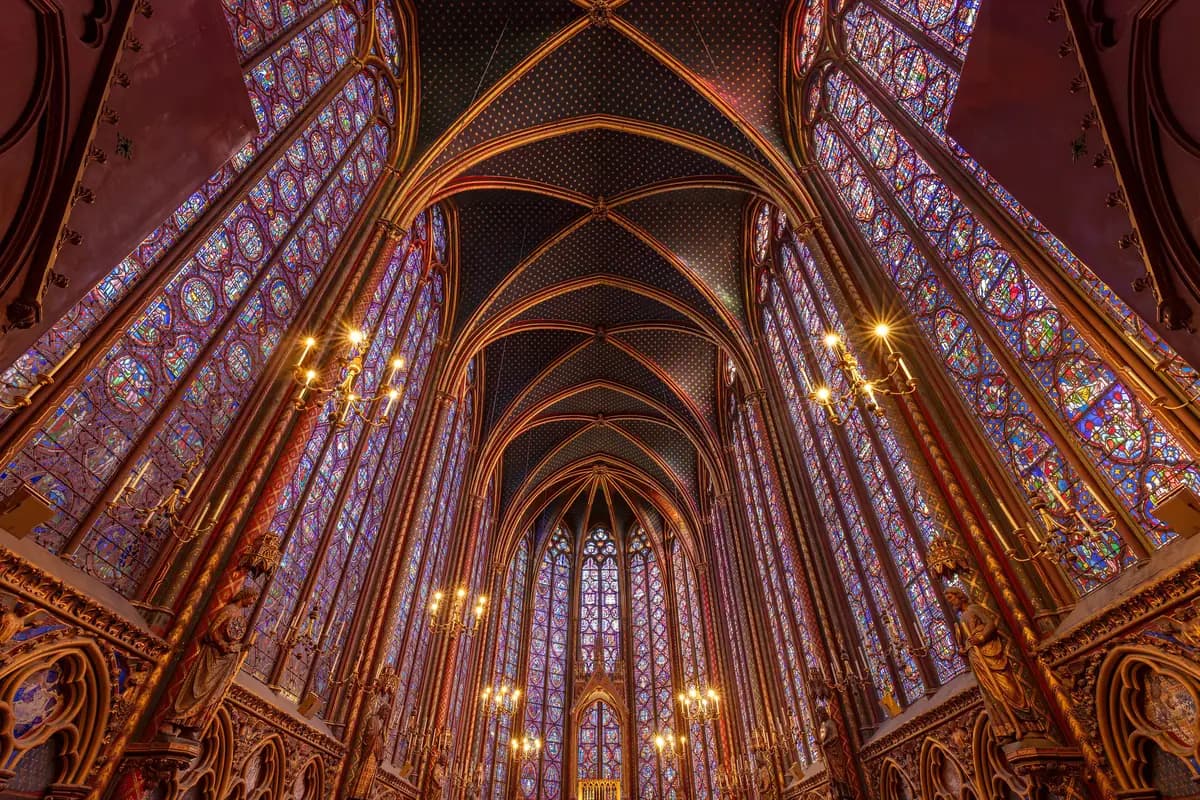
A few minutes’ walk away, the Sainte-Chapelle holds one of the most famous collections of Gothic stained glass in the world. According to its practical information, it opens from 9 am to 5 pm from 1 October to 31 March and from 9 am to 7 pm from 1 April to 30 September, with last entry 30 minutes before closing; it is closed on 1 January, 1 May and 25 December.
There is no single price. Since 12 January 2026, an individual ticket costs €22 for visitors who are neither nationals nor residents of the European Economic Area (EEA) and €16 for EEA nationals and residents of more than four months; the combined ticket with the Conciergerie costs €30 or €23 respectively. It is free, among other cases, for under-18s, for 18- to 25-year-olds who are EU nationals or regular non-European residents in France, and for disabled visitors and one companion. Bring documents proving your category.
The chapel stands within the Palais de Justice, so there are security checks and police checks may take place nearby. Arrive at the exact time of your slot, not before, and avoid bringing suitcases or bulky bags, helmets, sharp objects or glass bottles: prohibited items that are confiscated are not returned.
Afternoon: the Seine banks, the Latin Quarter and the Luxembourg
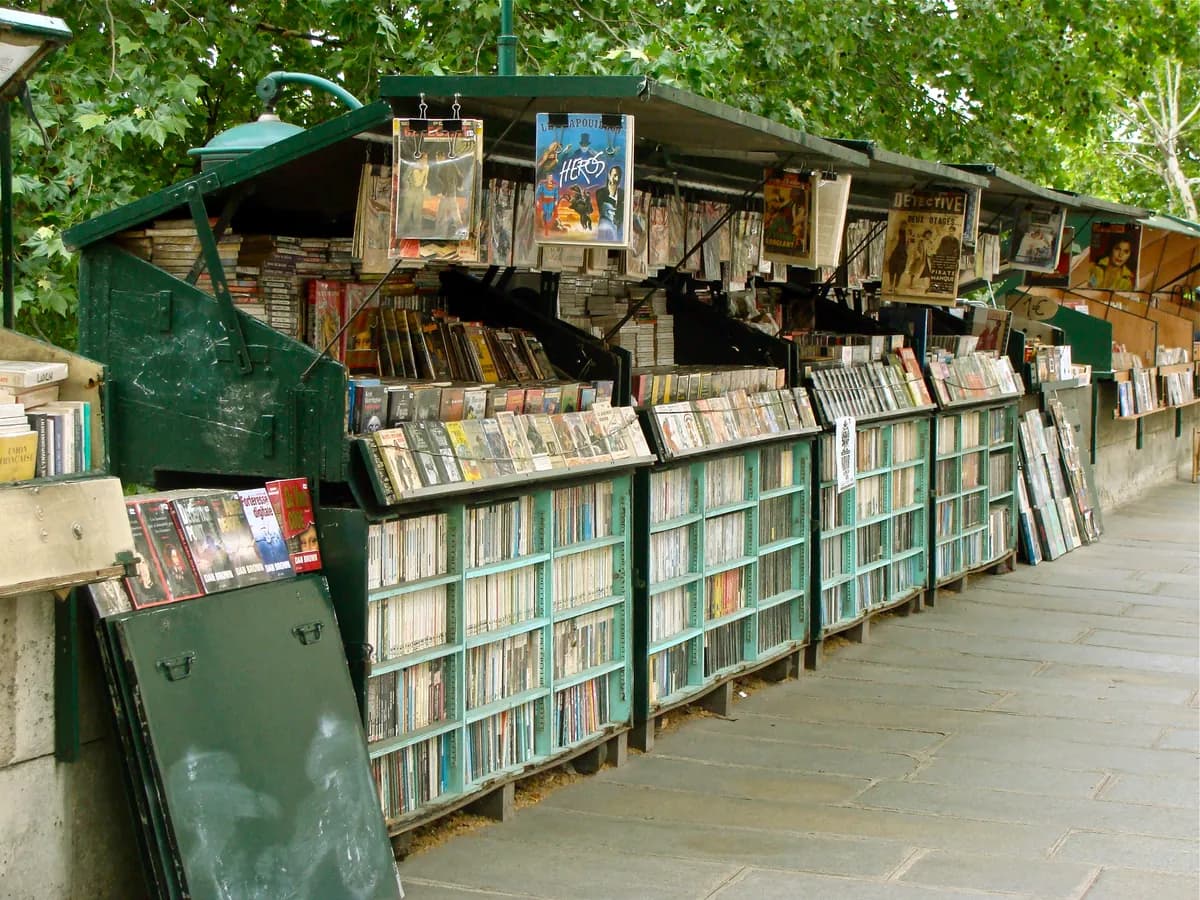
Leave the island for the Left Bank and walk along the Seine quays, where the bouquinistes sell books and prints from their green boxes. From there, head into the Latin Quarter through the streets that climb from Saint-Michel. It’s a good time for an unhurried lunch; this guide does not recommend specific establishments.
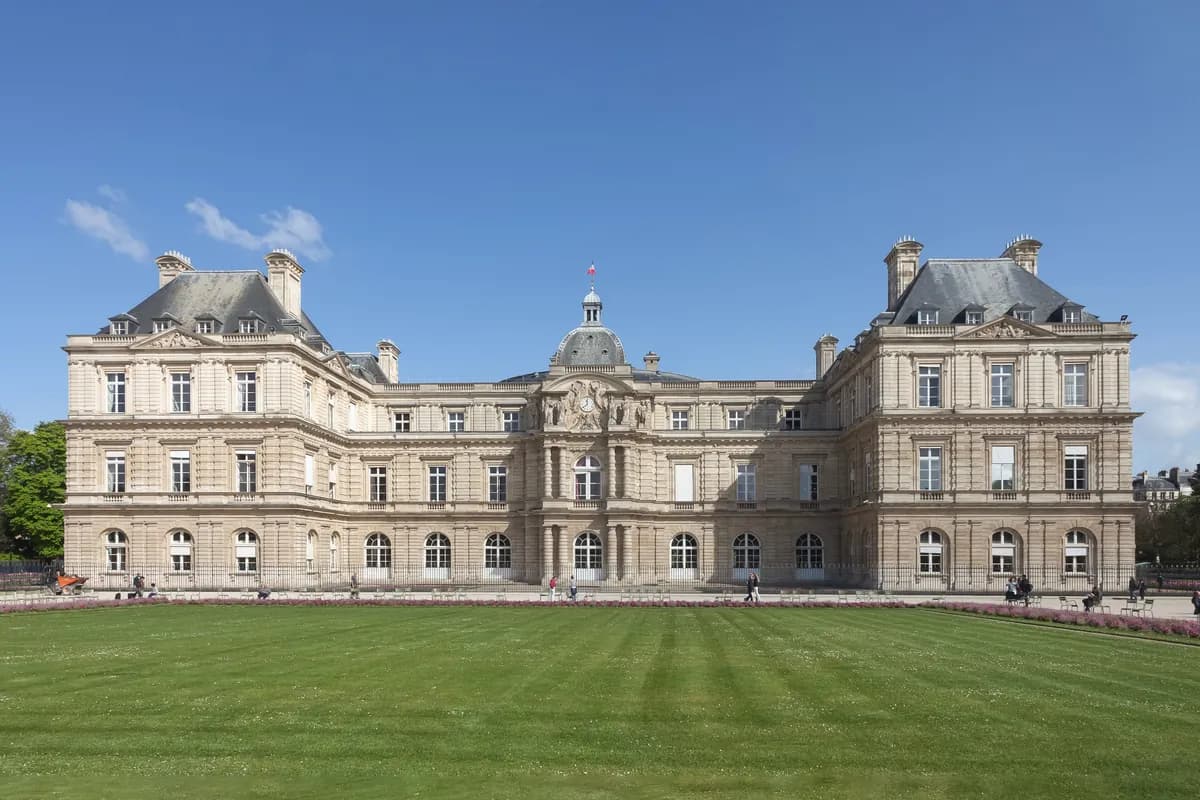
Finish in the Luxembourg Gardens, with the palace that houses the Senate, its avenues and its chairs by the pond. If you still feel like it, choose just one extension: the Île Saint-Louis, a stroll through Saint-Germain-des-Prés, the Shakespeare and Company bookshop or the Panthéon, which charges admission and opens from 10 am to 6 pm from October to March, with last entry 45 minutes before closing. Its panoramic viewpoint was closed to visitors on the date checked.
Day 2: the Louvre, the Tuileries and the Arc de Triomphe
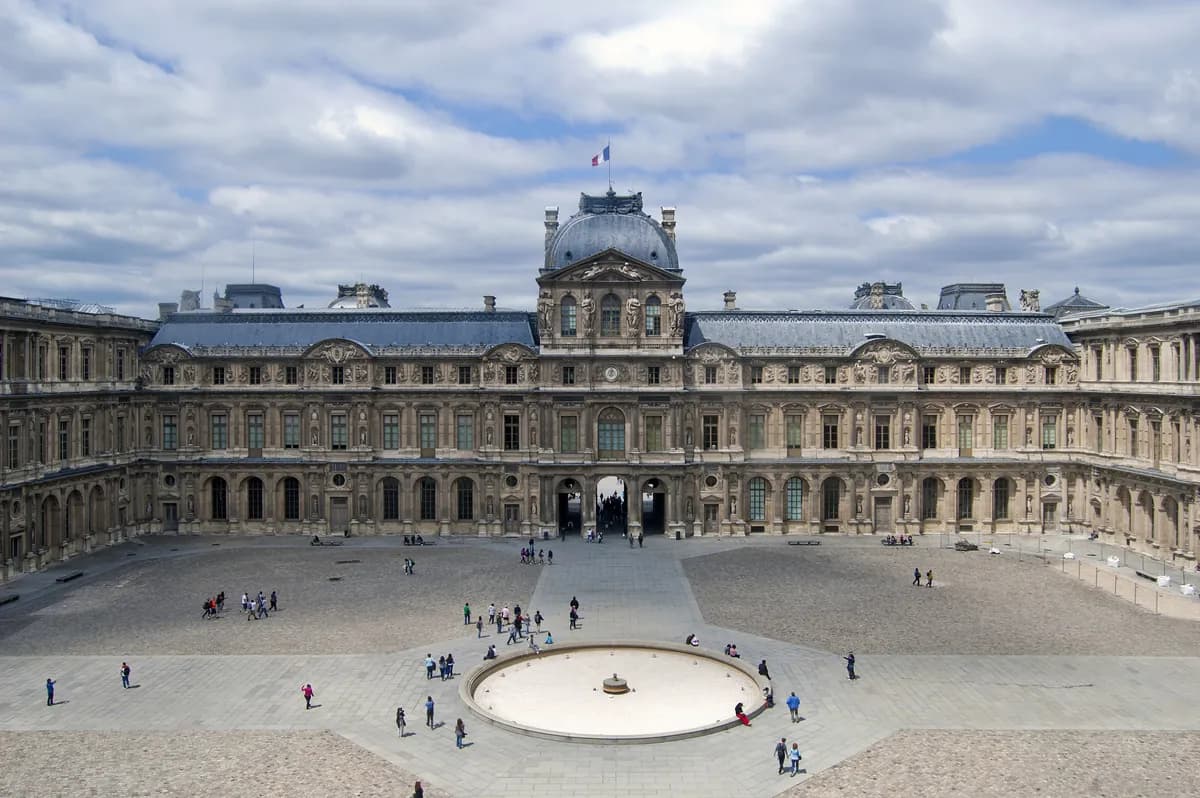
Morning: the Louvre Museum
Spend the morning at the Louvre. According to its official website, it opens on Mondays, Thursdays, Saturdays and Sundays from 9 am to 6 pm, and on Wednesdays and Fridays from 9 am to 9 pm; it is closed on Tuesdays, as well as on 1 January, 1 May and 25 December. Last entry is one hour before closing and rooms start to be cleared 30 minutes before.
Since 14 January 2026, a ticket costs €22 for EEA citizens or residents and €32 for all other visitors. It is free for under-18s and for EEA citizens or residents under 26 (with ID and, for residents, a residence permit of more than 90 days), among other categories. Admission is free for everyone on the first Friday of each month from 6 pm (except July and August) and on 14 July.
The museum recommends booking a slot on its official ticketing site, even for visitors who enter free. In specific periods booking becomes compulsory: this was the case from 17 October to 1 November 2026 for all visitors, with some exceptions. Check whether your dates fall in such a period. It is impossible to see everything in one morning: choose two or three areas that interest you in advance, expect temporarily closed rooms and crowds in front of the most famous works, and allow at least half a day.
Midday: Palais-Royal, the Tuileries and Concorde
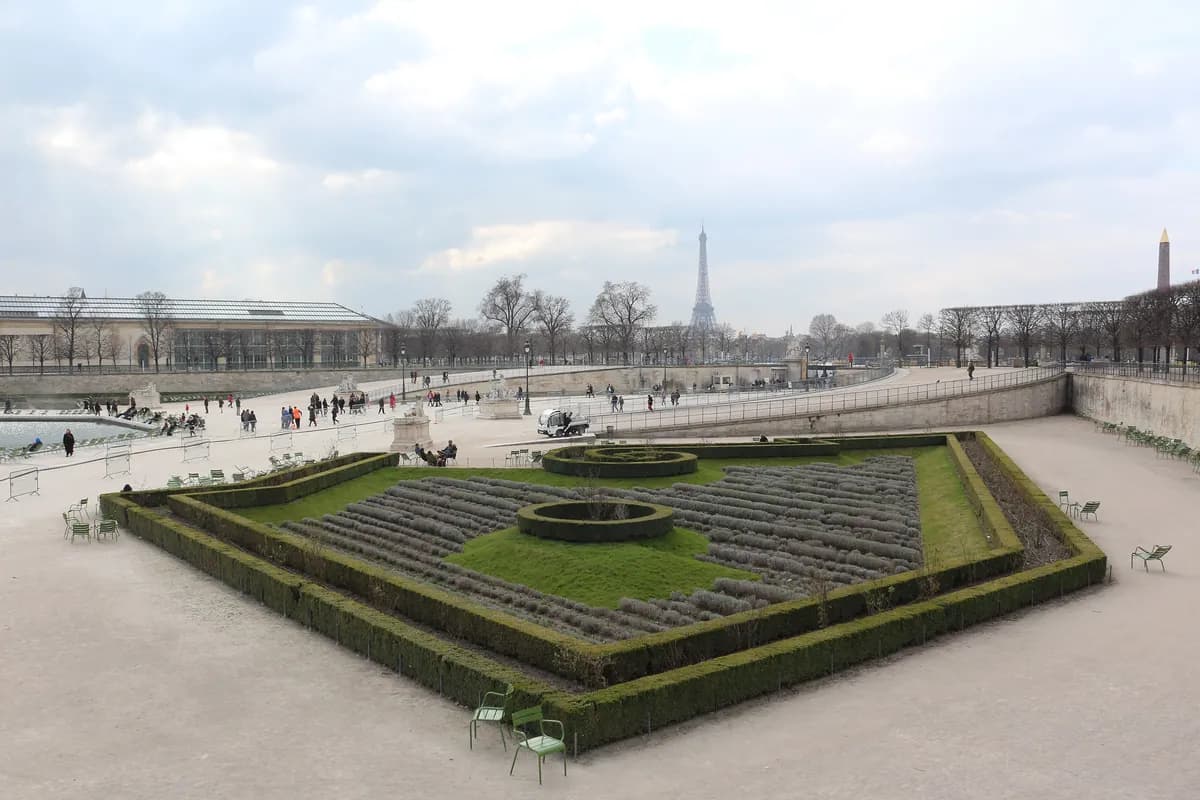
When you leave, you can make a short detour to the Palais-Royal gardens before heading back towards the Tuileries. The garden, between the Louvre and the Place de la Concorde, is a good place to rest. Cross it to the square with its obelisk, from where you’ll see the axis of the Champs-Élysées.
Afternoon: the Champs-Élysées and the Arc de Triomphe
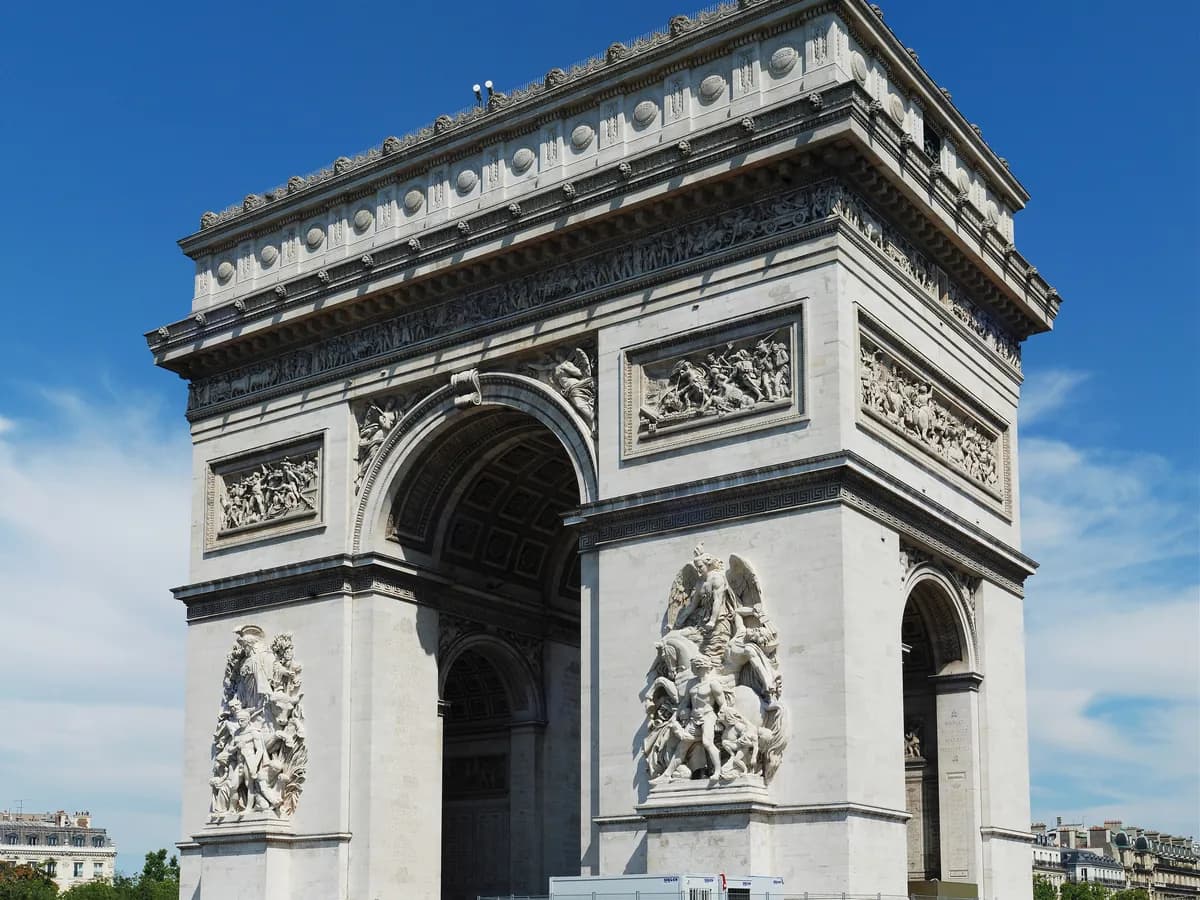
Walking the whole Champs-Élysées is a long walk after a morning in a museum. If you are tired, do just one stretch and continue on metro line 1 to Charles de Gaulle–Étoile. Don’t cross the roundabout through the traffic: the Arc is reached via the Passage du Souvenir underpass, from the top of the Champs-Élysées or the Avenue de la Grande-Armée.
Looking at it from outside is free, and access to the Tomb of the Unknown Soldier is free too. Climbing to the terrace is paid: according to the monument’s website, from 1 October to 31 March it opens from 10 am to 10:30 pm (Tuesdays from 11 am) and an individual ticket costs €16; from 1 April to 30 September it costs €22, except on Wednesdays (€16). Last entry is 45 minutes before closing. Since late July 2026, because of work on the lift, the only way up is by the stairs (284 steps); the monument plans to announce the lift’s return in 2027. It may also close fully or partly for official ceremonies or bad weather.
Day 3: the Eiffel Tower, Les Invalides and the Seine
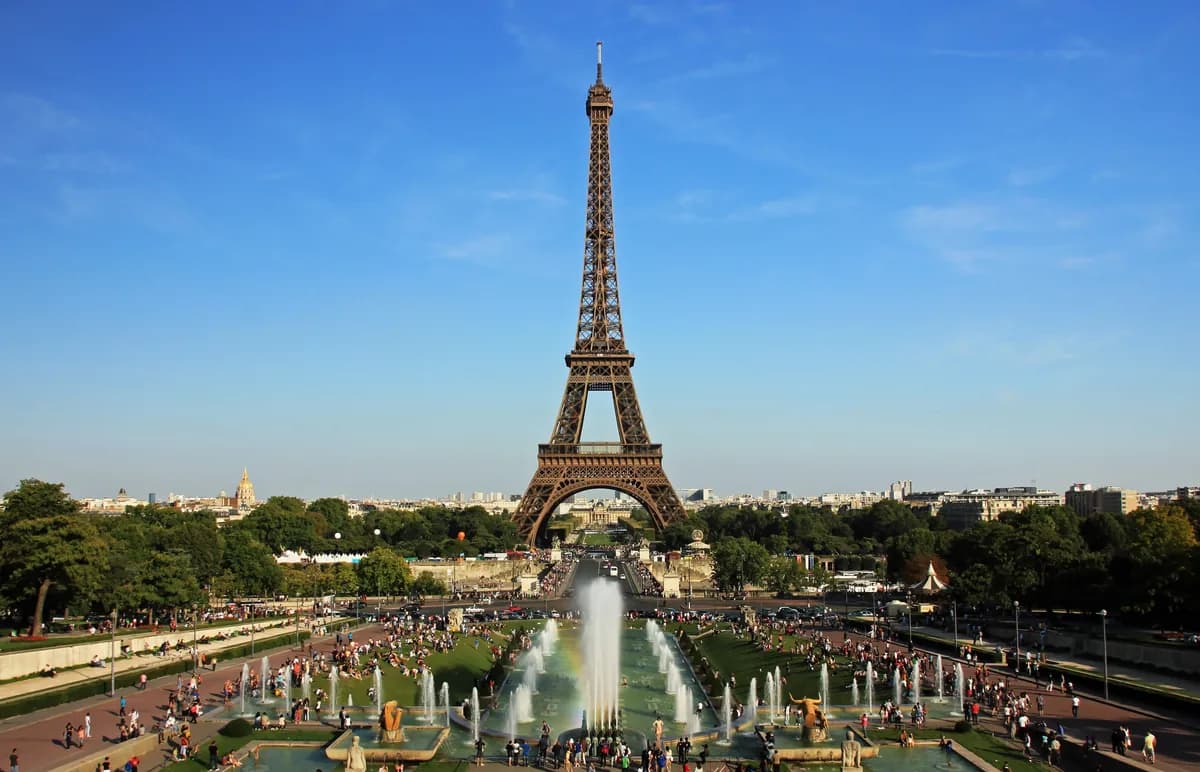
Morning: Trocadéro and the Eiffel Tower
Start on the Trocadéro esplanade, one of the classic views of the tower. Seeing it from outside is free: from the Trocadéro, the Champ-de-Mars or the bridges you don’t need a ticket. There may be fences, works or temporary checks around it. Then cross the Seine on the Pont d’Iéna to the foot of the tower.
Going up requires a ticket, and not every ticket includes the summit. According to the official prices in force in October 2026, adult prices were:
- Second floor by the stairs: €14.80.
- Second floor by lift: €23.50.
- Summit, with stairs to the second floor and the lift from there: €28.00.
- Summit by lift (two lifts): €36.70.
Young people aged 12 to 24 pay a reduced rate and children aged 4 to 11 a child rate; under-4s go free but need their own ticket. The website announced new prices for visits from 11 January 2027. Access to the summit may be restricted in bad weather or at peak times, and the summit and stairs are not suitable for people with reduced mobility. Bags are checked and large luggage is not allowed. Buy from the official ticketing site and check the day’s opening calendar: on the date checked, the tower was open from 9:30 am to 11 pm.
Afternoon: Les Invalides

From the Champ-de-Mars, continue to Les Invalides, recognisable by its golden dome. According to the Musée de l’Armée, it opens every day from 10 am to 6 pm (closed on 1 January, 1 May and 25 December) and the €17 “Museum and exhibitions” ticket includes the Dôme church and Napoleon’s tomb. On the first Friday of each month there is a late opening from 6 pm to 10 pm.
End of the day: the Seine, the Pont Alexandre III or a cruise
Finish by walking towards the Pont Alexandre III and the Seine, or book a cruise with an operator whose conditions you have checked. If you want to see the tower at sunset, go back to a public spot such as the Trocadéro. Consider how tired you are: this day adds up to many hours on your feet.
Day 4: Montmartre and Le Marais

Morning: Sacré-Cœur and Montmartre
Go up to Montmartre early, before the busiest hours. According to its official website, visiting the Sacré-Cœur Basilica is free and it is open every day from 6:30 am to 10:30 pm. Climbing the dome is a separate, paid visit, with nearly 300 steps up a narrow staircase and no lift; it is not recommended for people with mobility problems or anyone uncomfortable in confined spaces.
The hill has slopes and many stairs. The Montmartre funicular avoids the main flight of steps and, according to Île-de-France Mobilités, accepts the Metro-Train-RER ticket, though without transfers to other transport. Afterwards, wander around the Place du Tertre and nearby streets without trying to cover them all: some are steep or have steps.
Afternoon: Le Marais and the Place des Vosges
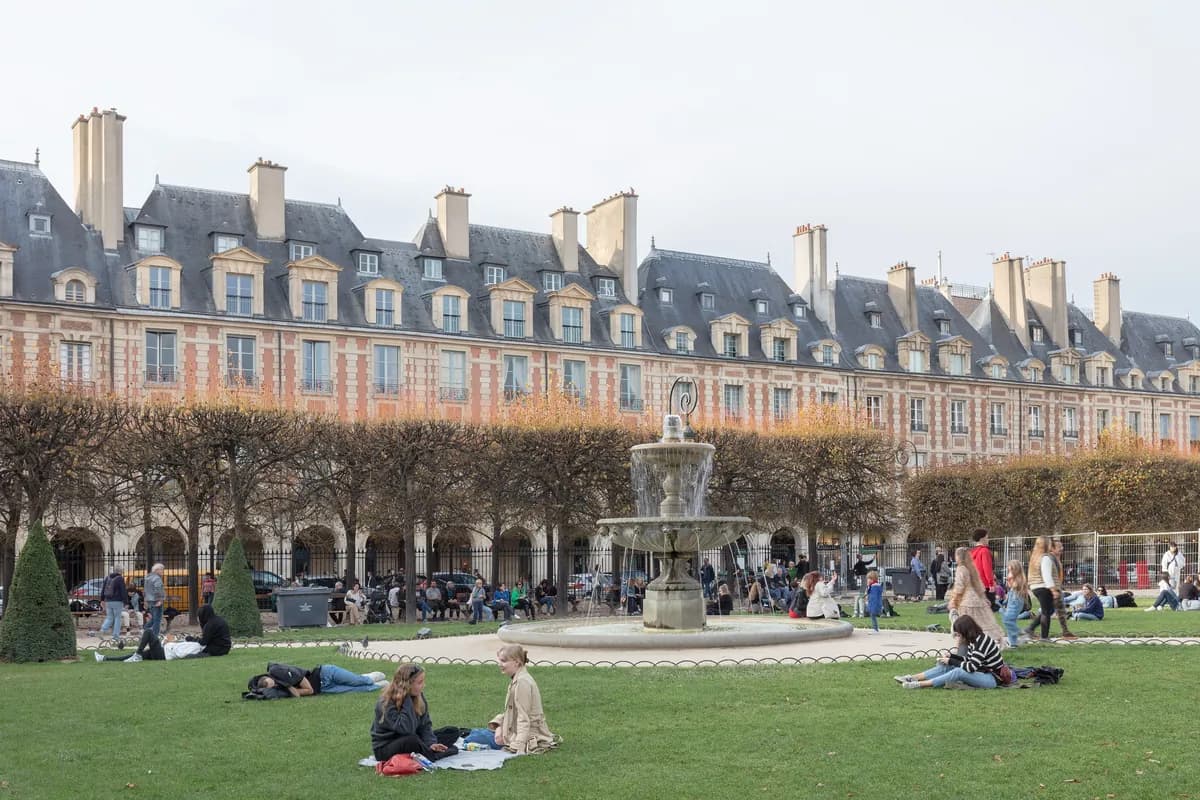
Montmartre and Le Marais are not next to each other: the sensible option is to come down the hill and take the metro. In Le Marais, stroll to the Place des Vosges, one of the oldest squares in Paris, and leave free time for lunch, a shop or a short visit that interests you.
Alternative: swap Day 4 for Versailles

Versailles is not a quick stop: between the journey from Paris, the palace, the gardens, the Trianon estate and breaks, it takes up practically a whole day. If you choose it, replace the fourth day and give up much of Montmartre and Le Marais, or fit Montmartre into an afternoon on a lighter day. According to its practical information, the palace is closed on Mondays and opens from 9 am to 6:30 pm in high season (April to October) and from 9 am to 5:30 pm in low season, with last entry 30 minutes before closing; the palace recommends arriving at opening time on Tuesdays and weekends.
According to the official ticketing page, the Passport, which gives access to the whole estate with a fixed time for the palace, costs €35 in high season (1 April to 31 October) and €25 in low season; for EEA nationals or residents, €32 and €22. There is a cheaper late-afternoon Passport and a ticket for the Trianon estate only (€15, €12 for the EEA). In high season the gardens are paid (€15, or €12 for the EEA) and in low season they are free. Entry to the palace and Trianon is free for under-18s and for EEA nationals or residents under 26, with proof.
According to the palace’s website, the nearest station is Versailles Château–Rive Gauche, on RER line C, about a 10-minute walk away; the RER C mainly runs from stations such as Saint-Michel or Champ de Mars. According to Île-de-France Mobilités, the Metro-Train-RER ticket is valid on RER and train lines across the region, except at airport stations. Within the estate, distances between the palace, the gardens and Trianon are long.
How to adapt the itinerary to closures
- Tuesdays: the Louvre is closed. Use that day for Day 1, 3 or 4.
- Mondays: the Musée d’Orsay and the Palace of Versailles are closed. Avoid those plans on a Monday.
- First Sunday of some months: several monuments are free (for example, the Sainte-Chapelle in January, February, March, November and December), but there may be more visitors and compulsory bookings.
- 1 January, 1 May and 25 December: many sites close, including the Louvre, the Sainte-Chapelle and Les Invalides (Orsay closes on 1 May and 25 December).
- Events and ceremonies: Notre-Dame adapts access to services, and the Arc de Triomphe may close for official ceremonies or weather.
Fix the timed visits first and build the rest around them. If you get an afternoon slot for the Eiffel Tower, for example, start Day 3 with Les Invalides. Check each site’s official calendar in the week of your trip.
Getting around Paris

Within each area, walking is the most practical option; to link areas, use the metro, RER, bus and tram. Tickets are loaded on your phone or on the rechargeable Navigo Easy card. These are the 2026 fares from Île-de-France Mobilités (IDFM):
- Metro-Train-RER ticket: €2.55. Valid on the metro, RER and trains across the region, with transfers for 2 hours without leaving the network, except at airport stations. Not valid on buses or trams.
- Bus-Tram ticket: €2.05. For buses and trams; transfers between them are allowed.
- Navigo Jour: €12.30. Unlimited travel for one day in zones 1 to 5, excluding journeys to the airports.
- Paris Région ↔ Aéroports ticket: €14. To or from Orly (metro 14 or Orlyval) or Charles de Gaulle (RER B).
A pass is not always the best option. Five metro journeys in one day add up to €12.75 (5 × €2.55), a little more than a Navigo Jour; with three or four journeys a day, single tickets are cheaper. IDFM also offers the Paris Visite tourist pass, with options that include the airports: compare its price with the journeys you will actually make. Not every station has a lift; if you need one, check each line’s accessibility on the IDFM website.
Getting in from the airports
- Charles de Gaulle (CDG): the RER B links to central Paris (Gare du Nord, Châtelet) in about 35 minutes, according to Paris Aéroport; actual journey time depends on the station and terminal. You pay with the Paris Région ↔ Aéroports ticket (€14), not with the Metro-Train-RER ticket. There is also the 9517 express bus connecting with metro line 14, and Noctilien night buses.
- Orly: metro line 14 reaches Paris in about 25 minutes, according to Paris Aéroport, depending on the starting station; another option is Orlyval connecting with the RER B at Antony, and tram T7 to Villejuif. The Orlybus has not run since 3 March 2025.
- Beauvais: much farther from Paris and not included in the Paris Région ↔ Aéroports ticket or Navigo passes. According to the Paris je t’aime tourist office, the direct link is the Aérobus shuttle from Porte Maillot; buy your ticket and check times and price on the airport’s website.
Budget for the transfer separately and check times if you arrive late or leave very early. To compare flights by total price, airport included, see our guide on how to find cheap flights.
How much does four days in Paris cost?
There is no fixed figure: accommodation, season, how far ahead you book, the number of travellers, age, residence and the visits you choose all change the total a lot. This hypothetical example uses only verified official prices for one adult aged 26 or over (no age-based free entry) doing the four main paid visits on this route in October 2026:
- Tickets without the EEA rate (neither an EEA national nor resident): Louvre €32 + Sainte-Chapelle €22 + Eiffel Tower, second floor by lift, €23.50 + Arc de Triomphe terrace €16 = €93.50.
- The same tickets with the EEA rate (national or resident, under each monument’s conditions): €22 + €16 + €23.50 + €16 = €77.50.
- Transport: two airport tickets for CDG or Orly (2 × €14 = €28) + ten Metro-Train-RER tickets (10 × €2.55 = €25.50) = €53.50.
On those assumptions, tickets and transport add up to €147 without the EEA rate and €131 with it. You need to add accommodation, meals and optional extras, which are not estimated here. Children and many young EU residents enter several of these monuments free, and the Arc price used is the low-season one (October to March). To work out the rest of the trip, see our guide on how to budget for a trip.
Where to stay for this route
- Latin Quarter and Saint-Germain-des-Prés: close to Day 1 and well placed for the Left Bank; usually in high demand.
- Le Marais and around Châtelet: central, with many metro and RER connections, useful for moving between the four areas.
- Montmartre: a neighbourhood feel and views, but with slopes and stairs; bear this in mind if you have luggage or reduced mobility.
- Near major stations such as Gare du Nord: practical for the RER B and trains, though it’s worth checking the exact location and the route at night.
More than the name of the district, what matters is the distance to a station with direct connections, your arrival time, the building’s accessibility (lift, steps) and your budget. Prices change with dates and how far ahead you book, so this guide does not give hotel rates. No district is universally safe or unsafe: use common sense as in any big city.
What is free and what needs a ticket
- Free or open access (subject to conditions): Notre-Dame Cathedral; the Sacré-Cœur Basilica; seeing the Eiffel Tower from the Trocadéro and the Champ-de-Mars; the banks of the Seine; the Tuileries, the Luxembourg and the Place des Vosges; the Tomb of the Unknown Soldier beneath the Arc de Triomphe.
- Specific ticket needed: going up the Eiffel Tower; the Louvre; the Sainte-Chapelle; the Arc de Triomphe terrace; the Notre-Dame towers; the Sacré-Cœur dome; Les Invalides; the Musée d’Orsay; the Palace of Versailles and, in high season, its gardens.
Seeing a monument from outside is not the same as going in. And a paid visit does not cost the same for everyone: age, nationality, residence and certain situations (disability, unemployment, professional cards) give access to reduced or free rates with proof.
Tips for different kinds of trip
- First visit: follow the area-by-area order and choose one long visit per day.
- As a couple: book a slot for the Eiffel Tower or Notre-Dame and leave free time in Le Marais or Saint-Germain.
- With children: alternate museums and parks (Tuileries, Luxembourg, Champ-de-Mars) and don’t chain two long visits; many monuments are free for minors, but under-4s need a free ticket at the Eiffel Tower.
- With reduced mobility: the tower’s summit and stairs are not suitable; the Arc is accessible only by stairs until the lift returns; the Sacré-Cœur dome has no lift. Check the accessibility of each site and station before you go.
- If you prefer to walk less: use the metro between sections, do only part of the Champs-Élysées and go up to Montmartre by funicular.
- On a tight budget: prioritise outdoor sights, Notre-Dame and the Sacré-Cœur, and choose just one major paid visit.
- If you love museums: spend half a day at the Louvre and another at Orsay, and drop the Arc and part of the Seine walk.
- In winter: several monuments have shorter hours and it gets dark early; do outdoor visits earlier in the day.
- In summer: there are more visitors; book earlier, carry water and avoid the hottest hours on stretches without shade.
What to do in Paris when it rains
If it rains, bring forward the indoor visits already planned: the Sainte-Chapelle, the Louvre, Les Invalides or the Musée d’Orsay. Notre-Dame and the Sacré-Cœur are good free, covered stops. Leave the Seine walk, the gardens and the outdoor views of the tower for a dry day, and remember that the summit may close in bad weather.
Common mistakes
- Not booking the most popular visits: buy the Eiffel Tower, the Louvre and the Sainte-Chapelle in advance.
- Scheduling the Louvre on a Tuesday: it’s the closing day; move it.
- Scheduling Orsay on a Monday: it’s closed that day; choose another.
- Confusing free entry with booking: at Notre-Dame entry is free and booking is optional.
- Booking Notre-Dame on a paid website: use only the official website or app.
- Assuming a single price: the Louvre, the Sainte-Chapelle and Versailles distinguish between EEA and non-EEA visitors.
- Trying to see everything in each museum: choose two or three areas.
- Walking too much without breaks: combine walking with the metro and rest stops.
- Going to Versailles with half a day: set aside a whole day.
- Forgetting the airport transfer: budget for it separately and choose the right ticket.
- Buying a pass without doing the maths: compare it with your actual journeys.
- Filling the route with paid monuments: limit indoor visits to the ones that interest you most.
- Not checking special opening hours: check the official calendar in the week of your trip.
- Not checking accessibility: check lifts and stairs at each site.
- Having no plan for rain: keep an indoor alternative for each day.
- Counting on the Centre Pompidou: its main building is closed until 2030.
- Forgetting entry requirements: bring proof for reduced rates and avoid prohibited items at security.
- Buying from unverified intermediaries: check the official domain before paying.
Checklist before your trip
- Check that no museum day coincides with its weekly closure.
- Book the Eiffel Tower, the Louvre and the Sainte-Chapelle on their official websites.
- Remember that Notre-Dame’s free booking opens only a few hours before the visit.
- Choose between Les Invalides and Orsay for Day 3.
- Decide whether to swap Day 4 for Versailles and, if so, book.
- Prepare documents proving your rate (age, residence, disability).
- Install the transport app or get a Navigo Easy card.
- Work out the transfer from your airport and the ticket you need.
- Check each site’s official calendar a few days before.
- Keep an alternative plan for rain.
If you are travelling with hand luggage only, also check what you can take in our guide to carry-on luggage rules.
Frequently asked questions
Can you visit Paris in four days?
Yes, to get to know the main districts and monuments with a route by area; not to see everything or go into every museum.
What shouldn’t I miss?
Notre-Dame, the Sainte-Chapelle, the Louvre, the Eiffel Tower, the Seine, Montmartre with the Sacré-Cœur, and Le Marais.
In what order should I visit Paris?
By area: Île de la Cité and the Latin Quarter; the Louvre and the Arc de Triomphe; the Eiffel Tower and Les Invalides; Montmartre and Le Marais. Adjust the order to the weekly closures.
How much money do I need?
It depends on accommodation, season and visits. In this guide’s example, tickets and transport add up to €147 for an adult without the EEA rate and €131 with it, excluding accommodation and meals.
How much does it cost to go up the Eiffel Tower?
In October 2026, for adults: from €14.80 (second floor by the stairs) to €36.70 (summit by lift). There are reduced rates, and new prices apply from 11 January 2027.
Do I need to book the Eiffel Tower?
Buying in advance on the official website to choose a slot is highly recommended; availability is not guaranteed on every day.
Which day is the Louvre closed?
Tuesdays, as well as 1 January, 1 May and 25 December. On Wednesdays and Fridays it opens until 9 pm.
How long should I spend at the Louvre?
At least half a day, focused on two or three areas. It is impossible to see everything in a short visit.
Is Notre-Dame free?
Yes, entry to the cathedral is free. The towers and the treasury are separate, paid visits.
Is booking compulsory for Notre-Dame?
No. Booking is optional and free on the official website or app, and slots open a few hours ahead; without it you enter through the general queue.
How much does the Sainte-Chapelle cost?
Since 12 January 2026, €22 for non-EEA visitors and €16 for EEA nationals and residents, with free admission for groups such as under-18s.
Which day is the Musée d’Orsay closed?
Mondays, as well as 1 May and 25 December. On Thursdays it opens until 9:45 pm.
Is the Centre Pompidou open in 2026?
No. Its main building closed at the end of September 2025 for works and is scheduled to reopen in 2030.
How do I get around Paris?
On foot within each area and by metro or RER between areas, with tickets on your phone or a Navigo Easy card.
Which ticket do I need for the airport?
For CDG by RER B and for Orly by metro 14 or Orlyval, the Paris Région ↔ Aéroports ticket (€14). The €2.55 Metro-Train-RER ticket is not valid at airport stations. Beauvais has its own shuttle.
Is a transport pass worth it?
Only if you make many journeys: the Navigo Jour (€12.30) pays off from five metro journeys in a day and does not include the airports.
What are the best areas to stay in?
The Latin Quarter, Saint-Germain, Le Marais and the area around Châtelet are central; what matters most is having a nearby, well-connected station.
Can I include Versailles?
Yes, but as a replacement for a full day, usually the fourth, and never on a Monday, when the palace is closed.
What can I do in Paris when it rains?
Bring forward the indoor visits (Sainte-Chapelle, Louvre, Les Invalides or Orsay) and go into Notre-Dame or the Sacré-Cœur.
Which places can I visit for free?
Notre-Dame, the Sacré-Cœur, the views of the Eiffel Tower from outside, the banks of the Seine, the big gardens and the Place des Vosges.
In short
Paris is more enjoyable with a route by area and a few well-chosen visits than with an endless list. Book the Eiffel Tower, the Louvre and the Sainte-Chapelle first, check the Tuesday and Monday closures, make the most of everything you can see for free, and leave room to stroll, rest and change plans.
Official sources consulted
- Notre-Dame de Paris: free entry and booking and Notre-Dame towers.
- Sainte-Chapelle: practical information.
- Louvre Museum: hours and prices.
- Eiffel Tower: prices and opening times.
- Musée d’Orsay: prices and 2026–2028 works.
- Musée de l’Armée (Les Invalides): hours and prices.
- Arc de Triomphe: practical information and Panthéon.
- Sacré-Cœur Basilica of Montmartre.
- Centre Pompidou: 2030 renovation project.
- Palace of Versailles: 2026 prices, practical information and FAQ.
- Île-de-France Mobilités: 2026 fares.
- Paris Aéroport: transport to CDG and to Orly; Beauvais airport and Paris je t’aime on Beauvais.
Related guides

Travel
How to make a travel budget step by step (with examples)
A practical travel budget method: estimate transport, accommodation, meals and activities, separate paid from outstanding costs, and track spending.
13 min read

Travel
Rome in 3 days: a complete itinerary for a first visit
Plan three full days in Rome with a practical route through ancient Rome, the historic centre and the Vatican, plus booking, transport and timing advice.
12 min read

Travel
Japan in 10 days: a first-trip itinerary
A realistic 10-day Japan itinerary for a first visit, linking Tokyo, Kyoto and Osaka with transport, budget, entry and booking advice.
22 min read